
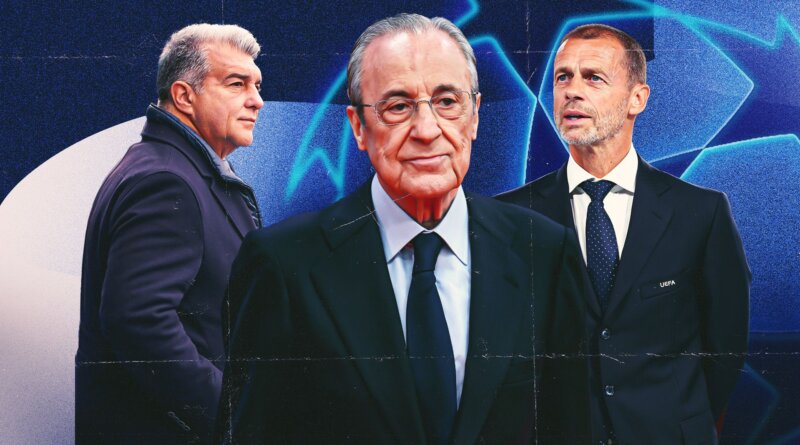
Barcelona Exit Leaves Real Madrid Alone in Super League Bid
European Super League drama continues as Barcelona, one of its founding clubs, has officially withdrawn support for the project. This decision leaves Real Madrid as the last standing giant from the so-called ‘Dirty Dozen’ backing the controversial European Super League. The landscape of elite European football is once again in flux, with significant implications for both the Super League idea and the future format of the Champions League.
European Super League: Barcelona’s Departure and Real Madrid’s Isolation
European Super League ambitions have suffered a critical blow. Barcelona’s exit, as reported by RAC1, marks a turning point and likely signals the effective demise of the breakaway concept. With only Florentino Perez’s Real Madrid left advocating for the Super League, the project’s foundation appears weaker than ever.
Barcelona’s withdrawal is particularly significant given the club’s status as one of the original architects of the Super League. Alongside Real Madrid and Juventus, Barcelona had remained steadfast in support even after the backlash that saw most of Europe’s biggest clubs quickly retract their involvement in 2021. This latest move isolates Real Madrid and raises questions about the project’s long-term viability.
Champions League Revamp: Fresh Negotiations Amid Super League Fallout
The collapse of widespread support for the European Super League does not mean top clubs are content with the status quo. Reports from Spain confirm that Barcelona, Real Madrid, and A22 Sports Management—the group behind the Super League—have engaged in at least seven rounds of discussions with UEFA. The focus: further changes to the Champions League format, despite a major revamp being introduced in 2023.
The talks suggest that leading clubs remain dissatisfied with certain aspects of the Champions League, such as financial distributions and qualification processes. Their willingness to negotiate with UEFA, rather than break away, may indicate a new era of compromise and reform rather than division.
The End of a Football Civil War?
The European Super League episode triggered a civil war within European football, pitting elite clubs against governing bodies, fans, and even governments. That war appears to be drawing to a close with Barcelona stepping away, leaving Real Madrid with little leverage for radical change outside the established system.
UEFA’s recent openness to dialogue shows lessons have been learned from the upheaval. The governing body now faces the challenge of balancing the demands of Europe’s wealthiest clubs with the integrity and inclusivity of its competitions.
What’s Next for Real Madrid and the Super League Vision?
With Barcelona gone, Real Madrid stands alone as the last major supporter of the European Super League. President Florentino Perez, a passionate proponent of the concept, must now convince both UEFA and other clubs of the need for further change—either within or outside the current European football structure.
However, Real Madrid’s isolation may force a strategic pivot. The club’s willingness to engage in extended talks with UEFA shows a possible shift away from confrontation towards negotiation, potentially leading to incremental changes in the Champions League that address the concerns of elite clubs without splitting the football community.
European Super League’s Impact on Champions League Evolution
European Super League debates have already left a lasting mark on the Champions League. The controversial breakaway attempt was a catalyst for UEFA’s most recent format changes, including expanding the group stage and increasing the number of high-profile fixtures. Ongoing talks could see additional tweaks that maintain elite clubs’ influence while safeguarding the competitive balance cherished by fans.
Opinion: A Turning Point for European Football Governance
Barcelona’s decision to walk away from the European Super League is a watershed moment. It signals a realization among top clubs that collaboration—with each other and UEFA—is the only sustainable path forward. For fans and the wider football community, this could mean a more stable and inclusive future for the Champions League and European competitions.
The Super League dream now appears relegated to the past, but the discussions it spurred have ensured that European football governance will never be the same. The challenge ahead is to continue reforming the Champions League in a way that respects tradition while embracing innovation.
For more updates on this developing story and all major football news, visit our homepage for more news.
Your global gateway to nonstop football coverage:
News Goal
Share this content: