
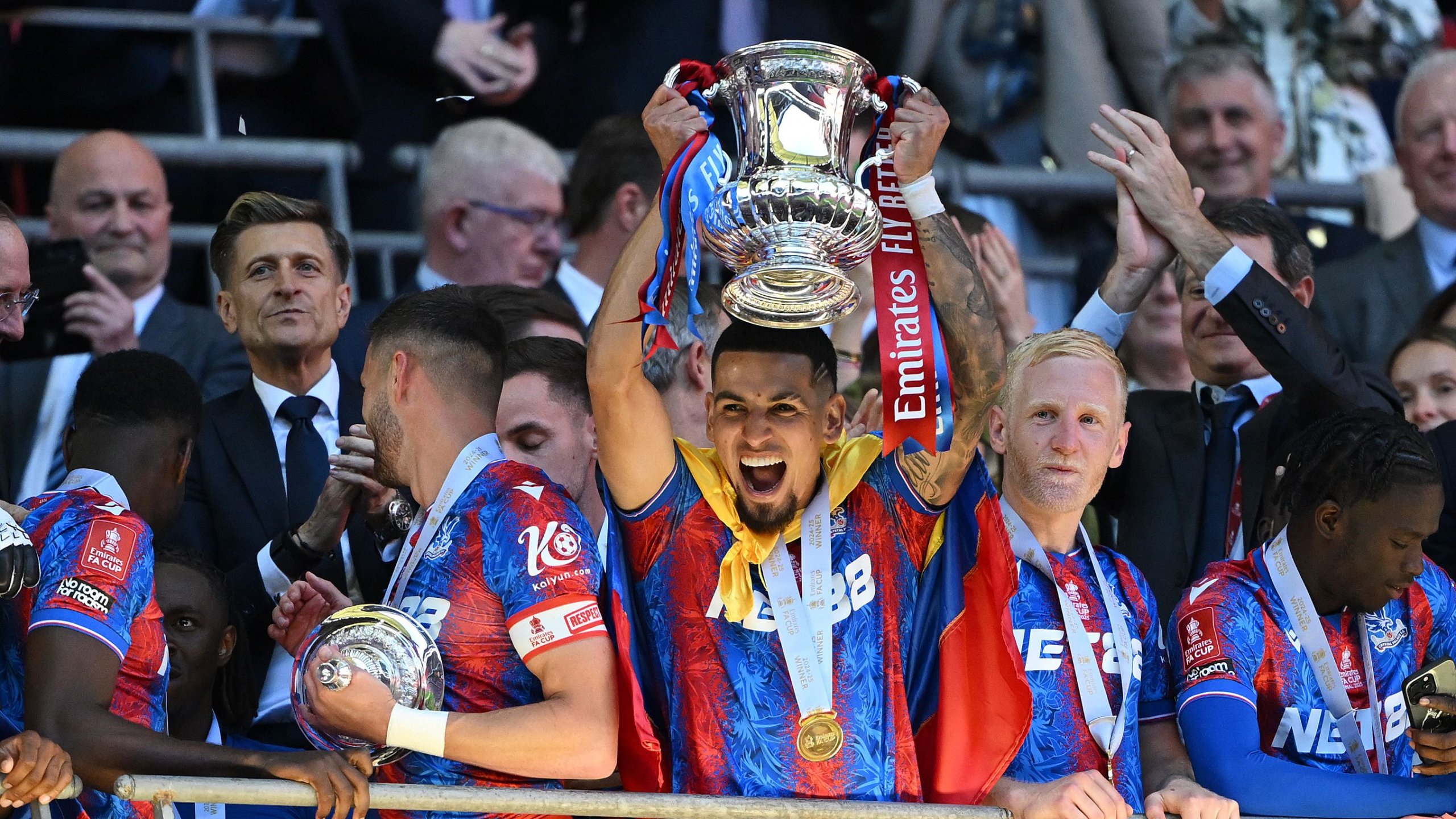
Palace Demotion Shakes Premier League
The Crystal Palace demotion from the UEFA Europa League has been officially confirmed, sending shockwaves through the Premier League and leaving the FA Cup winners facing a season in the less prestigious UEFA Europa Conference League. The ruling, handed down by UEFA’s Club Financial Control Body (CFCB), stems from a breach of the governing body’s stringent multi-club ownership (MCO) regulations, specifically concerning the shared ownership structure of American businessman John Textor, who holds significant stakes in both Crystal Palace and French club Olympique Lyonnais.
This decision marks a significant moment for European football, highlighting UEFA’s renewed commitment to enforcing rules designed to protect the integrity of its competitions. For the Selhurst Park faithful, it’s a bitter pill to swallow, turning the jubilation of a historic FA Cup victory into profound disappointment.
Understanding the Crystal Palace Demotion: A UEFA Ruling Explained
At the heart of the Crystal Palace demotion is Article 5 of the UEFA club competition regulations. This article is designed to prevent any single entity or individual from having “decisive influence” over the management, administration, or sporting performance of more than one club participating in the same UEFA competition. The goal is to eliminate any potential for conflicts of interest, whether real or perceived, and to ensure that the outcome of matches is determined solely by merit on the pitch.
When both Crystal Palace (as FA Cup winners) and Lyon (through their Ligue 1 standing) qualified for the 2024/25 UEFA Europa League, it triggered an automatic review by the CFCB due to John Textor’s Eagle Football Holdings group being the majority shareholder at Lyon and a major shareholder at Palace.
What Are UEFA’s Multi-Club Ownership (MCO) Rules?
The concept of “decisive influence” is central to UEFA’s MCO framework. It is broadly defined and can include:
- Holding a majority of the shareholders’ voting rights.
- Having the right to appoint or remove a majority of the members of the administrative, management, or supervisory body of the club.
- Being a shareholder and having the ability to exercise a decisive influence over the club’s decision-making through an agreement.
UEFA’s investigation concluded that Textor’s level of investment and influence in both clubs met this threshold. When two clubs from the same MCO group qualify for the same competition, the regulations are clear: only one may participate. The rules stipulate that the club that finished higher in its domestic league gets precedence. In the event both clubs are cup winners or finish in the same position, the club from the association with the higher UEFA coefficient ranking is admitted. In this case, Lyon’s qualification through their league position was deemed superior to Palace’s FA Cup entry, leading directly to the demotion of the London club.
The John Textor Conundrum: Palace and Lyon
John Textor’s Eagle Football Holdings has rapidly expanded its portfolio in recent years, creating a global network of clubs that also includes Botafogo in Brazil and RWD Molenbeek in Belgium. While this model offers benefits in terms of shared scouting, player development, and commercial opportunities, it also creates regulatory headaches, as this case proves.
The conflict arose because both clubs enjoyed successful seasons. Palace’s triumphant run to FA Cup glory secured their European spot, while Lyon’s strong finish in the French top flight also earned them a place in the Europa League. UEFA was left with no choice but to apply its regulations, making the Crystal Palace demotion an unfortunate but necessary consequence of its own rules. This situation mirrors similar challenges faced by other MCOs, such as those involving AC Milan and Toulouse or Brighton and Union Saint-Gilloise, though in those cases, ownership restructuring often resolved the conflict before such a drastic penalty was needed.
The Ripple Effect: Financial and Sporting Consequences
The demotion from the Europa League to the Conference League is not merely a change in name; it carries significant financial and sporting ramifications for Crystal Palace. The club now has to recalibrate its expectations and plans for the upcoming season.
A Financial Setback for the Eagles
The financial disparity between the two competitions is stark. The prize money on offer in the Europa League is substantially higher than in the Conference League. This includes participation fees, performance-based bonuses for wins and draws, and a larger share of the market pool distribution. The club will lose out on millions of pounds in potential revenue, which could have been reinvested into the squad, stadium improvements, or youth development. Furthermore, the prestige of the Europa League attracts higher-value sponsorship and broadcast revenue, another area where Palace will now face a shortfall.
Sporting Prestige and Transfer Market Impact
On the pitch, the Europa League offers a platform to compete against some of the continent’s most storied clubs. This exposure is invaluable for a club’
Your global gateway to nonstop football coverage:
News Goal
Share this content: