
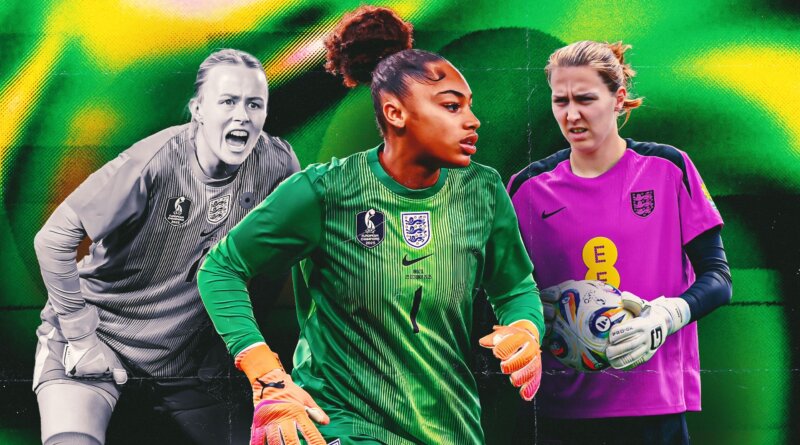
Hannah Hampton Injury Offers Lionesses Opportunity for Growth
Hannah Hampton’s injury is reshaping the England Lionesses’ preparations as they approach their final international camp of 2025. Without their established No.1, the spotlight now burns brighter on England’s inexperienced goalkeepers, forcing head coach Sarina Wiegman to accelerate the development of her shot-stopping options ahead of the 2027 Women’s World Cup.
Hannah Hampton’s Absence and the Goalkeeper Dilemma
Hannah Hampton’s quad injury, which could sideline her for the rest of the year, has left a significant gap in the Lionesses’ squad. Hampton, who was pivotal during England’s 2025 European Championship victory, was recently the only capped goalkeeper in the group. Her absence opens the door for Khiara Keating, the sole other capped goalkeeper, and for uncapped Sophie Baggaley and Anna Moorhouse to gain essential experience. This situation highlights the current lack of depth and international exposure among England’s goalkeepers, an issue that cannot be ignored as the team sets its sights on the next global tournament.
Learning from the Past: England’s Goalkeeping Evolution
This is not the first time England has faced a goalkeeper crisis. Only two years ago, the Lionesses relied heavily on Mary Earps, with the rest of the goalkeeping pool lacking consistent club or international minutes. Back then, injuries and club changes further depleted options, putting pressure on coaches to find reliable alternatives. Today, while Anna Moorhouse is a regular starter for Orlando Pride and Khiara Keating has shown promise at Manchester City, the international experience is still sparse. Baggaley, meanwhile, serves mainly in cup competitions for Brighton and is yet to make her England debut.
The Need for Strategic Opportunities
Wiegman’s approach to building goalkeeping depth was tested in 2024, when she gave Hampton crucial minutes in friendlies and qualifiers. This paid dividends when Earps was injured during a key Euro 2025 qualifier, as Hampton’s prior exposure proved vital. Now, with Hampton sidelined, Wiegman is again compelled to provide real-game experience for her alternatives, especially as the team’s defensive core is also weakened by absences of key centre-backs like Leah Williamson, Alex Greenwood, and Jess Carter.
Developing England’s Next Generation of Goalkeepers
The current scenario presents a unique “blessing in disguise.” While Hampton’s absence is a setback, it forces England to test and prepare their backup options under real pressure. Keating, who debuted in the recent Brazil match, has the chance to solidify her position. Moorhouse and Baggaley, both with strong club backgrounds, need international minutes to prepare for high-stakes tournaments. The lack of experience behind Hampton is a vulnerability England cannot afford to carry into the next World Cup cycle.
Upcoming Friendlies as Crucial Testing Ground
With England set to face China in an upcoming friendly at Wembley, these matches represent the last opportunity to experiment before competitive fixtures in the 2027 Women’s World Cup qualifiers begin. Wiegman can rotate her goalkeepers, exposing them to different match scenarios and combinations with England’s evolving defense. These friendlies are not just warm-ups—they are essential for building confidence and chemistry among England’s new-look backline and goalkeepers.
Hannah Hampton’s Injury Highlights Importance of Squad Depth
Looking forward, the Lionesses face a challenging World Cup qualifying campaign, potentially battling powerhouse Spain for automatic group qualification. Competitive fixtures in 2026 will leave little room for experimentation, making it critical to use every available friendly to address weaknesses. The continued search for a reliable left-back, improved depth in midfield, and an understudy for Lucy Bronze remain ongoing tasks, but the most urgent issue is ensuring the goalkeeper position no longer relies on a single mainstay.
Long-Term Benefits Outweigh Short-Term Setbacks
While fans and coaches would always prefer their first-choice goalkeeper fit and available, England must take advantage of Hampton’s forced break to build resilience in the squad. Friendlies provide a lower-pressure environment for Keating, Moorhouse, and Baggaley to make mistakes, learn, and grow—all crucial steps if they are to become reliable options at future major tournaments. The lessons from Mary Earps’ era, and the recent European triumph, prove the necessity of broadening the team’s experience base.
Opinion: England Must Embrace This Challenge
In my view, Hannah Hampton’s injury, though untimely, has arrived at a point where the Lionesses can turn adversity into opportunity. By fast-tracking the development of their backup goalkeepers now, England can avoid the pitfalls of overreliance on one player and ensure a smoother path to success at the 2027 World Cup. For fans following the team’s journey, this is a reminder that long-term success often demands uncomfortable but necessary transitions. Keep an eye on this new generation—they might just become the backbone England needs in the coming years. Visit for more news and detailed updates on the Lionesses’ preparations.
Your global gateway to nonstop football coverage:
News Goal
Share this content: