
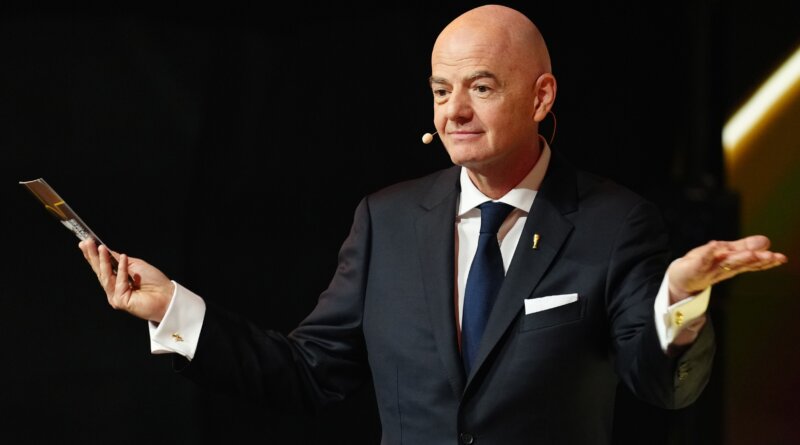
Infantino Calls for Russia Football Ban to End Amid Backlash
Russia football ban remains at the center of controversy after FIFA president Gianni Infantino declared the suspension should “definitely” be lifted. Speaking in a wide-ranging interview, Infantino’s remarks have reignited fierce debate over football’s role in global politics and the ongoing conflict between Russia and Ukraine.
Russia Football Ban: Infantino Urges Immediate Reintegration
Russia football ban is, according to Infantino, counterproductive and should be reversed. The FIFA chief was unequivocal in his interview with Sky News, stating: “We have to. Definitely.” Infantino cited frustration and increased animosity as the only outcomes of Russia’s ongoing exclusion since February 2022, when the invasion of Ukraine prompted widespread sporting sanctions.
Arguing that football should be a force for unity, not division, Infantino suggested the sport’s governing bodies should reconsider their approach. He proposed a new statutory rule to prevent national federations from being expelled due to their governments’ actions, emphasizing that “having girls and boys from Russia being able to play football games in other parts of Europe would help.” Infantino believes keeping sporting ties open is crucial, even amid geopolitical conflict.
Ukrainian Leaders Condemn Infantino’s Stance
The response from Ukraine was swift and vociferous. Ukrainian sports minister Matvii Bidnyi condemned Infantino’s comments, calling them “irresponsible” and “infantile.” Bidnyi accused the FIFA president of ignoring the harsh realities faced by Ukrainian children due to the war, suggesting that football cannot simply be separated from current events.
Opposition from UEFA Member Nations
Despite Infantino’s personal desire for Russian reintegration, the practicalities remain complex. UEFA and many of its members oppose lifting the ban, making any formal vote unlikely in the near future. When FIFA attempted to allow Russian youth teams back into international competition in 2023, it was met with strong resistance. England, Sweden, Poland, and Ukraine all refused to play Russian teams, making participation in tournaments impossible.
Russia Football Ban at the Heart of FIFA Governance Debate
Infantino’s call to enshrine new rules in FIFA’s statutes has sparked debate about the governing body’s future direction. He insists no country should be banned from football based on its political leaders’ actions, advocating for a clear separation between sports and politics. Infantino also cited his opposition to calls for a ban on Israel as an example of his broader philosophy.
Controversy Over Trump ‘Peace Prize’ and Double Standards
In the same interview, Infantino defended his controversial decision to award a bespoke FIFA “peace prize” to Donald Trump during the 2026 World Cup draw. The move, which faced criticism for lacking transparency and process, was justified by Infantino, who said Trump had been “instrumental in resolving conflicts and saving thousands of lives.”
Infantino brushed off criticism over the award, referencing support from Nobel Peace Prize laureate Maria Corina Machado. He also questioned why there were calls for political boycotts of the 2026 World Cup but no commercial boycotts, suggesting a double standard in reactions to the tournament hosts’ policies.
Apology to British Supporters Over ‘Lighthearted’ Remark
Infantino also addressed British fans after his earlier comments about the lack of arrests among British supporters at the Qatar 2022 World Cup were met with backlash. The Football Supporters’ Association (FSA) had labeled his joke a “cheap shot” rooted in outdated stereotypes. Infantino apologized, clarifying his intent was humorous rather than malicious, and took the opportunity to praise efforts by English fans and authorities in tackling football violence.
Opinion: Football’s Political Dilemma and the Path Forward
Russia football ban highlights the ongoing struggle to balance the sport’s unifying power with accountability in the face of global conflict. Infantino’s stance, while rooted in promoting unity, underestimates the symbolic importance of sanctions and the message they send. Lifting the ban without meaningful progress risks alienating football’s wider community and undermining the principles of fair play and justice. As the debate continues, FIFA must tread carefully, considering not only the letter of its statutes but also the spirit of solidarity and respect that underpins the game.
For more news, visit for more news.
Your global gateway to nonstop football coverage:
News Goal
Share this content: