
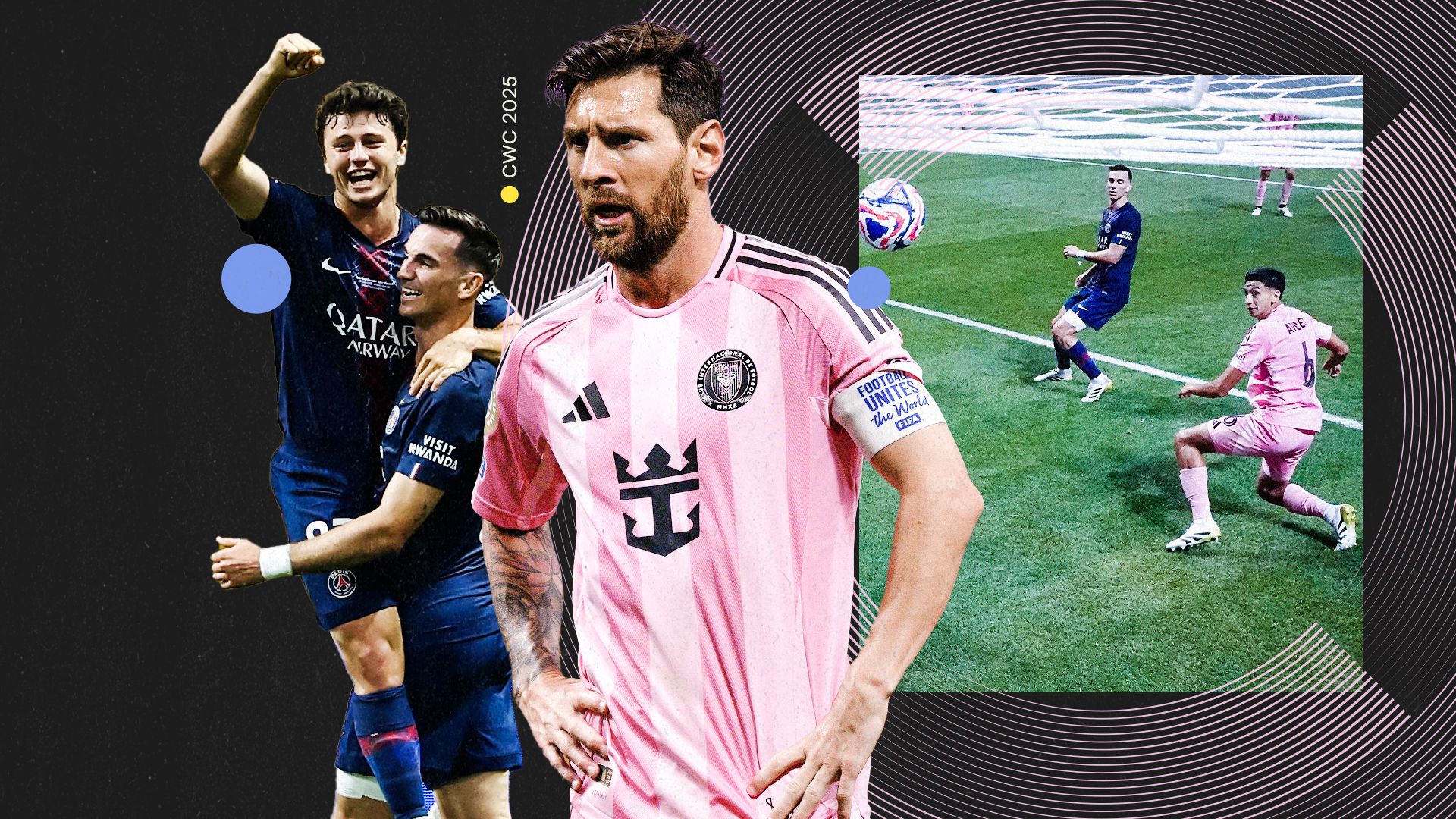
PSG Crush Miami in Club World Cup
The Inter Miami vs PSG clash in the FIFA Club World Cup round of 16 ended in a humbling 4-0 defeat for the MLS side, bringing their unexpected tournament journey to an abrupt and decisive halt. Lionel Messi, facing his former club, was effectively neutralized, and the team around him was systematically dismantled by a ruthless and superior Parisian outfit. The match served as a stark reality check, illustrating the significant gulf in quality between Europe’s elite and a developing Inter Miami squad that, despite its star power, was thoroughly outmatched in every department at Mercedes-Benz Stadium.
## Early Collapse: How the Inter Miami vs PSG Match Unravelled
From the opening whistle, the contest felt like a mismatch. The disparity in speed, tactical discipline, and execution was immediately apparent. Inter Miami’s hopes of keeping the game competitive were dashed within the first five minutes. A lapse in concentration from defender Maxi Falcon proved fatal, as he allowed PSG’s Joao Neves—one of the smallest players on the pitch—to drift unmarked to the back post. Neves met a well-delivered cross with a firm header, leaving goalkeeper Drake Callender with no chance and giving the French champions a 1-0 lead.
This early goal set a grim tone for Javier Mascherano’s men. Instead of settling their nerves, it emboldened a PSG side that was already playing with confidence and swagger. The Parisians established complete control, pinning Miami deep in their own half. The midfield duo of Vitinha and Neves orchestrated the play with effortless authority, dictating the tempo and recycling possession with precision. On the left flank, Khvicha Kvaratskhelia was a constant menace, his direct running and trickery causing endless problems for Miami’s right-back. The first half became an exercise in damage control for the Herons, but the floodgates were already beginning to open.
## Tactical Breakdown: Parisians Expose Miami’s Frailties
The match was a tactical masterclass from PSG, who exploited every weakness in Inter Miami’s system. Their approach was built on a foundation of intense pressing and rapid transitions, which Miami had no answer for.
### PSG’s High Press and Midfield Dominance
PSG’s game plan hinged on suffocating Inter Miami at the source. They pressed high and in coordinated units, preventing Miami’s defenders and midfielders from having any time on the ball. The primary target of this press was veteran midfielder Sergio Busquets. Known for his composure and passing range, Busquets was swarmed every time he received the ball, forcing him into uncharacteristic errors.
This strategy paid off spectacularly for the second goal. Under immense pressure on the edge of his own box, Busquets was dispossessed. The turnover was instant and lethal. PSG pounced, moving the ball with five quick, incisive touches that sliced through the scrambling Miami defense. The move culminated with Neves arriving in the box to coolly roll the ball into an empty net for his second of the night, effectively ending the contest before the half-hour mark. It was a textbook example of how to punish a team that attempts to play out from the back without the required technical security or physical pace to handle an elite press.
### Miami’s Defensive Disarray
While PSG’s attack was clinical, Inter Miami’s defending was calamitous. The backline looked disorganized and overwhelmed by the speed and intelligent movement of the PSG forwards. The third goal was a testament to this defensive fragility. Under pressure, young center-back Tomas Aviles panicked and inadvertently turned the ball into his own net. It was a moment of misfortune born from sustained pressure and a lack of composure.
The fourth goal, scored just before halftime, further highlighted Miami’s inability to track runners from deep. Achraf Hakimi, playing as an attacking right-back, bombed forward on a marauding run, completely untracked by the Miami midfield or defense. His initial shot was saved, but he was the quickest to react, tapping home the rebound to make it 4-0. The defensive structure simply collapsed, unable to cope with the multi-faceted threats PSG posed from all areas of the pitch.
## Lionel Messi’s Frustrating Reunion
All eyes were on Lionel Messi as he faced the club he departed just a year prior. However, any hopes of a fairytale performance against his former employers were quickly extinguished. PSG had clearly done their homework, implementing a defensive strategy designed specifically to nullify the Argentine superstar. He was rarely afforded a yard of space in the final third, consistently crowded out by two or three players whenever he touched the ball.
The disciplined Parisian defense, marshalled by their commanding center-backs, formed a low block that denied Messi the pockets of space where he is most dangerous. He was forced to drop deeper and deeper to get involved, often receiving the ball near the halfway line, far from where he could inflict any real damage. While he showed fleeting moments of his trademark genius—a slaloming run here, a perfectly weighted pass there—they were isolated incidents rather than a sustained threat. His best moment came late in the second half when
Your global gateway to nonstop football coverage:
News Goal
Share this content: