
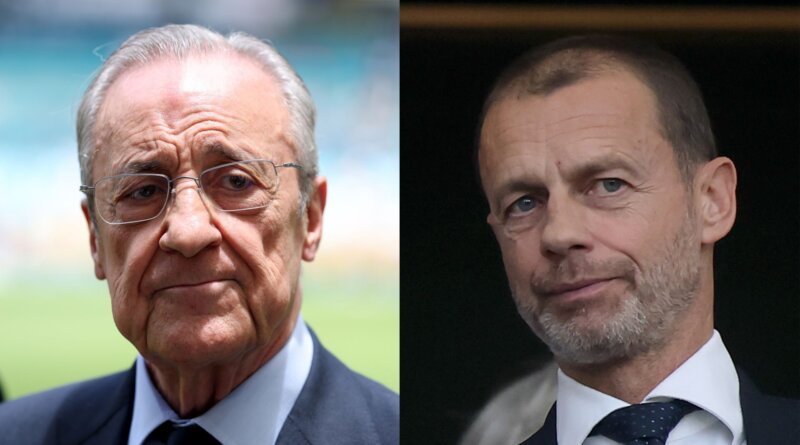
Real Madrid and A22 File €4.5bn Lawsuits Over Super League
Real Madrid and Super League Organisers Take Legal Action Against UEFA
Real Madrid and the European Super League’s promoters, A22, have launched separate lawsuits totalling €4.5 billion against UEFA, intensifying football’s most contentious legal battle. The legal offensive comes after a decisive ruling by the Court of Justice of the European Union (CJEU) in 2023, which stated that both UEFA and FIFA unlawfully blocked the creation of the Super League. This landmark decision opened the door for fresh legal challenges and renewed ambitions for a breakaway competition.
Super League Lawsuits Seek Financial Compensation and Official Approval
The lawsuits, as reported by AS, center on the argument that UEFA’s attempts to block the Super League project caused significant financial losses for its backers, including Real Madrid. A22, the company driving the Super League initiative, also sent a formal letter to UEFA president Aleksander Ceferin, asking UEFA to officially recognize the revamped competition within two months or face further legal repercussions. “Despite our substantial concessions, no agreement has been reached,” the letter stated, asserting that if approval is not granted, legal action will escalate.
Florentino Perez, president of Real Madrid, confirmed at the club’s annual meeting that Madrid will pursue independent legal action, pushing the total value of claims against UEFA to €4.5 billion. This figure represents not only the financial ambitions of the Super League but also the escalating tensions between Europe’s football elite and the governing bodies.
Revised Super League Format Aims for Openness and Inclusion
The Super League originally sparked outrage in 2021 as a closed competition of 12 founding clubs, but recent proposals by A22 and Real Madrid present a much more inclusive format. The new plan expands to 36 clubs, divided into two groups of 18, creating a “Super-Champions” competition with group and knockout stages. Organisers have also promised governance reforms, including a board with representatives from UEFA, participating clubs, and players. Three player delegates would hold voting rights on pivotal matters, such as revenue sharing and competition structure.
A22’s vision extends to the fans as well, with the introduction of ‘Unify’—a digital platform designed to stream football content for free to supporters worldwide. Despite these significant amendments, UEFA has so far rejected the proposal, prompting further legal escalation from Madrid and A22.
Madrid Now the Sole Flag-Bearer for the Super League
Once supported by powerhouses like Barcelona, Juventus, and several Premier League giants, the Super League project has seen most of its original backers withdraw. Fan protests and pressure from football authorities quickly led clubs like Arsenal, Liverpool, Chelsea, and Manchester United to pull out. Juventus and then Barcelona followed suit in 2024 and 2025 respectively, especially after UEFA introduced a more lucrative and competitive Champions League format.
Today, Real Madrid stands alone as the only major club still publicly championing the Super League cause. The club’s commitment, coupled with the €4.5 billion legal challenge, underscores the high stakes involved for European football’s future.
What’s Next for Real Madrid, UEFA, and European Football?
The ongoing lawsuits and demands for recognition set the stage for a potentially transformative period in European football governance. Both A22 and Real Madrid insist that the revised Super League offers a fairer, more competitive, and fan-focused alternative to the current UEFA competitions. UEFA, however, remains firm in its rejection, determined to preserve the integrity and structure of European football as it stands.
Meanwhile, Real Madrid look to refocus on the pitch, preparing to host Olympiacos in the Champions League as they seek to recover momentum after a string of disappointing results. The outcome of these legal battles could reshape the football landscape for years to come. Stay tuned for more news and updates on this evolving story.
Opinion: Is the Super League Worth the Fight?
While the Super League’s promise of greater competition and revenue is appealing to some, its history of fan backlash and club withdrawals casts a long shadow. Real Madrid’s determination is admirable, but the broader interests of the football community—fans, smaller clubs, and the spirit of open competition—must remain at the heart of any future changes. The game’s unity and tradition are as valuable as its commercial success.
Your global gateway to nonstop football coverage:
News Goal
Share this content: