
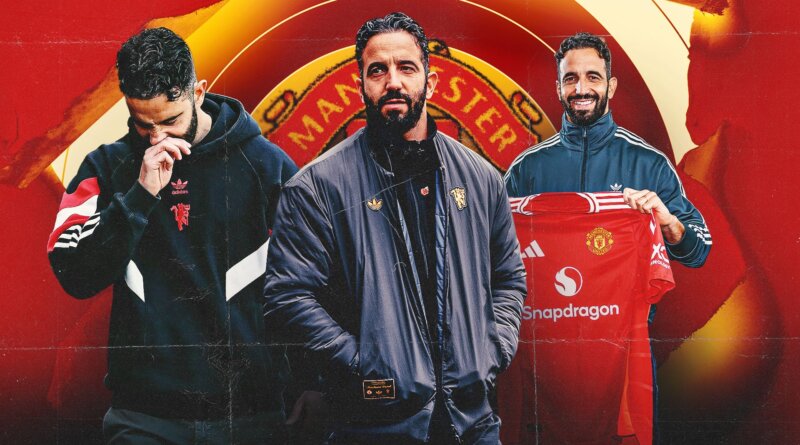
Ruben Amorim’s Manchester United Evolution: A Year of Change
Ruben Amorim’s Manchester United journey began exactly one year ago with high expectations and even higher pressures. As he prepares to face Everton, Amorim reflects on a tumultuous but transformative period at Old Trafford—one that has tested both his resilience and the club’s resolve.
Ruben Amorim’s Manchester United Tenure: A Dramatic First Year
Ruben Amorim’s Manchester United appointment was marked by turbulence from the outset. In his first match against Ipswich Town, the Red Devils sat 14th in the Premier League, mired in poor form and fraught with off-field drama. Twelve months later, United have climbed the table, standing higher with 18 points from 11 games and a positive goal difference—evidence of steady, if gradual, progress.
Amorim’s debut season was challenging: United finished 15th, losing 18 matches overall, 14 under his watch. The rolling 12-game points average plummeted to 0.83—its lowest since Sir Alex Ferguson’s departure. Early this campaign, that figure dipped further to 0.75, but has since rebounded to a promising 1.75, the best since December 2023.
Manchester United’s Tactical Growth Under Ruben Amorim
Performance data underlines clear improvement. According to Opta, Manchester United’s non-penalty expected goals per game have leapt from 1.24 to 1.48 under Amorim this season. Both defensively and offensively, the team shows more cohesion and purpose. The club’s leadership, especially co-owner Sir Jim Ratcliffe, deserves credit for supporting Amorim through rocky spells when pundits demanded change.
Squad Overhaul and Ruthless Decisions
A central narrative of Ruben Amorim’s Manchester United reign has been cultural transformation. Only 11 of the 16 players from his first game remain. Amorim’s no-nonsense approach saw club icons like Marcus Rashford, Rasmus Hojlund, Alejandro Garnacho, and Andre Onana either sold or loaned out. His handling of Rashford, once the era’s first goalscorer, was particularly bold: dropped from the squad and never returned after challenges to his authority.
Garnacho, too, found little patience from Amorim after repeated disciplinary issues. Jadon Sancho, Antony, and Tyrell Malacia were relegated to the “bomb squad,” highlighting Amorim’s willingness to sacrifice short-term value for long-term standards. This rigorous approach has fostered clarity and higher expectations within the dressing room.
Building a New Manchester United Culture
What sets Ruben Amorim’s Manchester United apart is not just tactical tweaks but a drive to reshape the club’s culture. Players are now required to engage with fans more directly, signing autographs and taking photos before and after matches—a small yet telling sign of accountability and unity. Amorim himself leads by example, regularly taking time for supporters at the training ground.
The result? A more harmonious team environment and a stronger sense of purpose on the pitch. However, challenges remain, as seen in inconsistency during moments like the defeat to Grimsby. Not every personnel decision has yielded immediate rewards—Hojlund thrives on loan at Napoli while Sesko, his replacement, struggles. Yet Amorim’s faith in new signing Senne Lammens has stabilised United’s goalkeeping situation.
Late Goals and Fighting Spirit
A notable on-pitch development under Ruben Amorim’s Manchester United is the surge in late-game resilience. Crucial goals from the 80th minute onwards have secured vital points in recent matches, such as Harry Maguire’s late winner at Anfield and Amad Diallo’s equaliser at Nottingham Forest. In total, late efforts have salvaged or secured six points in 11 games—a testament to improved mentality and belief.
Ruben Amorim’s Manchester United vs. Past Regimes
The Everton fixture is a fitting anniversary opponent, with David Moyes—United’s first post-Ferguson manager—on the opposite bench. Moyes’ brief tenure remains a cautionary tale about patience and support. Though his time was cut short, history suggests greater backing could have delivered better results, as seen in his subsequent managerial successes.
Amorim, in contrast, has been granted both time and financial backing, despite a less-than-stellar win percentage in his first 54 games. Notably, Ferguson’s own early numbers were not much better, underlining the unpredictable nature of long-term managerial projects at a club of United’s stature.
Backing from the Hierarchy and the Road Ahead
One key reason for Sir Jim Ratcliffe’s faith in Ruben Amorim’s Manchester United project is the manager’s willingness to take risks and challenge norms—qualities seen as essential for the club’s rebuilding process. Ratcliffe’s commitment to giving Amorim three years reflects a desire to see meaningful, lasting change, rather than chasing quick fixes.
This season presents a golden opportunity: a run of fixtures without ‘Big Six’ opponents until mid-January, and no European distractions. United face Wolves twice, as well as struggling Leeds, Burnley, and West Ham. With such a favourable schedule, the time is now for Amorim to translate incremental improvements into undeniable results.
For more news and ongoing updates about Manchester United, visit for more news.
Opinion: Amorim Deserves Credit, But Must Deliver Now
Ruben Amorim’s Manchester United journey has demonstrated the value of patience and a clear vision. The club’s willingness to support his uncompromising methods has paid off with notable improvements in performance, culture, and resilience. However, with a favourable run of fixtures and no cup distractions, incremental progress is no longer sufficient. The time has come for Amorim to deliver consistent results and reward the faith shown by Sir Jim Ratcliffe and the club’s hierarchy. This next phase will define whether Amorim can truly reestablish Manchester United among England’s elite.
Your global gateway to nonstop football coverage:
News Goal
Share this content: