
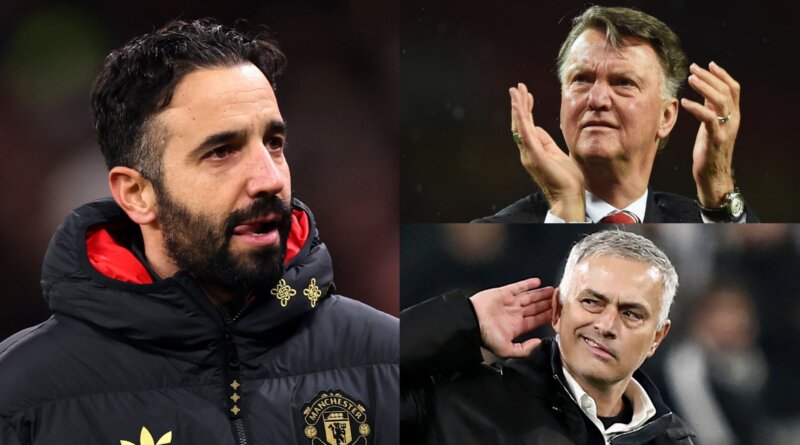
Ruben Amorim’s Manchester United Tenure: Where Does He Rank Among Post-Ferguson Managers?
Ruben Amorim’s Manchester United spell stands as one of the most disappointing chapters in the club’s modern history. Appointed amid high expectations in October 2024, the Portuguese coach—once hailed as a rising star following his success at Sporting CP—was dismissed after less than 14 months at Old Trafford. His tenure is now widely debated among fans and pundits, with many questioning where he ranks among the Red Devils’ post-Sir Alex Ferguson managers.
Ruben Amorim’s Rocky Road at Old Trafford
Ruben Amorim arrived at Manchester United with a reputation for tactical innovation and two Primeira Liga titles. Hopes were high that he could spark a transformation similar to Mikel Arteta at Arsenal. Backed by club co-owner Sir Jim Ratcliffe and CEO Omar Berrada, Amorim was handed significant transfer resources, with United’s net summer spend trailing only Liverpool and Arsenal. Bryan Mbeumo, Matheus Cunha, and Benjamin Sesko were secured for a combined £208 million, giving Amorim the tools to build his vision.
However, results quickly turned sour. Amorim’s rigid 3-4-3 system failed to adapt to the Premier League’s demands, while his frank press conferences often created negative headlines. Without European football to distract from the domestic campaign, United slumped to their lowest league finish—15th—since 1974. His win percentage of just 38.7% was alarmingly poor, even compared to David Moyes’ 52% during his turbulent transition from Sir Alex Ferguson.
Comparing Amorim to Other United Managers
Amorim was not the first post-Ferguson manager to struggle. David Moyes, the “Chosen One,” also suffered after inheriting an aging squad and a turbulent transfer window, but his challenges were compounded by the simultaneous departure of CEO David Gill. Moyes finished seventh and was sacked before the season’s end.
Ralf Rangnick’s interim spell brought initial optimism, but United ultimately finished with their lowest Premier League points tally until Amorim’s reign. Louis van Gaal and Jose Mourinho both delivered silverware—Van Gaal winning the FA Cup and Mourinho claiming the Europa League and Carabao Cup—but were criticized for uninspiring football and fractious dressing rooms.
Ole Gunnar Solskjaer, despite a memorable start and back-to-back top-four finishes, also fell short of restoring United’s glory. Erik ten Hag appeared to have steadied the ship with cup wins and a third-place league finish, but inconsistency and a lackluster second campaign led to his departure.
Key Moments from Amorim’s Tenure
Despite an overall bleak picture, Amorim’s time at United was not without highlights. The team ended a decade-long wait for a win at Anfield, managed a dramatic derby victory at Manchester City, and reached the Europa League final in Bilbao. However, a final defeat to Tottenham denied them Champions League qualification, erasing most of the goodwill earned during the cup run.
In the league, United faltered against struggling opposition, dropping points at Old Trafford to Wolves, West Ham, and Bournemouth. A shocking home loss to a 10-man Everton side underscored the team’s lack of progress and ultimately sealed Amorim’s fate.
Amorim’s Legacy: The Toughest Spell in the Modern Era?
Statistically, Ruben Amorim’s Manchester United record makes grim reading. No permanent boss in the post-Ferguson era has posted a lower win percentage or overseen such a poor league finish. Unlike Moyes, who inherited a declining squad, Amorim had resources, time, and a favorable fixture list—yet could not inspire improvement.
While his European run provided a brief respite, the inability to secure Champions League football or deliver consistent league performances means his reputation in English football has suffered. A return to Portugal, possibly with Benfica, appears the logical next step.
How Does Amorim Compare to His Predecessors?
Ranking United’s post-Ferguson managers is no easy task, but based on results alone, Amorim’s tenure stands as the least successful. While each coach faced unique challenges—be it lack of support (Moyes), dressing room unrest (Mourinho), or high expectations (Ten Hag)—none presided over as sharp a decline or delivered as little progress on the pitch as Amorim.
For a full look back at United’s managerial history and to contextualize Amorim’s tenure, visit our homepage for more news and exclusive analysis.
Opinion: A Cautionary Tale for United’s Future
Ruben Amorim’s brief and turbulent spell at Manchester United should serve as a warning for the club’s leadership. Ambition and resources are vital, but so too is adaptability and communication. United’s willingness to invest in youth and new ideas is encouraging, but patience and pragmatism must guide their next appointment. For Amorim, a return home could offer the fresh start needed to rebuild his once-bright coaching reputation.
Your global gateway to nonstop football coverage:
News Goal
Share this content: