
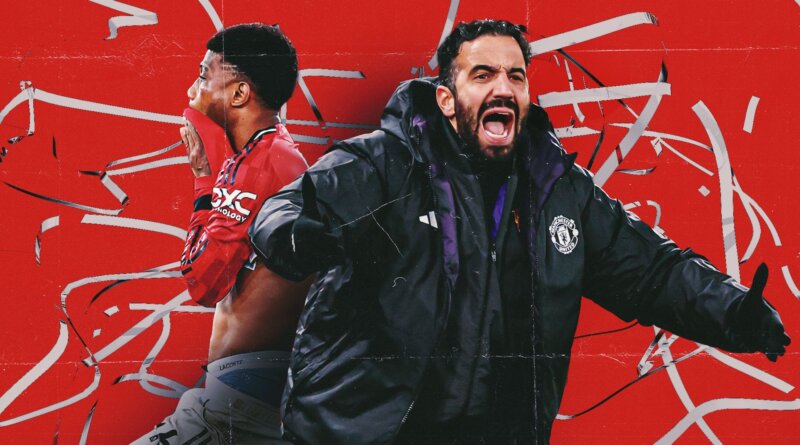
Ruben Amorim’s Rigid Tactics Stalling Manchester United
Ruben Amorim’s rigid tactics are under the spotlight at Manchester United after a frustrating anniversary match against Everton exposed the limitations of his unwavering 3-4-3 formation. Despite facing ten men for more than 77 minutes, United failed to break down their mid-table opponents and suffered a defeat that raised serious questions about the team’s progress under the Portuguese manager.
Ruben Amorim’s Tactics Under the Microscope After Everton Defeat
Ruben Amorim’s anniversary at the helm was meant to mark a turning point for Manchester United, but instead, it felt like a regression. Facing an Everton side reduced to ten men early on, United couldn’t seize the initiative. Amorim, candid in his post-match interview, admitted that Everton’s desire—even evidenced in their internal conflicts—was something his own side lacked. He said, “I hope my players, when they lose the ball, fight each other.” Yet, he stopped short of blaming the players directly, reiterating that it was his responsibility to explain how to play in every situation.
System Exposed: The Risks of Rigidity
However, the real culprit seemed to be Amorim’s rigid tactical system. When Idrissa Gueye’s red card changed the dynamic, United failed to adapt. The 3-4-3 formation, which has been Amorim’s hallmark, became a straitjacket rather than a weapon. While United have previously capitalized on similar situations, as against Chelsea earlier this season, this time they lacked the same urgency and flexibility. Everton, even with one less player, clogged the midfield, preventing Casemiro and Bruno Fernandes from making a single first-half tackle.
Wing-Back Woes and Ineffective Changes
With the centre of the pitch blocked, United tried to build attacks from wide areas, only for their limitations to show. Patrick Dorgu and Noussair Mazraoui offered little going forward, and Amorim’s halftime change—swapping Mazraoui for Mason Mount—failed to ignite the attack. Amad Diallo’s move to right wing-back brought some promise, but the left remained static. Introducing Diogo Dalot, a right-footer, further limited United’s options on the left, forcing play into areas where Everton were most comfortable.
The Luke Shaw Dilemma: Playing Out of Position
Luke Shaw, a natural left-back, found himself shackled by system demands as a left-sided centre-back. As pundit Gary Neville observed, Shaw’s ability to attack was wasted, as he played safe, sideways passes rather than surging forward. Deploying Dalot on the left exacerbated the issue, leaving United blunt and predictable. Their best chance came from Shaw’s cross to Joshua Zirkzee, but it was a rare moment in a largely uninspired attacking display.
No Plan Against Ten Men: A Recurring Theme
The failure to adapt was glaring. “It looked like they hadn’t planned how to play against 10 men,” Neville said, urging that United should have stretched the field and moved the ball with greater intensity. The absence of key forwards Matheus Cunha and Benjamin Sesko, worth a combined £136m, was not used as an excuse by Amorim, but their absence highlighted the need for tactical flexibility—especially with more players set to depart for the African Nations Cup.
Ruben Amorim’s Rigid Tactics: A Barrier to Progress
Amorim insists that desire is more important than formation, but his system does not play to his players’ strengths. Jamie Carragher questioned his refusal to adapt, especially in situations where a change in approach is clearly warranted. While Amorim’s tactics have worked in previous jobs, United’s inability to break down a determined but limited Everton side, even with a numerical advantage, erased the optimism built during their recent unbeaten streak.
United Must Adapt to Move Forward
The defeat to Everton highlighted how far Manchester United remain from challenging at the top. Amorim was frank about the team’s shortcomings, but his assertion that perfection is needed to win games missed the point. Fans crave common sense and the willingness to adapt, not rigid perfection. Until Amorim demonstrates flexibility and frees United from the constraints of his preferred formation, progress will remain painfully slow.
Opinion: Adaptation Is Key to Manchester United’s Future
In my view, Ruben Amorim’s reluctance to adapt his tactical approach is holding Manchester United back at crucial moments. Football requires flexibility, especially at the top level. If Amorim can blend his core principles with a willingness to innovate and make changes in-game, United could finally start to fulfill their potential. For now, the team’s ambitions remain shackled by a tactical straitjacket that is out of place in the fast-evolving Premier League.
For more updates, visit our homepage for more news.
Your global gateway to nonstop football coverage:
News Goal
Share this content: