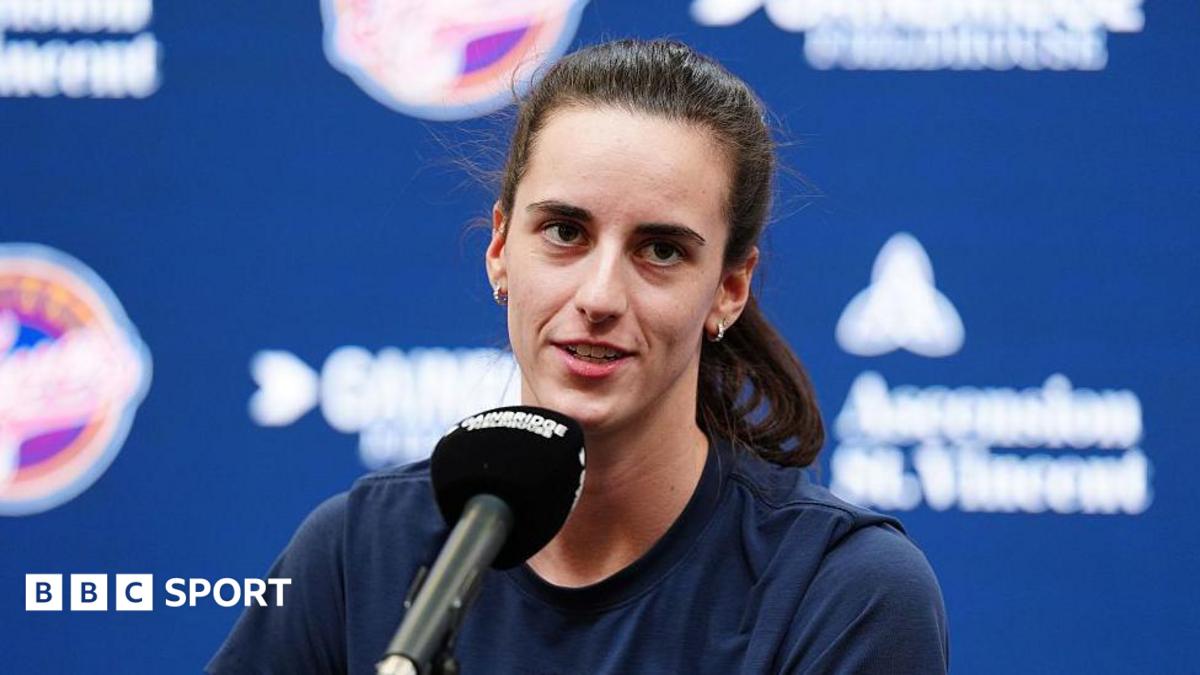
NBA commissioner Adam Silver has stepped into one of the most charged conversations in American sport, saying Indiana Fever guard Caitlin Clark has become a “political football” and that the wider debate over how she is officiated is not simply about refereeing. The comments add another layer to a story that has moved well beyond the court and into the culture-war space that now often surrounds major women’s sport in the United States.
Clark’s profile has made every hard foul, whistle and no-call feel amplified. That is not unusual for a player who has become the face of a league, but it does mean the discussion around her is rarely confined to basketball logic alone. Silver’s intervention suggests the issue has become as much about public perception, media framing and fan identity as it is about the mechanics of officiating.
Why the debate matters for the Fever
For Indiana, this is not just a talking point. The Fever are trying to build around a player whose presence changes the scale of every game they play. When a star attracts this level of attention, opponents defend more aggressively, officials are scrutinised more closely and every emotional reaction becomes part of the story. That can be a burden, but it is also a sign of how central Clark has become to the league’s visibility.
Her frustration boiled over this week when she reacted angrily to refereeing decisions and used an expletive. Those moments matter because they show the pressure that comes with being the most discussed player in the sport. They also feed the cycle: the more Clark reacts, the more the debate intensifies, and the more every future call is analysed through a political or emotional lens.
Officiating, optics and the modern star player
Silver’s remarks point to a broader truth about elite sport in the social media era. Officiating controversies no longer stay within the game report. They are instantly reframed through identity, popularity and grievance. In Clark’s case, that means the conversation can quickly shift from basketball fundamentals to arguments about fairness, protection and whether the league is handling its biggest attraction properly.
For supporters of the Fever, the immediate concern will be whether Clark can keep her focus and whether the team can channel the noise into performances rather than distractions. For the WNBA, the challenge is even bigger: how to protect the integrity of officiating while managing the reality that its most marketable star now sits at the centre of a national argument.
Whatever side of the debate fans take, Silver’s comments underline that this is no longer a routine refereeing complaint. Clark’s treatment on the floor has become a flashpoint, and the league now has to navigate both the basketball and the politics around it.
Source note: This article was prepared using publicly available information from BBC Sport and expanded with editorial context.
Share this content: