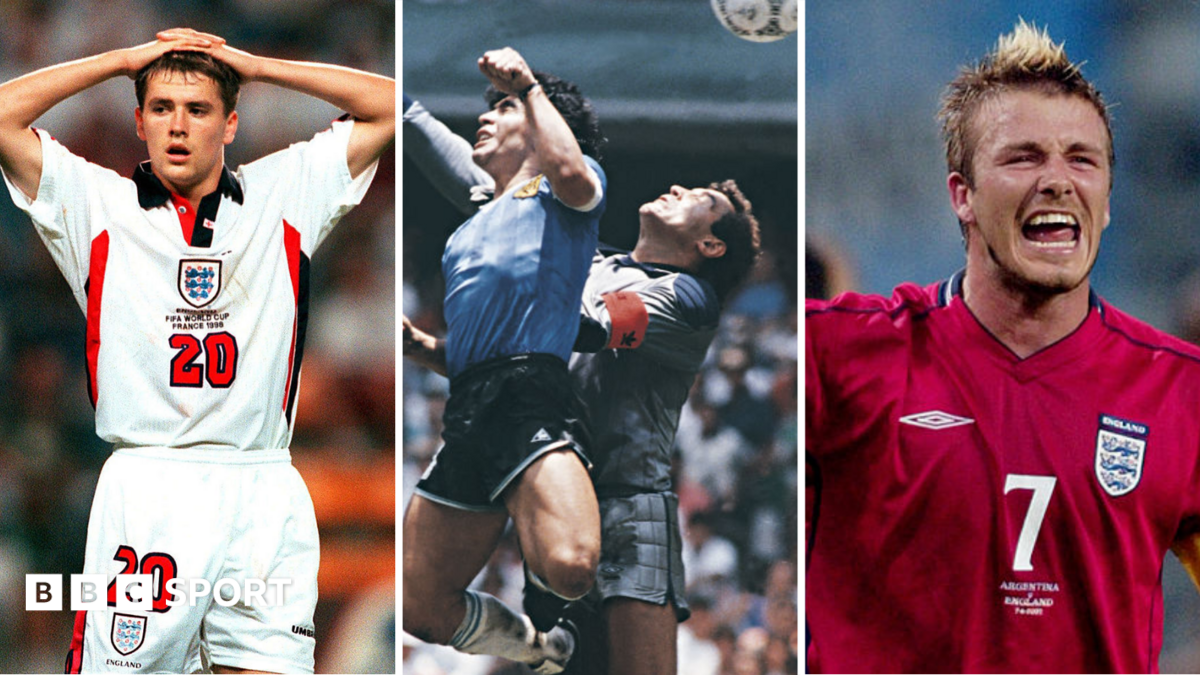
Few international rivalries carry the same emotional weight as Argentina against England. It is not just a football fixture; it is a meeting point for history, memory and national identity, with World Cup meetings repeatedly giving the contest a significance that goes far beyond the pitch.
BBC Sport’s latest feature revisits that story, highlighting how the rivalry has been shaped by moments that football supporters still talk about decades later. The 1986 World Cup remains central to the narrative, with Diego Maradona’s “Hand of God” goal becoming one of the most famous and controversial incidents in the sport’s history. For England fans, it is a wound that has never fully faded. For Argentina supporters, it is part of a wider legacy of triumph and defiance.
A rivalry built on World Cup drama
What makes Argentina versus England so enduring is that the football has always been tied to something larger. These are two nations with proud football cultures, and when they meet on the World Cup stage, the stakes feel amplified. The tension is not manufactured; it comes from the accumulation of decisive matches, disputed moments and the sense that each encounter adds another layer to an already loaded history.
That is why even a feature revisiting the rivalry lands with relevance for modern supporters. In an era when international football can sometimes feel fragmented between club loyalties and tournament cycles, this is one of the rare fixtures that still carries instant recognition. It is a reminder that World Cup football can create narratives that last for generations, not just for one tournament.
Why the Beckham link still matters
The BBC piece also points to David Beckham, whose own World Cup story became part of England’s wider relationship with Argentina. Beckham’s name remains attached to one of the most emotionally charged chapters in England’s tournament history, and his inclusion in any discussion of the rivalry underlines how individual players can become symbols of national expectation, pressure and redemption.
For supporters, that matters because it explains why this fixture is never treated like an ordinary international match. It is about legacy as much as line-ups, and about how one incident can define public memory for years. That is especially true in World Cup football, where a single game can alter the way an entire generation views a team or a player.
BBC Sport’s look back at Argentina and England is therefore more than a nostalgia piece. It is a reminder that football rivalries are built through repeated moments of tension, brilliance and controversy. And when these two nations are mentioned together, the conversation still immediately turns to the World Cup, to history, and to the emotional force of matches that have outlived the tournaments in which they were played.
Source note: This article was prepared using publicly available information from BBC Sport and expanded with editorial context.
Share this content: