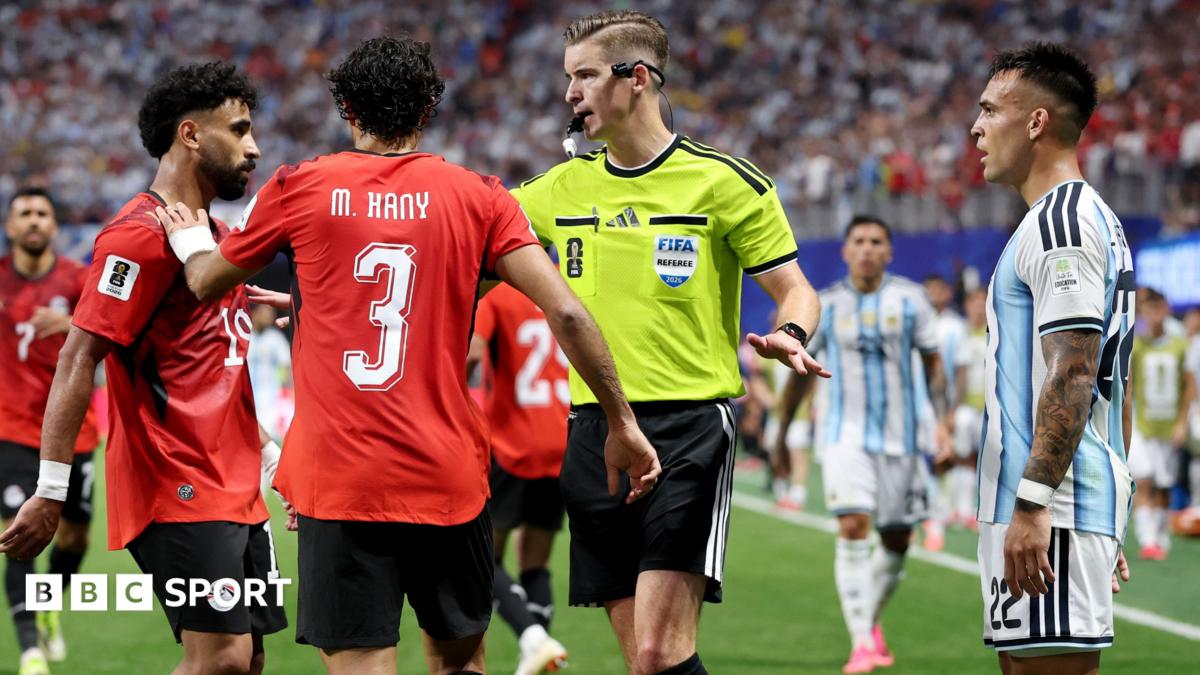
Argentina’s football association has raised the possibility that its official email accounts were compromised after messages reportedly appeared to criticise the refereeing in the national team’s 3-2 win over Egypt at the World Cup. The allegation is still at the level of suspicion rather than confirmation, but it is serious enough to put cyber security and communications control under the spotlight.
For supporters, the immediate football angle is not the technical detail of the breach itself, but what it says about the pressure surrounding a major tournament. When a federation’s official channels are involved in a dispute over officiating, the story can quickly move beyond a single match and into questions of governance, reputation and internal security. In a World Cup environment, even a short-lived compromise can create confusion and damage trust.
Why the incident matters beyond one match
Argentina’s 3-2 victory over Egypt is already the kind of result that invites scrutiny, especially when refereeing is mentioned. If the emails were genuinely sent from official accounts, they would suggest a formal complaint or at least a public-facing frustration with the match officials. If the accounts were hacked, the federation faces a different problem: the risk that false or unauthorised messages can shape the public narrative around the team.
Either way, the episode highlights how modern football is now tied to digital security as much as on-pitch performance. Federations, clubs and tournament organisers all rely on official communications to manage media, supporters and disciplinary issues. A breach can be as disruptive as a poor result because it can influence how a team is perceived in the hours after a match.
What it means for Argentina and their supporters
For Argentina, the practical concern is whether this becomes a wider administrative issue or remains an isolated incident. The team’s focus should be on the tournament itself, but off-field distractions can still affect preparation and public messaging. Supporters will want clarity on whether the emails were authentic, whether any sensitive information was exposed and whether the federation’s systems are secure.
From a football perspective, the incident also underlines how quickly officiating controversies can escalate when a national team is involved. A narrow 3-2 win is the sort of scoreline that naturally produces debate, and any suggestion of official criticism only intensifies that conversation. Until the federation provides more detail, the story sits in a grey area: important, potentially damaging, but not yet fully verified.
BBC Sport’s report leaves the central question unresolved, and that is why caution is essential. At this stage, the only confirmed point is that Argentina’s football association believes it may have been targeted. The next step is whether investigators can establish how the emails appeared, who sent them and whether the federation’s accounts were actually breached.
Source note: This article was prepared using publicly available information from BBC Sport and expanded with editorial context.
Share this content: