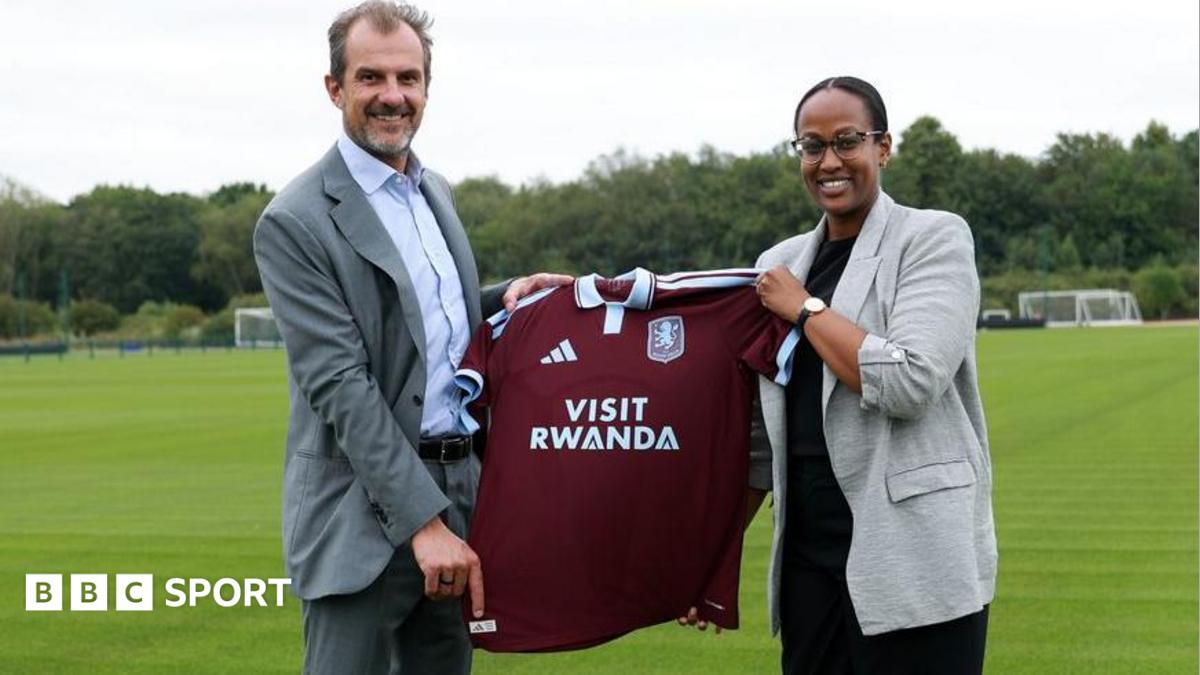
Aston Villa’s new sponsorship agreement with Visit Rwanda has quickly become more than a commercial football story. The reported £20m-a-year deal brings significant financial value to the Premier League club, but it has also triggered criticism and renewed scrutiny over the role football sponsorships can play in shaping public perception of governments and national brands.
The central concern is not about the shirt, the stadium or the training ground. It is about what the partnership represents. Critics have warned that Rwanda could use the visibility of a high-profile Premier League association to soften or distract from questions around its human rights record. That is why the deal has landed in a wider debate that goes well beyond Aston Villa’s balance sheet.
Why the deal matters beyond Villa Park
For Villa, this is a major commercial move. A sponsorship of this scale underlines the club’s growing market value and its ability to attract global partners. In modern football, such agreements can help fund recruitment, infrastructure and long-term competitiveness, especially for clubs trying to close the gap on the league’s biggest spenders.
But the backlash shows how sponsorship decisions are now judged not only on revenue, but on reputation. Supporters are increasingly aware that commercial partnerships can carry political and ethical baggage. For clubs, that creates a difficult calculation: the financial upside may be obvious, but the public response can be far more complicated.
Rwanda’s football strategy and the wider context
The reference point here is Bayern Munich, who announced last August that they were transitioning away from their commercial sponsorship with Visit Rwanda. Instead, the German club said the relationship would focus on expanding their academy in Kigali with Rwanda’s Ministry of Sports. That shift is important because it shows how elite clubs can reframe a relationship when the commercial optics become too sensitive.
For Aston Villa, the timing means the club will now have to manage the conversation carefully. Commercial partnerships are a routine part of elite football, but not all sponsors are viewed in the same way. When a deal becomes tied to political criticism, it can affect how fans, rivals and the wider football public interpret the club’s off-pitch decisions.
Supporters will likely see two competing truths at once. On one hand, Villa are securing a lucrative agreement that reflects their rising profile. On the other, the club is attaching its name to a sponsor whose presence in football has already been contested elsewhere. That tension is now part of the story, and it is unlikely to disappear quickly.
In practical terms, the football impact is indirect but real. Sponsorship controversies can shape the tone around a club, influence supporter sentiment and add pressure on executives to justify commercial choices. For a club with ambitions on the pitch, the challenge is to ensure that off-field headlines do not overshadow progress in the squad and in the stands.
Source note: This article was prepared using publicly available information from BBC Sport and expanded with editorial context.
Share this content: