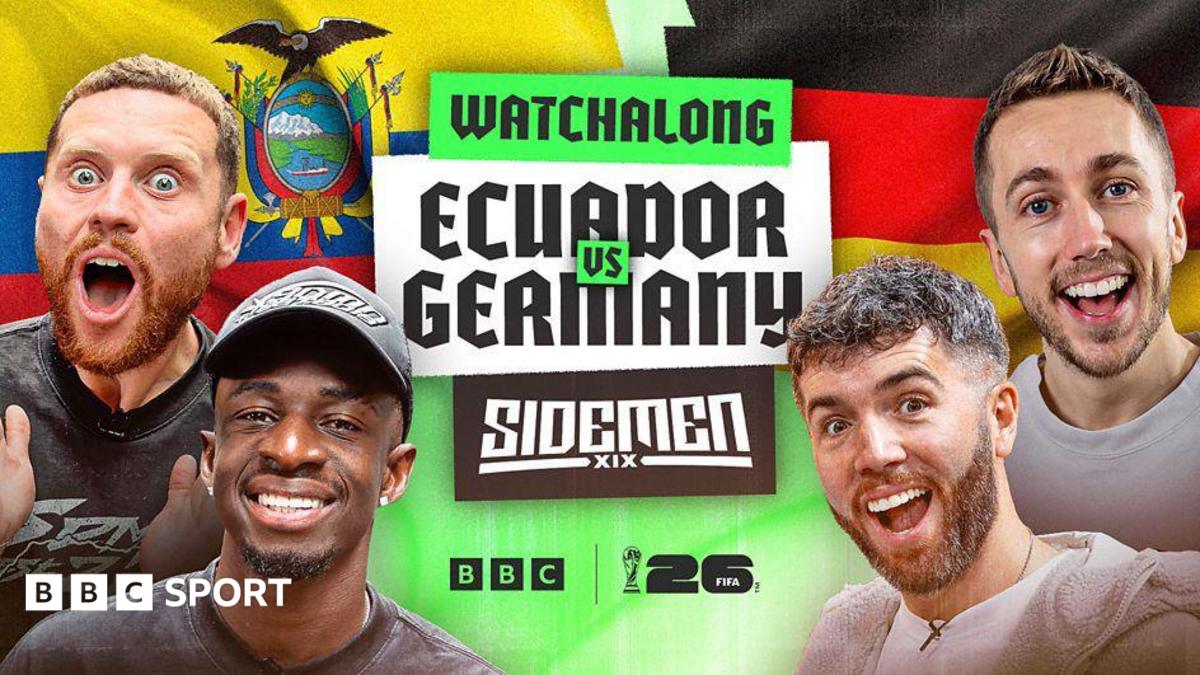
BBC Sport is set to broaden its World Cup coverage with a watchalong produced alongside the Sidemen for Germany’s group match against Ecuador on Thursday. The collaboration will be available on YouTube and BBC iPlayer, giving supporters another way to follow one of the tournament’s group-stage fixtures.
The move reflects how major broadcasters are increasingly blending traditional sports coverage with creator-led formats. For BBC Sport, the partnership offers a route to a younger digital audience, while the Sidemen bring a large online following and a style that is built around live reaction, commentary and fan engagement. In tournament football, where matches are often watched in groups and across multiple platforms, that kind of format can add a different layer to the viewing experience.
What the watchalong means for World Cup coverage
Watchalongs have become a familiar part of modern football media because they sit between analysis and entertainment. They do not replace live match coverage, but they can complement it by creating a more social, interactive atmosphere around a game. For a World Cup fixture, that matters: group-stage matches can be decisive, but they also need to hold attention in a crowded broadcast landscape.
Germany’s meeting with Ecuador is the kind of game that can benefit from that extra framing. Germany are one of the tournament’s most recognisable teams, and any group match involving them tends to draw interest beyond the immediate stakes of qualification. Ecuador, meanwhile, will be looking to make the most of a high-profile platform and test themselves against elite opposition in a match that could shape the group picture.
Why broadcasters are leaning into creator partnerships
For supporters, the appeal is straightforward: a watchalong can make a big match feel more immediate and communal, especially when it is available on widely used digital platforms. For BBC Sport, the partnership is also a signal that football coverage is continuing to evolve, with broadcasters seeking formats that can sit alongside live rights and traditional analysis.
There is also a wider commercial and editorial logic. Creator partnerships can help broadcasters remain relevant to audiences who consume football through clips, streams and social-first content rather than only through linear television. At the same time, the BBC’s involvement gives the project a mainstream sporting platform and a level of editorial visibility that can help it reach beyond the Sidemen’s core audience.
For fans, the key takeaway is simple: Thursday’s Germany vs Ecuador game will not just be another World Cup group fixture, but also part of a broader experiment in how football is presented and consumed. If the format lands well, it could point to more hybrid coverage around future major tournaments.
Source note: This article was prepared using publicly available information from BBC Sport and expanded with editorial context.
Share this content: