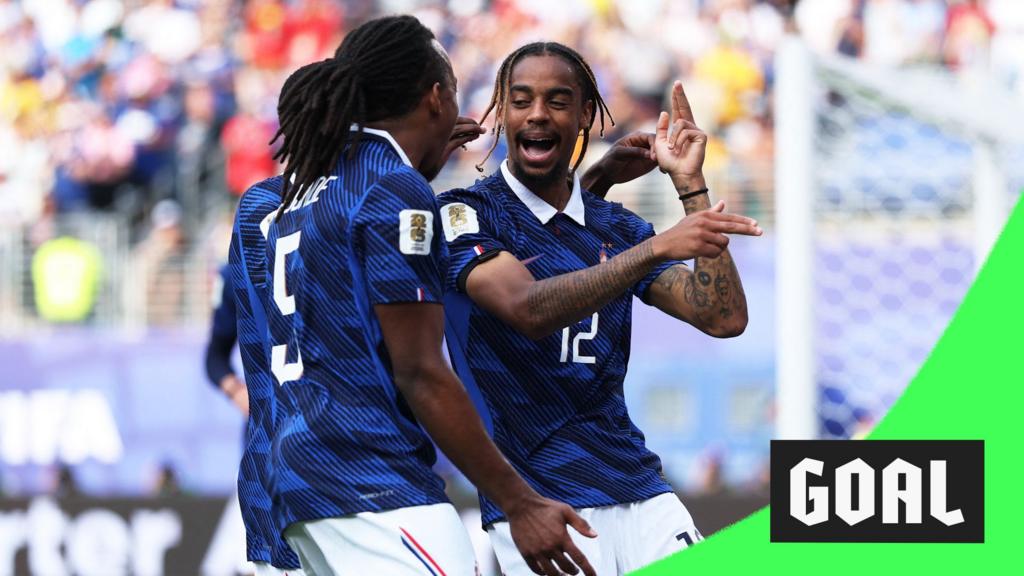
Bradley Barcola’s finish to double France’s lead against Sweden offered a clear reminder of why the Paris Saint-Germain forward has become such an important attacking option for his country. In a World Cup round-of-32 match at New York New Jersey Stadium, France’s second goal gave them a stronger grip on the contest and shifted the pressure firmly onto Sweden.
France’s attacking depth pays off
For France, a goal like Barcola’s is more than just a scoreline update. It reflects the kind of depth that has long made them one of international football’s most difficult teams to contain. When a side can add a second goal through a player who brings pace, direct running and composure in front of goal, it changes the rhythm of the match and forces the opposition to open up.
That matters especially in knockout football, where control is often as important as creativity. A two-goal cushion can allow France to manage the game more efficiently, reduce risk in possession and make Sweden chase the match in areas they may not want to. For supporters, it is the sort of moment that turns tension into confidence and gives the team room to dictate the next phase of play.
What the goal means for Barcola and France
Barcola’s contribution also carries wider significance for his standing in the squad. Goals in major tournament matches are the moments that shape reputations, particularly for younger attackers competing in a squad packed with elite talent. Delivering in a round-of-32 tie strengthens the case for his continued involvement and highlights the trust placed in him by the France setup.
From a tactical perspective, Barcola’s ability to finish emphatically is valuable because it rewards France’s forward movement and transition play. Teams facing France must account not only for established stars but also for players who can exploit space quickly and punish any lapse in concentration. That combination is one of the reasons France remain so dangerous in tournament football.
For Sweden, conceding a second goal in a knockout match creates a difficult challenge. It narrows the margin for error and increases the need for a response without leaving further space behind. In games of this type, the timing of the next goal can be decisive, and France’s second strike gave them a major advantage in that battle.
Barcola’s goal, then, was not just a highlight clip. It was a statement of control, a sign of France’s depth, and a moment that could shape the rest of the tie.
Source note: This article was prepared using publicly available information from BBC Sport and expanded with editorial context.
Share this content: