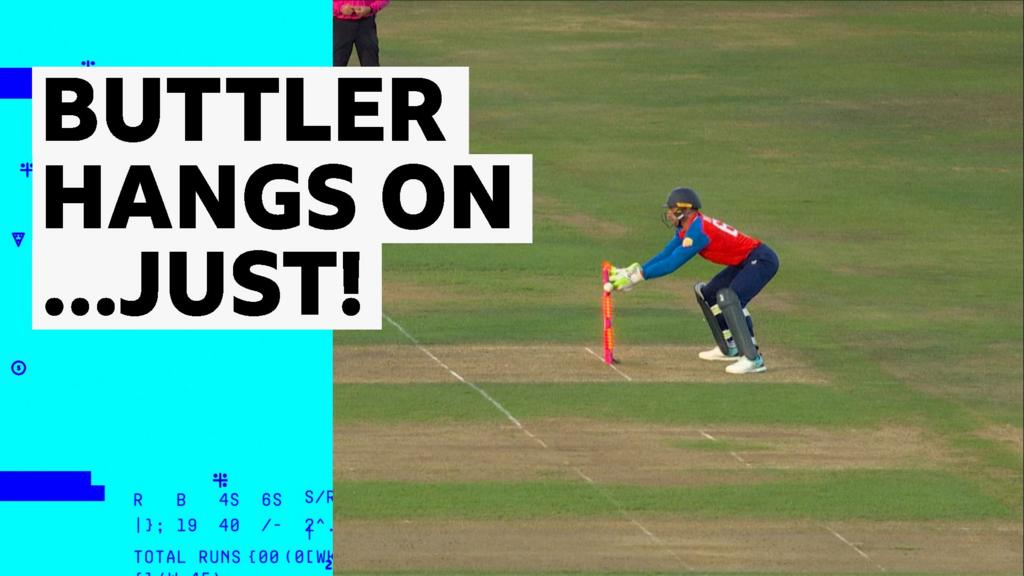
Jos Buttler’s dismissal of Tilak Varma at Trent Bridge was the kind of moment that can swing a match without producing a huge scoreline or a long highlight reel. It was a stumping decided by the smallest of margins, with Buttler keeping control of the ball just long enough to complete the dismissal before it slipped away. For England, it was a reminder of how valuable sharp wicketkeeping can be in pressure situations. For India, it was the sort of wicket that can feel especially costly because it came down to inches rather than a clear error.
In modern limited-overs cricket, wicketkeepers are often judged not just on catches and runs but on their ability to turn half-chances into dismissals. Buttler’s intervention fits that mould. The fact that he was able to finish the stumping at all speaks to the speed of his hands and his awareness around the stumps, even if the execution looked almost accidental to the naked eye. Those are the moments that separate routine fielding from match-defining alertness.
Why the dismissal mattered
Tilak Varma’s wicket matters because it came in a format where momentum can change quickly. A batter set at the crease can force a fielding side to defend deeper, rotate bowlers more aggressively, and alter the tempo of the innings. Removing that batter through a stumping not only ends a partnership, it can also disrupt the batting side’s rhythm and force a reset. England will have valued that kind of pressure release, especially in front of a home crowd eager for decisive fielding moments.
For supporters, this was the sort of play that reinforces why Buttler remains such a central figure in England’s white-ball setup. He is known primarily for his batting, but dismissals like this underline the broader value of a wicketkeeper who can influence the game in multiple phases. Even when the ball appears to have escaped, the initial control and the split-second decision-making are what count.
What it says about both sides
From India’s perspective, the dismissal will likely be viewed as a frustrating one because it was so narrowly executed. There is little a batter can do when the keeper’s hands and the stumps align perfectly in a fraction of a second. But it also serves as a reminder that in high-level cricket, concentration must remain constant until the ball is fully dead. England, meanwhile, will take confidence from a passage of play that rewarded alertness and composure.
Moments like this do not always dominate the scorecard, but they often shape the tone of a contest. A fingertip stumping is the kind of dismissal that energises a fielding side, unsettles the batting side, and gives the crowd a flashpoint to remember. At Trent Bridge, Buttler delivered exactly that.
Source note: This article was prepared using publicly available information from BBC Sport and expanded with editorial context.
Share this content: