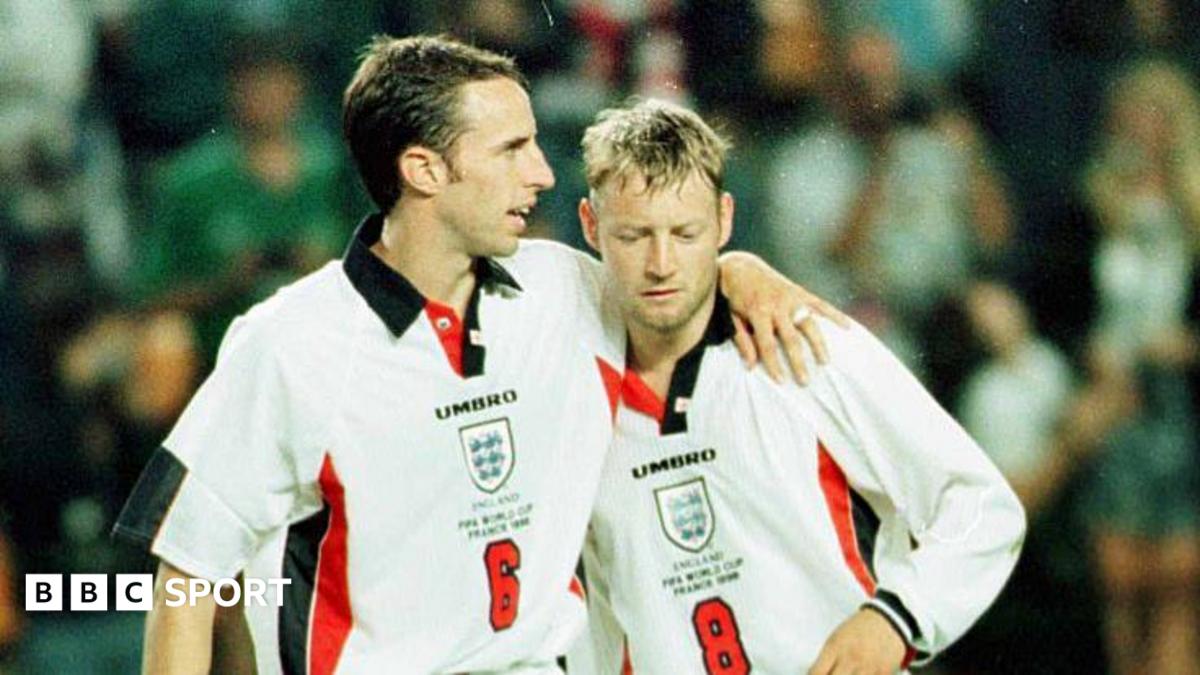
David Batty’s name remains tied to one of England’s most painful World Cup memories, but the BBC’s latest retrospective also underlines something easy to overlook: the midfielder was placed in an extraordinary situation. In 1998, Batty took what the source describes as his first professional penalty at a World Cup, a pressure point that helps explain why the moment has lingered for so long in English football memory.
That context matters. Batty was never known as a penalty specialist, and the fact that he was asked to step up in such a high-stakes knockout environment says as much about tournament football as it does about the player himself. World Cups often turn on tiny margins, and when a defensive midfielder is suddenly asked to settle a match from the spot, the psychological burden can be immense.
A moment that outlived the match
The source frames Batty’s miss against Argentina not as a simple isolated error, but as a defining episode in a career that otherwise carried the hallmarks of reliability and discipline. That is why the story still resonates. Supporters do not remember the miss only because it happened in a shootout; they remember it because it came in a tournament England believed it could win, against a major rival, with the margin for failure effectively gone.
For England fans, the episode became part of the wider narrative of near-misses at major tournaments. For Batty, it became an unfairly dominant shorthand for a player whose value was built on control, work rate and tactical balance rather than headline moments. In that sense, the BBC piece is useful because it restores proportion to the story: one kick did not define the totality of his career, even if it defined a public memory.
Why the story still matters to supporters
Retrospectives like this continue to matter because they show how football history is shaped by pressure as much as by talent. Batty’s case is a reminder that tournament shootouts can force players into roles they rarely, if ever, perform for their clubs. That is especially true for midfielders whose job is usually to break up play, protect space and keep possession moving rather than decide matches from 12 yards.
For supporters, the article offers a chance to revisit a familiar moment with more nuance. It is not just about a miss; it is about the circumstances surrounding it, the rarity of the task, and the way a single event can follow a player long after the final whistle. That broader perspective is what gives the BBC’s piece its value.
Batty’s 1998 penalty remains one of those moments that football refuses to forget. But the more interesting story is how a player known for steadiness ended up carrying such an unusual burden on the game’s biggest stage.
Source note: This article was prepared using publicly available information from BBC Sport and expanded with editorial context.
Share this content: