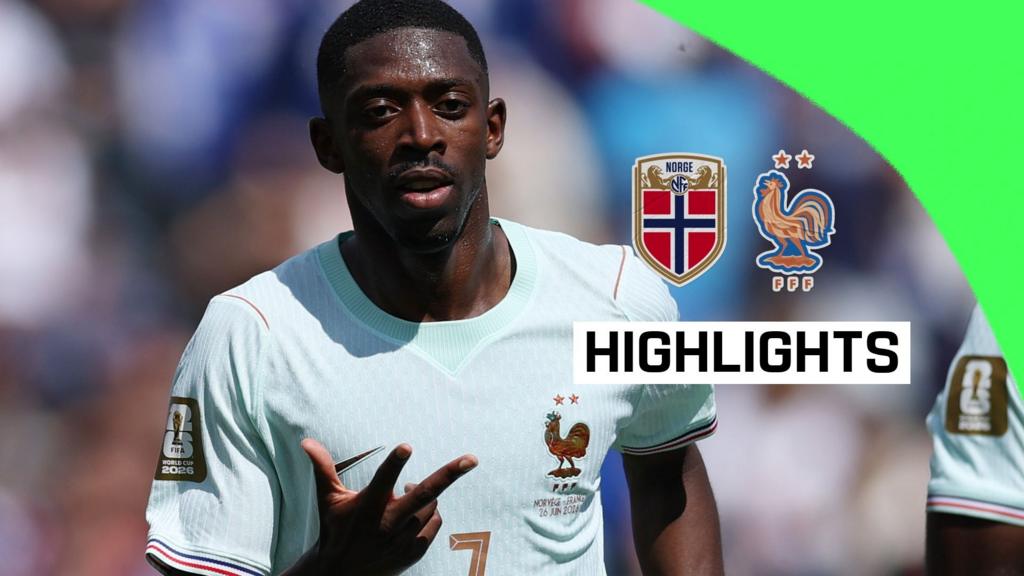
France’s 4-1 win over Norway was defined by one player and one decisive spell: Ousmane Dembélé’s first-half hat-trick. In a match that quickly tilted toward the French, the forward’s finishing gave Les Bleus control before the interval and ensured they finished the night at the top of Group I at the FIFA World Cup 2026.
Dembélé’s burst changes the shape of the group
Hat-tricks at international level are rare enough; doing it before half-time in a World Cup group match is the kind of statement that can reshape a campaign. Dembélé’s treble not only settled the contest early, it also underlined France’s depth in attacking areas. When a team can lean on a player who can decide a game in a short, explosive period, it changes the way opponents prepare and the way a group table begins to look.
For France, the scoreline matters beyond the three points. A convincing win in a competitive section is often as valuable psychologically as it is mathematically. It sends a message to the rest of the group that France can turn pressure into control quickly, and that they have the pace and precision to punish any lapse in concentration.
What Norway missed without Haaland
Norway’s task was made harder by the absence of Erling Haaland, and the result reflects how much attacking threat they lose when their leading striker is unavailable. Against a side with France’s quality, Norway needed a disciplined defensive display and a reliable outlet in transition. Without Haaland, that balance becomes much harder to find, especially once the game starts slipping away.
The 4-1 defeat will leave Norway with work to do in the group, not only in terms of points but also in restoring momentum. At this stage of a World Cup campaign, goal difference and confidence can matter almost as much as the result itself, and conceding four will be a concern for supporters looking for signs of resilience.
Why this result matters for supporters
For France fans, this is the kind of performance that builds belief. A dominant attacking display, a hat-trick from a marquee forward and a move to the top of the group all point to a side that is finding rhythm at the right time. For Norway supporters, the challenge now is to respond quickly and avoid letting one heavy defeat define the rest of the campaign.
In tournament football, momentum can shift fast. France have taken control of Group I for now, and Dembélé’s performance gives them a clear attacking reference point as the competition progresses.
The broader implication is simple: if France can combine this level of finishing with their usual tournament structure, they will be difficult to stop. If Norway are to recover, they will need to find a way to generate more threat even when their main striker is missing.
Source note: This article was prepared using publicly available information from BBC Sport and expanded with editorial context.
Share this content: