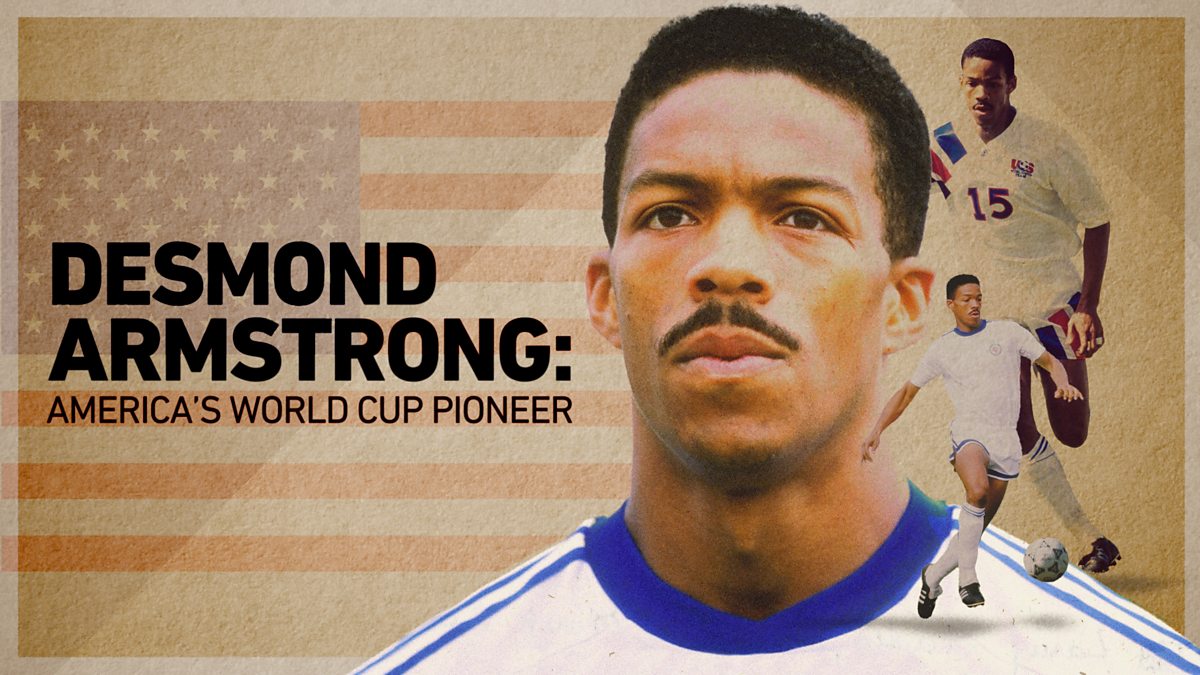
Desmond Armstrong’s story is more than a historical footnote. The BBC’s profile of the former United States defender revisits a player whose place in American football history is secure: he became the first US-born Black player to represent the United States men’s national team at a World Cup and was part of the squad that achieved qualification for Italia 90.
For supporters of the modern US game, that matters because the current national team stands on the foundations built by players like Armstrong. Long before the United States became a regular presence on the global stage, qualification itself was a breakthrough. Reaching the 1990 tournament in Italy signalled that American football was beginning to move from outsider status toward genuine international relevance.
A landmark figure in US football history
Armstrong’s significance is not only statistical. Being the first US-born Black player to appear for the national team at a World Cup placed him at the intersection of sporting progress and representation. In a sport that has often been shaped by questions of access, visibility and opportunity, his achievement carries a wider meaning for the game in the United States.
That context is important for today’s audience because the US men’s team continues to search for consistency at the top level. The modern squad benefits from deeper talent pools, stronger youth development and greater exposure to elite club football, but the pressure to convert that potential into tournament success remains. Stories such as Armstrong’s remind supporters that progress is rarely linear; it is built through individual pioneers who help widen the path for those who follow.
Why this legacy still resonates
The BBC’s decision to spotlight Armstrong as part of its broader football storytelling underlines how international tournaments are remembered not only for results, but for the people who made them possible. Italia 90 was a milestone for the United States, and Armstrong’s inclusion in that squad gives the moment a human face.
For fans, the takeaway is clear: the history of US football is richer than the recent rise of the men’s team suggests. Armstrong represents an era when simply qualifying for a World Cup was a major statement. That legacy still resonates because it frames the present-day ambitions of the national team in a longer, more demanding context — one where representation, resilience and competitive progress all matter.
As the United States continues to build toward future World Cup cycles, Armstrong’s place in the story serves as a reminder that football culture is shaped by pioneers as much as by trophies. His career helped open doors, and the modern game in the US still benefits from that breakthrough.
Source note: This article was prepared using publicly available information from BBC Sport and expanded with editorial context.
Share this content: