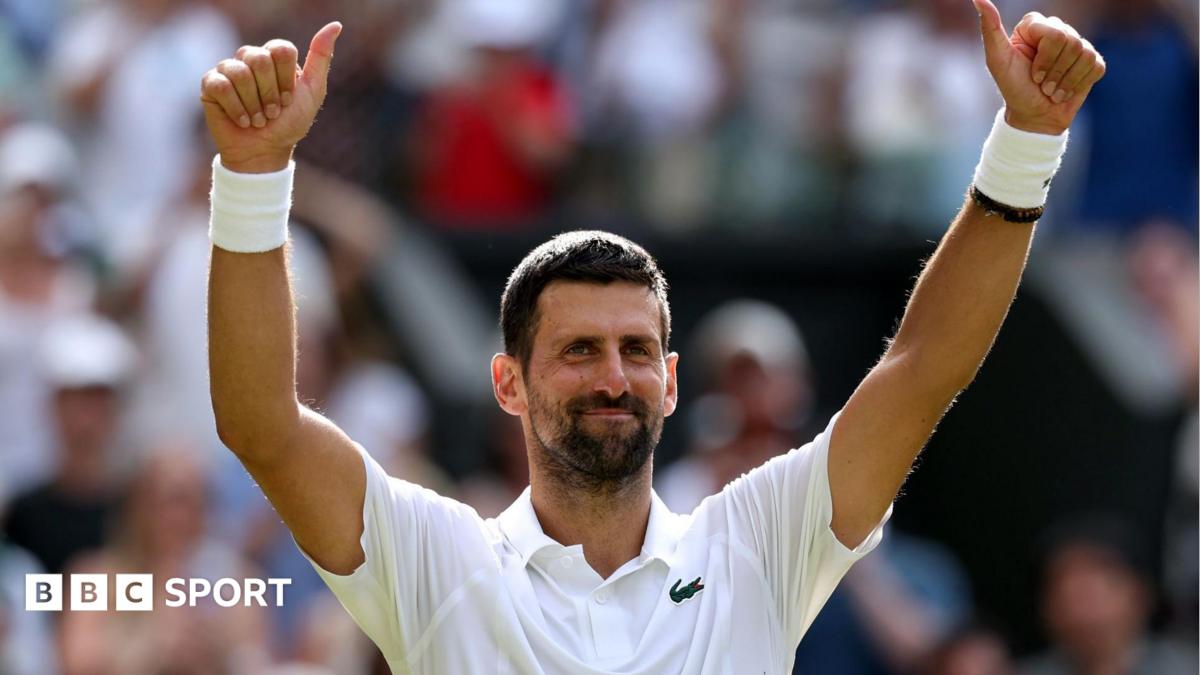
Novak Djokovic’s latest Wimbledon victory was about more than simply moving into the quarter-finals. By defeating qualifier Roman Safiullin, the Serbian also moved clear of Roger Federer for the all-time record for most men’s singles match wins at the Championships, adding another statistical landmark to a career already defined by them.
For supporters of the tournament, the significance is obvious: Wimbledon is where Djokovic’s legacy has become inseparable from the event’s modern history. Every deep run now carries the possibility of another record, another comparison with the greats, and another reminder that his grass-court consistency remains one of the sport’s defining advantages. Even when the performance is not at its cleanest, the result often still arrives.
A test that asked questions
The BBC report noted that Djokovic experienced moments of visible frustration against Safiullin, a sign that the match was not a straightforward procession. That matters because qualifiers can be dangerous at this stage of a Grand Slam: they arrive with rhythm, freedom and little to lose, while the top seed or defending force is expected to manage pressure, expectation and the weight of history all at once.
Djokovic’s ability to absorb that kind of challenge has long been one of his greatest strengths. He does not need every match to be fluent to remain the favourite; he needs control at the key points, and enough resilience to prevent a difficult spell from becoming a costly one. That is often the difference between a champion surviving a scare and a champion being dragged into a longer battle than planned.
What the record means now
Breaking Federer’s Wimbledon men’s singles wins record is another marker of Djokovic’s extraordinary longevity. It also reinforces how his game translates to grass: the return, the movement, the balance under pressure and the ability to reset after setbacks all remain central to his success. For rivals, that is the warning. Even when he is irritated or pushed off rhythm, he still tends to find a way through.
For Wimbledon followers, the quarter-final place keeps alive the possibility of another title charge and another chapter in a rivalry with the tournament’s record books. The performance may have contained frustration, but the outcome was familiar: Djokovic advanced, history shifted, and the draw now has to deal with him again.
That is the broader implication for the rest of the field. A player who can win while not at his sharpest is still the one everyone else must beat. At Wimbledon, that usually means the story is not just about one match, but about whether anyone can stop the next one.
Source note: This article was prepared using publicly available information from BBC Sport and expanded with editorial context.
Share this content: