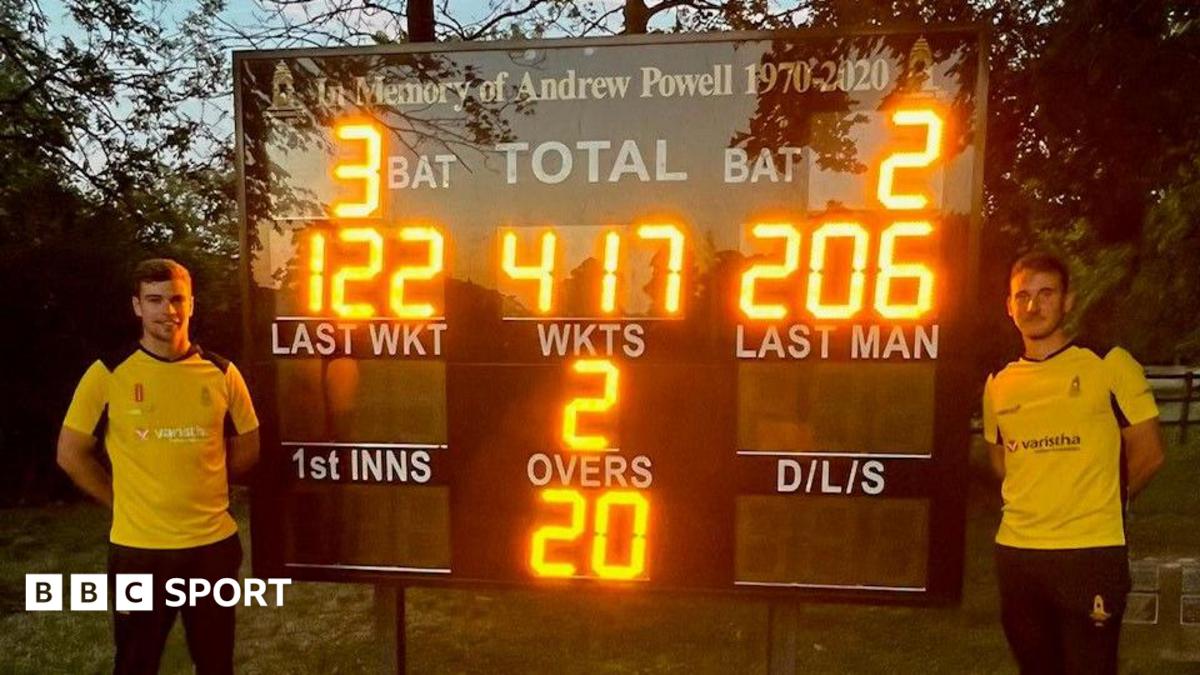
A club side from Gloucestershire has produced a score that immediately demands attention across the game: 417-2 from 20 overs. According to the BBC report, the team are now waiting to see whether that total is officially recognised as the highest ever recorded in T20 cricket.
For supporters, the headline number is striking not just because of its scale, but because of what it says about the modern white-ball game. Totals once considered match-winning are now being pushed into territory that can overwhelm bowling attacks and force opponents into damage-limitation mode from the first over. A score above 400 in a 20-over match is extraordinary by any standard, and it underlines how aggressively some sides are now approaching the format.
What the score means in T20 context
In T20 cricket, the balance between bat and ball is often shaped by powerplay batting, boundary-hitting depth and the ability to maintain scoring pressure through the middle overs. A total of 417-2 suggests a side that dominated every phase of the innings, preserved wickets, and kept the run rate at a level that would leave most opposition attacks with no realistic recovery route.
Even without the full scorecard details, the implication is clear: this was not a brief burst of hitting, but a sustained assault over the full 20 overs. That matters because record totals in short-format cricket are usually built on a combination of clean striking, disciplined running and a refusal to let the innings stall after early wickets. With only two wickets lost, Gloucestershire’s club side also showed the kind of control that often separates a good batting performance from a historic one.
Why the record claim matters
The BBC report makes clear that the side are still waiting for confirmation on whether the innings stands as the highest total in T20 history. That verification step is important because record claims in cricket depend on official recognition, competition context and the exact status of the match. Until that process is complete, the innings remains an astonishing benchmark rather than a confirmed world record.
For the club, though, the significance is already obvious. A score of this size can reshape how a team is viewed locally and beyond, bringing attention to the standard of batting in club cricket and highlighting how far scoring rates have evolved. For opponents, it is a reminder that in T20 cricket, even at non-professional level, a game can be taken away in a matter of overs if the bowling side cannot break momentum.
For readers following the sport, the story is a snapshot of cricket’s modern extremes: a format built for entertainment, now producing totals that once seemed impossible. If the score is confirmed as a record, it will sit among the most remarkable batting feats the short format has seen. If not, it will still be remembered as a statement innings that pushed the boundaries of what a club side can achieve in 20 overs.
Source note: This article was prepared using publicly available information from BBC Sport and expanded with editorial context.
Share this content: