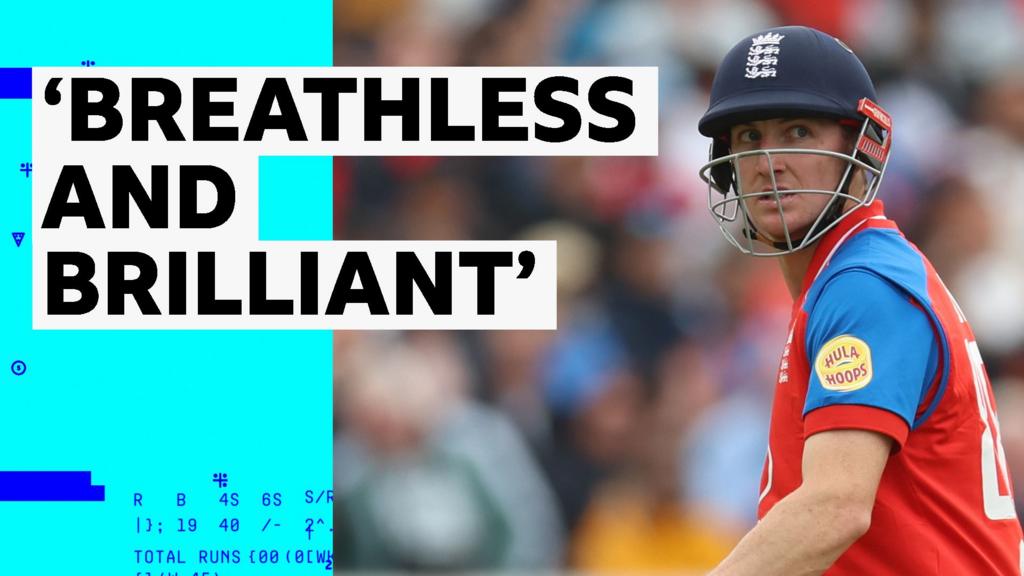
Harry Brook’s latest burst of power batting gave England the momentum they needed in the second T20 against India at Old Trafford, where the home side completed a four-wicket win after chasing 191. Brook’s 39 from just 15 balls was the defining passage of the chase, a short but decisive innings that shifted the pressure back onto India and underlined why England continue to view him as one of their most dangerous middle-order hitters.
Brook’s cameo changes the chase
England were not cruising when Brook arrived at the crease. The chase had already carried moments of tension, with the home side at 1-2 in the pursuit before Brook’s acceleration changed the tone of the innings. In a format where momentum can swing over the course of a handful of deliveries, his strike rate did more than add quick runs: it forced India to defend a total that had looked competitive and briefly put England on the back foot.
That is the value of Brook in T20 cricket. He does not need a long stay to influence a game, and this innings was another reminder that a brief spell of clean hitting can be enough to decide the result. For England supporters, it was the kind of innings that feels both entertaining and reassuring: entertaining because of the sheer speed of the scoring, reassuring because it showed the batting depth needed to finish off a tricky chase.
What the result means for England and India
Beating India by four wickets after chasing 191 is a significant result in any bilateral T20 series. India’s total suggested a contest that would test England’s composure, and the chase did require a response from the middle order. Brook provided that response, and England’s ability to get over the line will be encouraging as they look to build consistency in the shortest format.
For India, the defeat will raise familiar questions about defending a strong total away from home. A score of 191 is usually enough to put real pressure on an opponent, but England’s chase showed how quickly a game can change when one batter finds rhythm. The margin of four wickets suggests India were in the contest for much of the evening, yet Brook’s intervention ensured the visitors could not close it out.
From a tactical perspective, the innings also highlighted the importance of match-up batting in modern T20 cricket. When a player like Brook gets into his stride, captains are often forced into defensive fields and reactive bowling changes. That can open scoring options for the rest of the batting order, even if the innings itself is short. England will take confidence from that kind of flexibility, especially in a format where finishing power is often the difference between a good performance and a winning one.
For supporters, the headline is simple: England found a way to chase down a challenging target, and Brook once again supplied the spark. It was not a marathon innings, but it did not need to be. In T20 cricket, 15 balls can be enough to change everything.
Source note: This article was prepared using publicly available information from BBC Sport and expanded with editorial context.
Share this content: