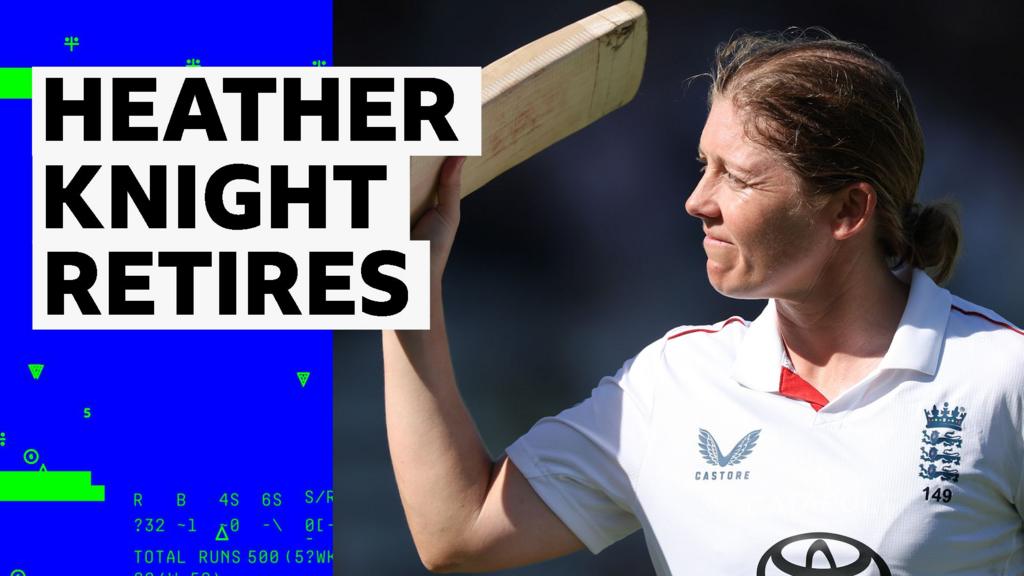
Heather Knight’s final appearance for England ended in familiar Test-match frustration at Lord’s, where the chase against India had already become a steep climb by the time she walked back after making 13. The dismissal, taken by Richa Ghosh, was more than just a scorecard entry: it marked the close of an England career moment on the grand old stage, with the home side already under severe pressure at 34-4 in pursuit of 457.
A difficult finish to a landmark England career
For supporters, the significance of Knight’s final innings goes beyond the numbers. She has been one of the defining figures of England women’s cricket in the modern era, and any farewell at Lord’s carries a weight that is hard to ignore. But cricket rarely offers a scripted ending, and this one was shaped by India’s control of the match and England’s early collapse in the chase.
The source footage captures the moment as a final dismissal, but the broader context is a reminder of how demanding Test cricket can be when a side is forced into a record-level chase. England needed a near-perfect fourth-innings response to make the target realistic, yet the loss of wickets quickly shifted the contest away from a competitive pursuit and into damage limitation.
What the dismissal says about the match
India’s position in the game was already strong, and England’s top-order problems made the task even harder. Being 34-4 while chasing 457 is the sort of scenario that leaves little room for recovery unless a partnership can settle the innings immediately. Knight’s departure therefore reflected not only an individual moment, but also the wider tactical failure of England to absorb pressure and build any momentum against a disciplined attack.
From a supporter’s perspective, the emotional layer is obvious. Farewells are usually judged by the result, but they are also judged by the memory they leave behind. Knight’s final England innings may not have produced the fairytale finish many would have wanted, yet it still served as a poignant marker of the end of an era.
For England, the challenge now is to move forward while acknowledging what Knight represented: leadership, consistency and a long period of influence at the top level. For India, the moment underlined their grip on the match and the composure that had put them in command at Lord’s.
In that sense, the dismissal was both a personal farewell and a reflection of the match itself — one side closing out a contest, the other closing a chapter.
Source note: This article was prepared using publicly available information from BBC Sport and expanded with editorial context.
Share this content: