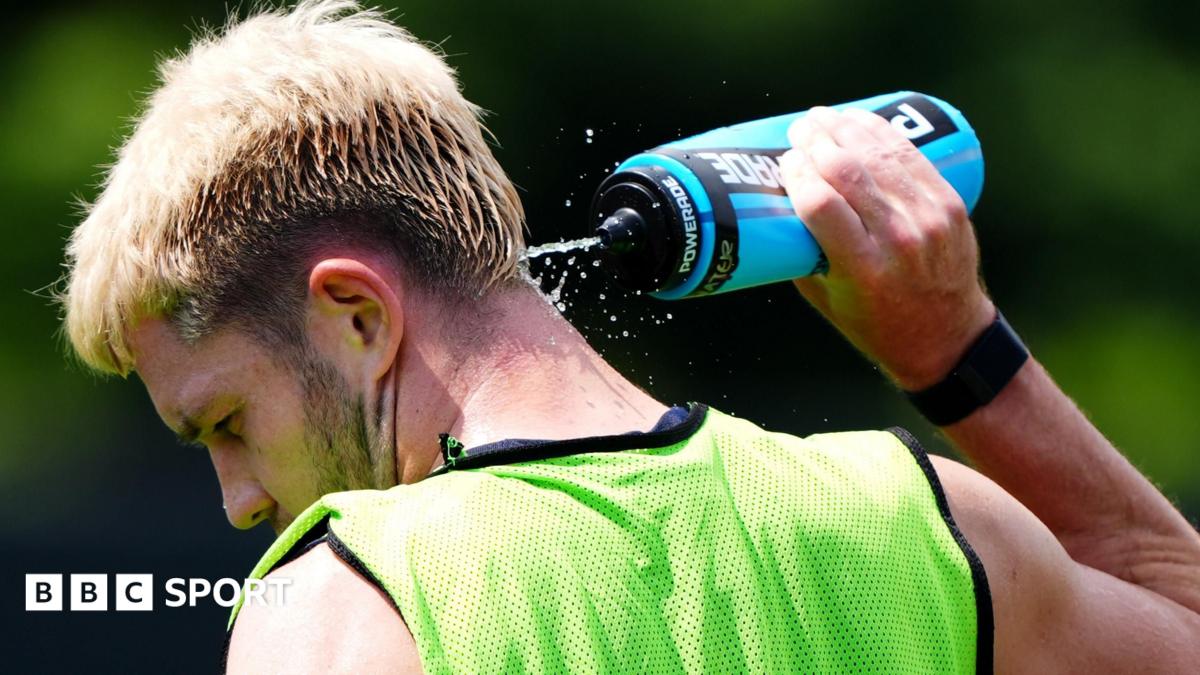
The World Cup has already shown that the tournament is not being shaped only by tactics, pressing structures and set-piece routines. Heat management has become part of the competitive picture, with hydration breaks, ice jackets, cooling towels and isotonic drinks all used to help players cope with difficult conditions.
For Scotland, that issue matters more than most. The BBC’s focus on how the team can handle the heat reflects a practical reality: if the temperature rises, the margin for error gets smaller. A side that wants to compete over 90 minutes, recover quickly between matches and maintain intensity in key phases cannot treat climate as a side note.
Why heat changes the game
Hot weather affects more than comfort. It can reduce the speed of pressing, make repeated sprints harder to sustain and increase the risk of fatigue late in matches. That has tactical consequences. Teams that rely on compact defensive work, quick transitions or high-energy wing play often need to manage their effort more carefully when conditions are extreme.
That is why the World Cup’s use of cooling measures is more than a broadcast detail. It is a sign that squads and staff are having to build match plans around recovery as much as possession or chance creation. In some games, air-conditioned stadiums and more moderate temperatures have softened the challenge, but not every venue offers that relief.
What Scotland must get right
For Scotland, the key will be preparation and discipline. Hydration, rotation and game management become essential when the weather is punishing. Players need to know when to slow the tempo, when to conserve energy and when to press aggressively. Coaching staff also have to think about substitutions not only as a way to change the game, but as a way to protect legs and preserve intensity.
Supporters will recognise the broader significance. International tournaments are often decided by fine details, and environmental conditions can be one of them. If Scotland are to make an impact, they will need to show they can adapt as well as compete. In a World Cup where heat is already influencing the rhythm of matches, the teams that manage it best may gain an edge before the footballing contest even fully begins.
That makes this more than a weather story. It is a reminder that tournament football rewards the best-prepared sides, not just the most talented ones. Scotland’s challenge is to turn a difficult climate into a manageable one, and that could prove just as important as any tactical plan.
Source note: This article was prepared using publicly available information from BBC Sport and expanded with editorial context.
Share this content: