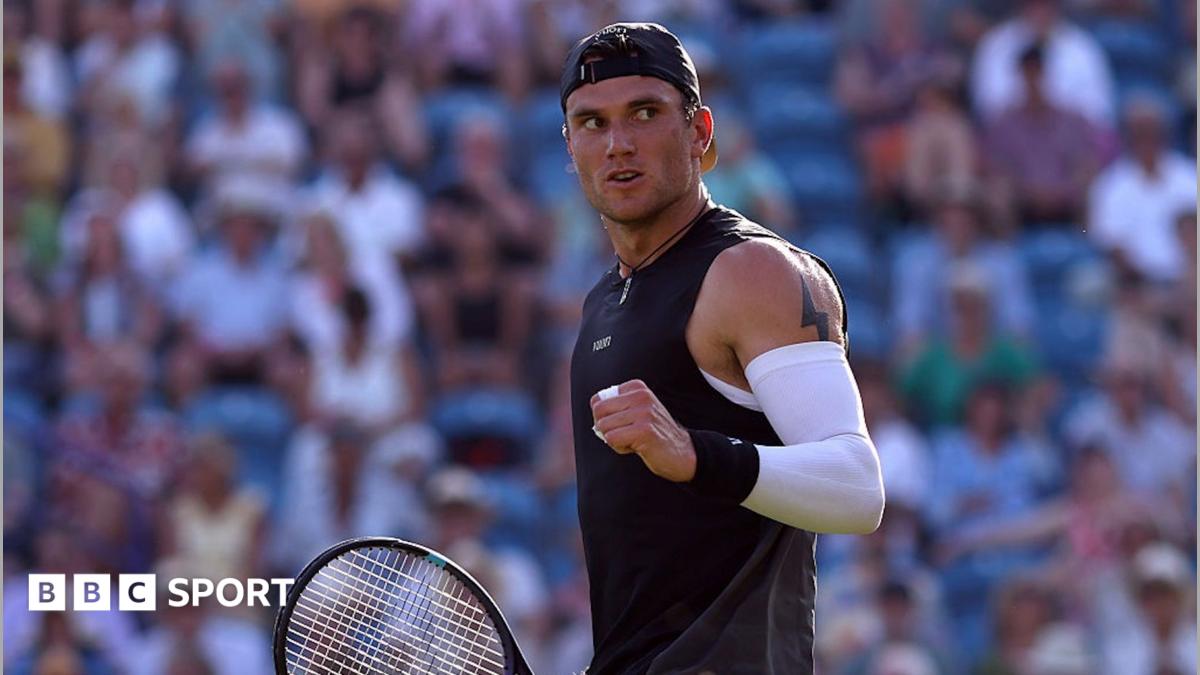
Jack Draper’s progress at Eastbourne is about more than one win. For a player whose recent injury problems have dragged his confidence to what he described as “below the floor”, reaching the quarter-finals is a meaningful sign that his body and game are beginning to align again.
The British player’s assured victory over Jack Pinnington Jones keeps him in the draw and gives him another chance to build rhythm on grass, a surface that often rewards clean striking, balance and trust in movement. For Draper, those are exactly the areas that can be hardest to recover after a spell on the sidelines. A convincing performance at this stage of the season matters because grass-court confidence is rarely built in one match; it is usually accumulated point by point, set by set, through repeated evidence that the body can cope with the demands of the surface.
Why this win matters for Draper
Injury comebacks are rarely linear, and Draper’s own comments underline how much mental work sits behind the physical return. When a player talks about confidence being so low, the result is not just about advancing in a tournament. It is also about restoring belief in movement, timing and decision-making under pressure. That is especially relevant on grass, where hesitation can be punished quickly and where players often need to commit early to shots and patterns.
For supporters, the encouraging part is not simply that Draper won, but that he did so in an “assured” manner. That suggests a performance with enough control to reduce the sense of fragility that can follow injury layoffs. If he can keep stacking matches like this, Eastbourne could become a useful platform rather than just a stop on the way to bigger events.
What Eastbourne can offer next
Quarter-final places at home tournaments often carry extra value for British players, particularly when the wider narrative is about recovery and momentum. Draper now has the chance to turn one positive result into a deeper run, which would strengthen the sense that his comeback is moving in the right direction. Even without over-reading a single match, the broader implication is clear: he needs competitive minutes, and Eastbourne is giving him exactly that.
Pinnington Jones, meanwhile, provided the kind of domestic test that can be awkward in early-round grass-court tennis, but Draper handled it well enough to move on. The next stage will tell us more about how far the comeback has come, yet this latest win already offers a useful checkpoint. For a player trying to rebuild confidence after injury, that is no small thing.
As the grass season gathers pace, Draper’s supporters will be looking for signs that this is the start of a sustained run rather than a brief flash of form. For now, Eastbourne has delivered one important answer: he is still moving forward.
Source note: This article was prepared using publicly available information from BBC Sport and expanded with editorial context.
Share this content: