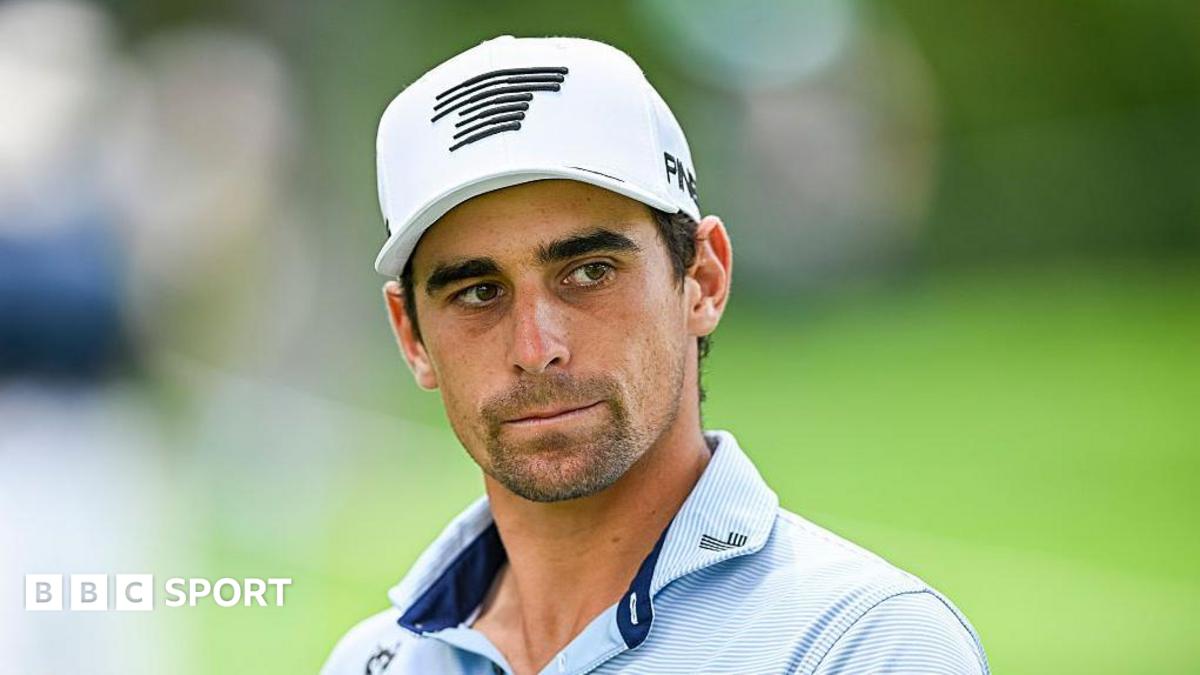
Joaquin Niemann has found himself at the centre of an unusual early test for golf’s new disciplinary framework, after becoming the first player to be penalised under the code of conduct introduced for major championships in 2026. The Chilean said he is “not proud” of the moment, which came after he threw a club during US Open play.
While the incident itself is straightforward, its significance is broader than a single penalty. Major championships have long tried to balance golf’s traditional self-policing culture with clearer standards for behaviour under pressure. Niemann’s case is now the first visible example of how strictly the new code may be applied when emotions spill over on one of the sport’s biggest stages.
What Niemann’s penalty means
For supporters, the story is less about a one-off outburst and more about the direction of elite golf governance. A new code of conduct only matters if it is enforced, and Niemann’s punishment suggests officials are prepared to act quickly when conduct crosses the line. That will matter to players trying to manage frustration in major pressure, and to fans who expect the sport’s biggest events to protect both standards and spectacle.
Niemann’s reaction also matters because it reflects the tension between competitive intensity and professional discipline. Throwing a club is not rare in golf, but being the first player penalised under a newly introduced major-championship code gives the incident added weight. It turns a moment of frustration into a reference point for future tournaments.
Broader US Open context
The BBC Sport report also sits against the wider backdrop of US Open day two, where Rory McIlroy and Scottie Scheffler made solid starts in pursuit of pace-setter Clark. That context underlines how quickly the tournament narrative can shift from leaderboard pressure to disciplinary flashpoints, especially when conditions and stakes are high.
For Niemann, the immediate damage is reputational as much as competitive. Being first in any new disciplinary category is rarely a distinction a player wants, and his public regret suggests awareness that the episode will be remembered beyond the round itself. For golf’s governing bodies, meanwhile, the case offers an early benchmark for how the 2026 code may shape behaviour at the game’s most scrutinised events.
In practical terms, the incident is a reminder that major championships are not only decided by shot-making. They are also shaped by composure, judgement and the ability to absorb pressure without crossing the line. Niemann’s penalty may be a small moment in the scorecard sense, but it carries outsized importance as the first real-world example of the new rules in action.
Source note: This article was prepared using publicly available information from BBC Sport and expanded with editorial context.
Share this content: