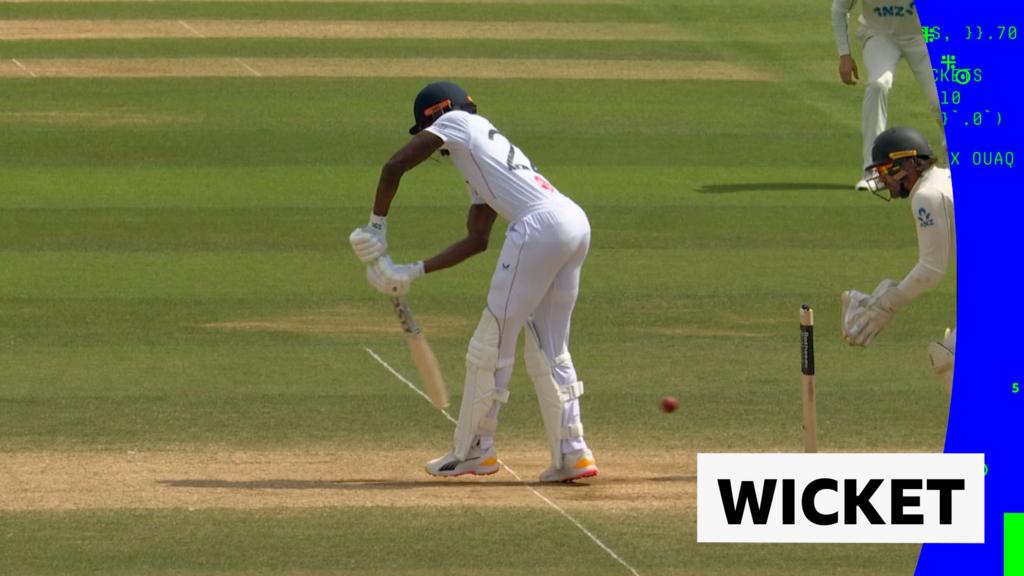
Jofra Archer’s brief stay at the crease ended in dramatic fashion on day five of the second Test at The Oval, with New Zealand seamer Matt Henry producing a delivery that proved too good for the England quick. Archer was bowled for a second-ball duck, a dismissal that immediately shifted the tone of the passage of play and highlighted the value of disciplined fast bowling in pressure moments.
For England supporters, the wicket will sting not only because of Archer’s reputation as a lower-order hitter who can change a game in a hurry, but also because it arrived at a stage where every run and every wicket carries extra weight. In Test cricket, tail-end contributions often decide whether a side can extend a lead, survive a collapse, or build a defendable target. Losing Archer so quickly meant England were denied even a small burst of resistance.
Henry’s execution under pressure
Matt Henry’s role in the dismissal is the key story. A bowler does not need extravagant movement every ball to be effective; sometimes the best delivery is simply the one that lands in the right area with enough accuracy and seam presentation to force a mistake. That is what made this wicket notable. The source description of the ball as unplayable suggests Henry found the ideal combination of line, length and movement to beat the bat and hit the stumps.
For New Zealand, wickets like this are the product of a long-standing tactical identity: patient seam bowling, relentless accuracy and the ability to exploit any lapse in technique. Henry has often been central to that approach, and dismissals of this kind are exactly why sides value him in Test cricket. He does not need a spell full of drama if he can deliver one decisive ball at the right moment.
What it means in the match context
Even without the full scorecard, the timing of the wicket matters. Day five of a Test match is usually where tension rises and margins narrow. A second-ball duck from a lower-order batter can accelerate a collapse, reduce a lead, or hand momentum back to the fielding side. For England, it is the sort of moment that can alter the shape of the final innings, especially if the batting side is trying to squeeze out every possible run.
For readers following the contest, the dismissal is a reminder that Test cricket often turns on a single delivery rather than a long passage of dominance. Archer’s wicket may be a small entry in the scorebook, but in the context of a fifth-day battle at The Oval, it could carry real significance for how the match unfolds from there.
Source note: This article was prepared using publicly available information from BBC Sport and expanded with editorial context.
Share this content: