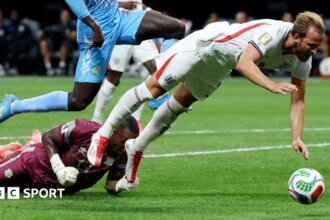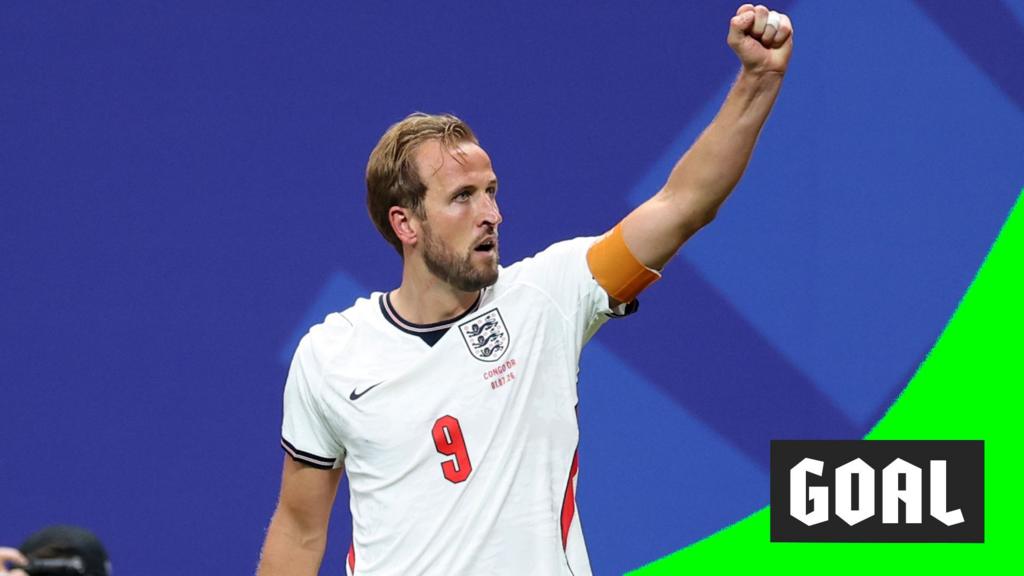
Harry Kane’s equaliser against DR Congo offered England exactly the kind of moment tournament football often demands: calm, direct and delivered by a striker who has built his reputation on turning pressure into goals. The header, supplied by Anthony Gordon, restored balance in a round of 32 tie in Atlanta and gave England a foothold in a game that could easily have become awkward.
Kane remains England’s most reliable knockout outlet
For England supporters, the significance of Kane’s intervention goes beyond the scoreline. In matches where margins are tight and rhythm can disappear quickly, the captain’s presence in the box remains one of the side’s clearest attacking advantages. A headed finish from a wide delivery is not just a simple goal; it is a reminder that England still have a forward capable of converting half-chances when the game becomes congested.
Anthony Gordon’s role is also important. His cross provided the kind of service England need more consistently when opponents sit deep or force play into wide areas. If England are to progress through knockout rounds, they will need more moments where the wide players create early, decisive service for Kane rather than relying on longer spells of possession to open a defence.
What the equaliser means tactically
From a tactical perspective, the goal suggests England can still hurt opponents through the simplest route: quick wide delivery and movement in the penalty area. That matters in tournament football, where teams often become more cautious after the first goal and where set patterns can be more effective than elaborate build-up. Kane’s timing and aerial ability remain central to that approach.
It also eases some of the pressure that builds whenever England fall behind or fail to impose themselves early. In knockout matches, momentum can shift rapidly, and an equaliser often changes the emotional tone of the contest as much as the tactical one. For England, the goal was a reset button; for DR Congo, it was a warning that one lapse in marking can be punished immediately.
Why supporters will see this as a positive sign
England fans will take encouragement from the fact that their captain is still delivering in decisive moments. Tournament campaigns are often judged by whether a team can find a dependable scorer when the game tightens, and Kane continues to fit that profile. The challenge now is for England to build on the platform the equaliser created and show more control in the rest of the match.
For DR Congo, conceding in that manner will be frustrating because it came from a delivery that England will feel they can repeat. For England, though, it is the kind of goal that can steady a campaign: not flashy, but highly functional, and exactly the sort of moment that keeps a team alive in knockout football.
Source note: This article was prepared using publicly available information from BBC Sport and expanded with editorial context.
Share this content: