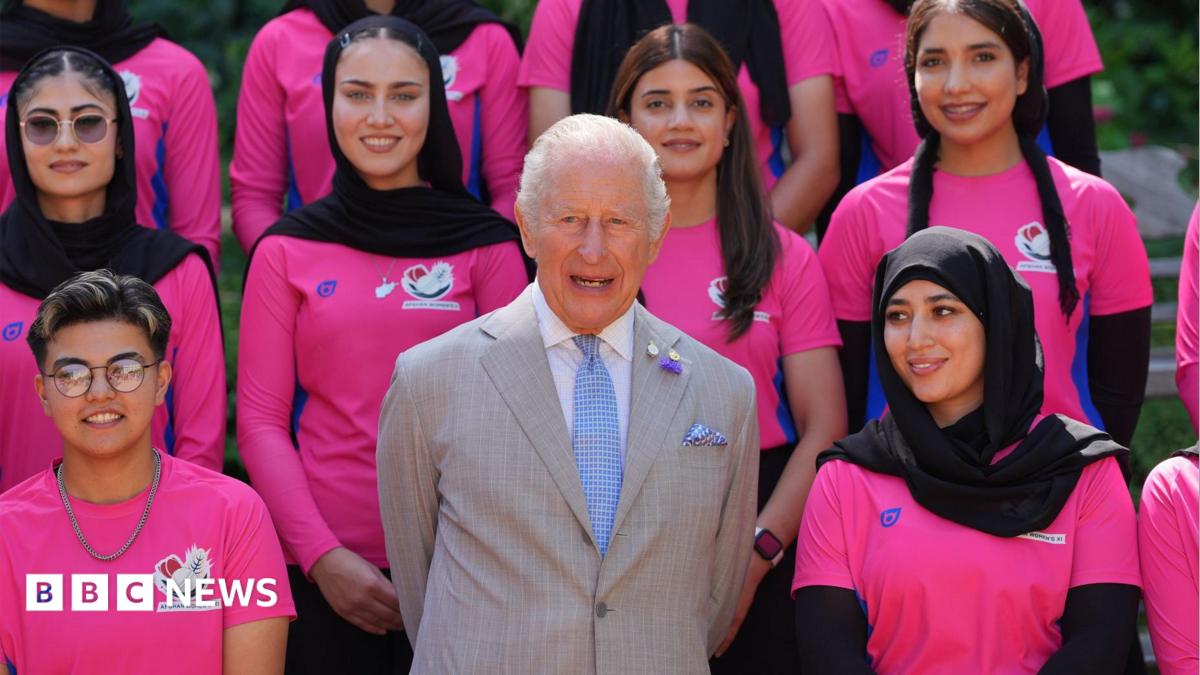
King Charles has offered a symbolic public gesture of support to the Afghan women’s cricket team, a side forced into exile after the Taliban’s ban on women’s sport made it impossible for them to represent their country. The meeting is significant not because it changes their status on the field, but because it keeps attention on a team whose existence has become a political statement as much as a sporting one.
For supporters of women’s sport, the image matters. Cricket is one of Afghanistan’s most visible national games, yet the women’s programme has been stripped of the basic conditions needed to function. In practical terms, exile means the players are no longer operating as a domestic national team with a pathway to official competition at home. In symbolic terms, it means they are still fighting for recognition in a sport that has become inseparable from questions of rights, identity and representation.
A team in exile, and what that means
The BBC report underlines the central contradiction: the Afghan women’s team exists, but is not allowed to exist in the way a national side normally would. That distinction is crucial. A national team is usually built around selection, development, fixtures and federation backing. Here, the political environment has removed the foundation beneath all of that. The result is a team that can be acknowledged internationally, yet remains blocked from representing Afghanistan under the current regime.
King Charles’s intervention is therefore best understood as a form of visibility. It does not solve the structural problem, but it does place the issue in a public setting where sport, diplomacy and human rights overlap. For a team in exile, that kind of recognition can matter almost as much as a fixture list, because it helps prevent their situation from fading into obscurity.
Why this matters beyond cricket
The story also speaks to a wider debate in global sport: what responsibility do institutions and public figures have when a national team is denied the chance to exist fairly? Women’s cricket has grown rapidly in visibility and commercial value in recent years, but Afghanistan’s case shows how fragile progress can be when political power overrides sporting participation.
For the players, the immediate implication is simple: they remain without the right to represent their country in the normal way. For supporters, the meeting is a reminder that sport can still be used to spotlight injustice, even when it cannot directly fix it. And for cricket’s governing bodies, the issue remains uncomfortable and unresolved, because the gap between symbolic support and formal inclusion is still wide.
In that sense, the King’s meeting is less a sporting headline than a marker of the team’s continued struggle. It keeps the Afghan women’s cricket team in the conversation, and in a situation defined by exclusion, that visibility is itself meaningful.
Source note: This article was prepared using publicly available information from BBC Sport and expanded with editorial context.
Share this content: