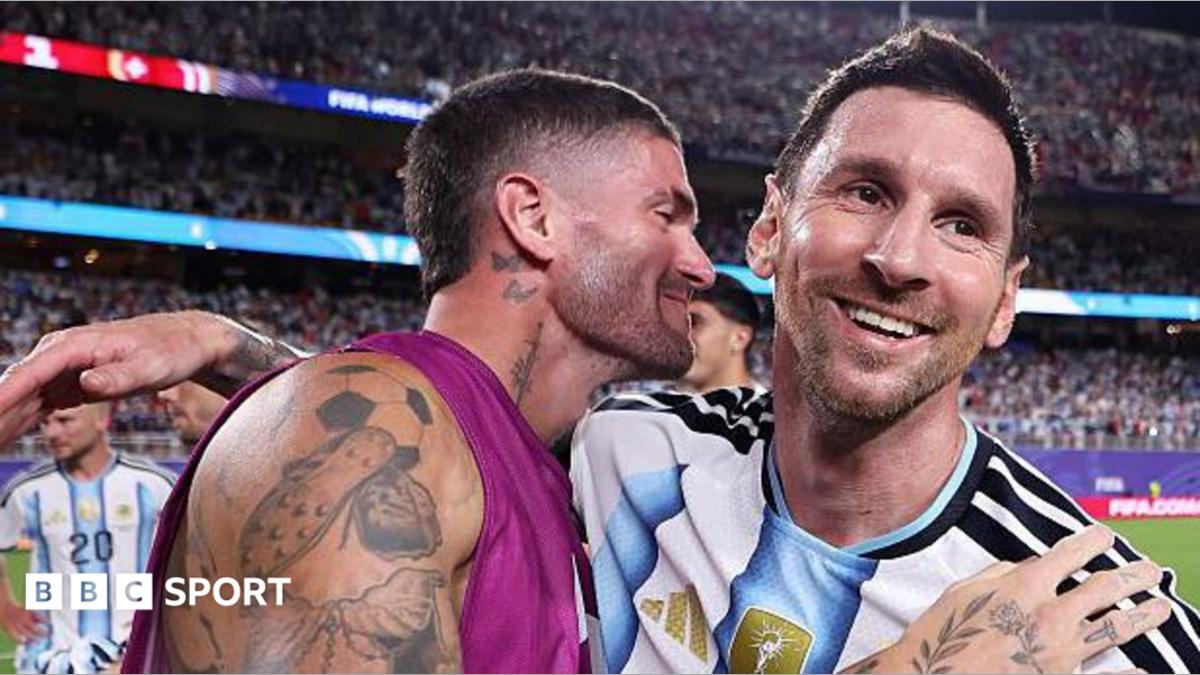
Argentina’s comeback from 2-0 down to reach the World Cup quarter-finals is the kind of moment that explains why Lionel Messi’s international story has often been judged through emotion as much as output. The BBC’s framing of the piece — “mates, mate and freedom” — points to a familiar truth about Messi: at his best, he is not simply carried by talent, but by a team environment that understands how to place him at the centre without making him carry everything alone.
That matters because Messi’s Argentina career has long been discussed in terms of pressure, expectation and comparison. When a player of his stature is asked to solve every problem, the football can become too rigid and the emotional load too heavy. The image of Messi unable to stop crying after the comeback is a reminder that international football is not only about tactics or statistics; for Argentina, it has also been about release, relief and belonging.
Why the structure around Messi matters
The source’s emphasis on “freedom” is especially relevant in tactical terms. Messi has always been most effective when he can drift into pockets of space, connect with teammates who anticipate his movement and avoid being trapped in a system that asks him to do everything from deep build-up to final finish. Argentina’s best versions of him have tended to come when the team is organised enough to support him, but flexible enough to let him improvise.
That balance is important for supporters because it changes the conversation around what Argentina should be. Rather than treating Messi as a lone saviour, the piece suggests a more sustainable model: a collective built on trust, chemistry and shared responsibility. For a national team, that is often the difference between a side that looks tense in decisive moments and one that can recover from adversity.
What the comeback says about Argentina
Coming back from 2-0 down in a World Cup knockout setting is never just a statistical footnote. It speaks to mentality, game management and the ability to stay connected when the match appears to be slipping away. For Argentina, that comeback likely reinforced the idea that Messi can still be the emotional and footballing reference point, but only when the team around him is functioning with clarity.
For supporters, the appeal is obvious. Messi’s Argentina story has often been framed by near-misses and scrutiny, but moments like this give the relationship a different tone. They show a team capable of rescuing itself, and a captain whose reaction reveals how much the shirt still means. That combination of structure, trust and freedom is what the BBC piece argues helped Argentina get the best out of him — and it remains the template for any side hoping to maximise a player whose genius is most visible when the burden is shared.
Source note: This article was prepared using publicly available information from BBC Sport and expanded with editorial context.
Share this content: