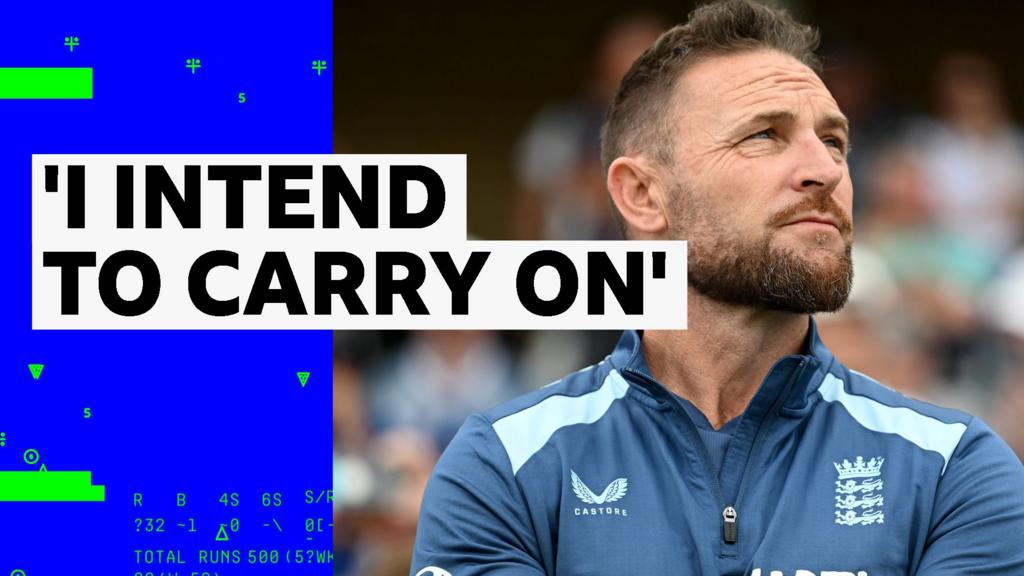
BBC Sport’s revisit of Brendan McCullum’s final interview offers a sharp reminder of how quickly the mood can change in elite international cricket. The former England Test head coach had been publicly backing his own commitment to the job, even as the pressure around the side intensified after a series defeat to New Zealand earlier this summer. His departure has now turned that interview into a useful snapshot of a team and coaching setup at a crossroads.
What McCullum’s comments tell us
McCullum’s message was straightforward: he wanted to continue, and he said his commitment to England had never wavered. That matters because it frames his exit not as a coach stepping away from the challenge, but as a figure still invested in the project right up to the point of dismissal. For supporters, that distinction is important. It suggests the issue was not a lack of intent, but a decision made against a backdrop of results, expectations and the constant scrutiny that follows England’s Test side.
The timing also adds weight. A series defeat to New Zealand is never just another result for England, particularly given the modern demands placed on the Test team. Under McCullum, England had been associated with a bold, aggressive style and a willingness to take risks. When that approach stops producing wins, the conversation quickly shifts from identity to accountability. That is the tension this BBC Sport clip captures so well.
Why the Ben Stokes factor matters
The reference to Ben Stokes’ retirement in the interview context is another layer worth noting. Stokes has been central to England’s Test identity, both as captain and as a symbol of the team’s competitive edge. Any uncertainty around his future naturally affects the wider direction of the side, because the coaching plan and the leadership structure are closely linked. McCullum’s comments therefore sit within a broader question: how much of England’s recent Test identity was built around a specific partnership, and what happens when that partnership is disrupted?
For England supporters, the story is less about nostalgia than about what comes next. A coaching change at Test level is never only about one person. It affects selection, tactical direction, dressing-room confidence and the public narrative around the team. McCullum’s final interview now reads as part of the record of a period that promised a lot, delivered memorable moments, but ultimately ended under the weight of results and expectation.
BBC Sport’s decision to look back at that interview is timely because it helps explain the emotional and tactical stakes behind the dismissal. It is a reminder that in international cricket, especially in a high-profile environment like England’s, commitment alone is not enough to protect a coach when performances dip. The next phase will be judged not just on who takes over, but on whether England can maintain a clear identity while finding more consistent results.
Source note: This article was prepared using publicly available information from BBC Sport and expanded with editorial context.
Share this content: