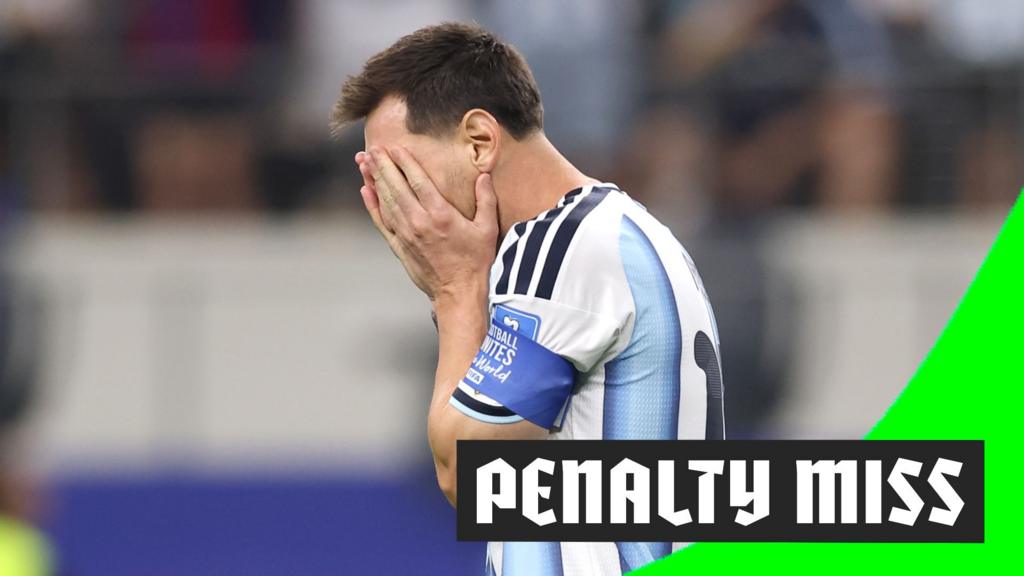
Lionel Messi’s missed penalty against Austria was more than a brief highlight-reel moment. It was a reminder that even the most decorated players in the game can be undone by the smallest margins, especially when history is on the line. The spot-kick would have taken Messi to the top of the World Cup scoring chart, but instead it left the record chase unresolved and added another layer of drama to a career already defined by pressure, expectation and constant scrutiny.
For supporters, the miss is significant because it sits at the intersection of individual legacy and team ambition. Messi has spent much of his career carrying the burden of being both creator and finisher, and moments like this show how much of elite tournament football is decided by single actions. A penalty is usually the clearest scoring opportunity in the sport, which is why the miss stands out so sharply in a World Cup context.
What the miss means in tournament terms
World Cup records carry a different weight from club milestones. They are compressed into a short competition, measured against a global audience, and remembered for decades. That is why a missed penalty can feel so consequential: it does not just remove a goal, it postpones a place in the record books. For Messi, the chance to become the all-time World Cup record goalscorer would have added another historic line to an already extraordinary international career.
From a footballing perspective, the moment also reflects the emotional volatility of knockout and tournament football. Teams often build around their biggest names, but those players are still exposed to the same technical and psychological demands as everyone else. The BBC’s framing of the miss as evidence that Messi is human captures that tension well: greatness does not remove vulnerability.
Why supporters will read more into it
For Argentina fans and neutral observers alike, the miss will be interpreted in different ways. Some will focus on the disappointment of a missed chance to make history; others will see it as a minor setback in the broader story of a player whose legacy is already secure. Either way, the incident reinforces how tightly World Cup narratives are built around decisive moments.
There is also a tactical angle. Penalties are often the product of pressure, rhythm and confidence as much as technique. When a team’s main attacking reference steps up, the expectation is that the moment will be converted. When it is not, the emotional swing can be immediate, even if the wider match picture remains unchanged. That is part of what makes tournament football so compelling: one miss can dominate the conversation far beyond the 90 minutes.
Messi’s penalty miss will not define his career, but it does sharpen the sense that every record chase in football comes with risk. The story is not only about a missed chance; it is about the fragile line between history and near-history, and why supporters remain so invested in every touch from the game’s biggest names.
Source note: This article was prepared using publicly available information from BBC Sport and expanded with editorial context.
Share this content: