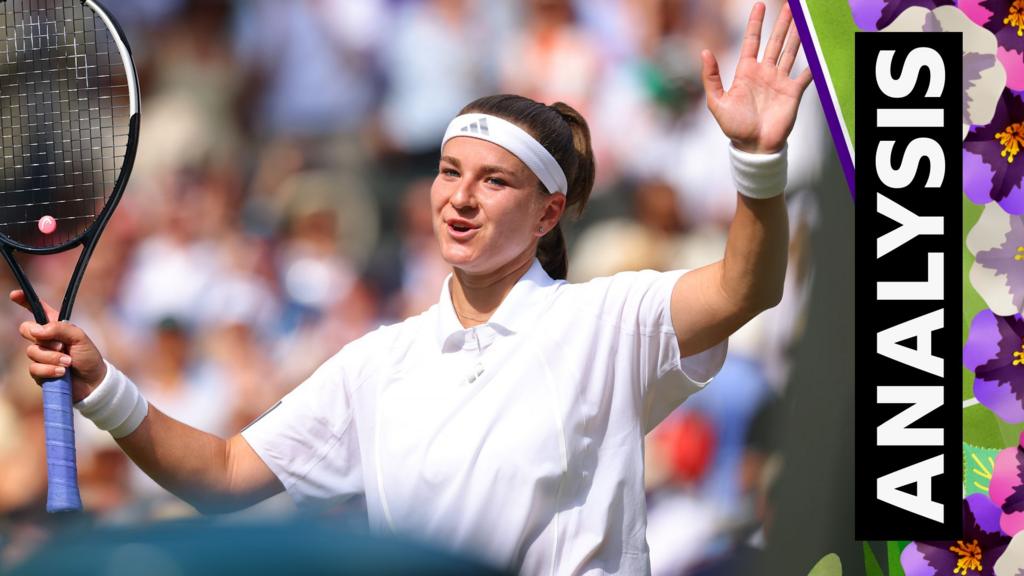
Karolina Muchova’s victory over Coco Gauff in a tense three-set women’s singles semi-final was the kind of match that underlines how fine the margins can be at the top of the women’s game. With the contest decided by a dramatic tie-break, the result was shaped not just by shot-making, but by nerve, timing and the ability to handle pressure when every point carried extra weight.
BBC Sport analyst Naomi Broady described the atmosphere around the key moments as one of extreme tension, with both players pushed into a battle where momentum shifted repeatedly. That is often the defining feature of elite semi-finals: the technical level is high, but the player who can stay composed through the most chaotic passages usually gains the edge. Muchova did exactly that, finding a way through a match that demanded resilience as much as talent.
Why the tie-break mattered
A deciding tie-break in a semi-final is rarely just a single mini-set; it is usually the product of an entire match’s emotional and tactical build-up. In this case, the pressure of the occasion magnified every serve, return and rally. For Muchova, coming through that stage suggests a strong competitive temperament, while for Gauff it is another reminder of how unforgiving knockout tennis can be when the margins are this narrow.
From a tactical perspective, matches like this often hinge on who can control the middle of the court, protect serve under pressure and avoid giving away cheap points. Even without a full statistical breakdown, the fact that the semi-final reached a deciding tie-break tells us the players were closely matched for long stretches. Muchova’s ability to close it out is a significant marker of her current level and her capacity to absorb pressure in the biggest moments.
What it means for Muchova and Gauff
For Muchova, this is the sort of win that can change the tone of a tournament run. Beating a player of Gauff’s calibre in a semi-final is not only a route into the final, but also a confidence-building statement about her ability to handle top-tier opposition. Supporters will see it as evidence that she can compete deep into major events when the stakes are highest.
For Gauff, the defeat will sting because matches decided in a tie-break are often defined by a handful of points rather than a clear gap in quality. That can be frustrating, but it also reinforces how close she remains to the very top of the field. In the broader context of women’s tennis, this was a reminder that the leading players are separated by very little when the pressure peaks.
Broady’s analysis adds another layer to the story: this was not simply a match won by one player collapsing or the other cruising. It was a thriller, and Muchova’s composure in the decisive moments proved decisive. For fans, that makes the result more compelling, because it speaks to the drama and unpredictability that make semi-finals so memorable.
Source note: This article was prepared using publicly available information from BBC Sport and expanded with editorial context.
Share this content: