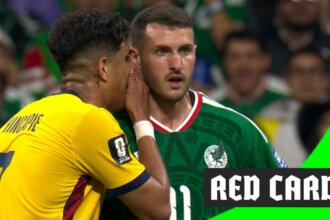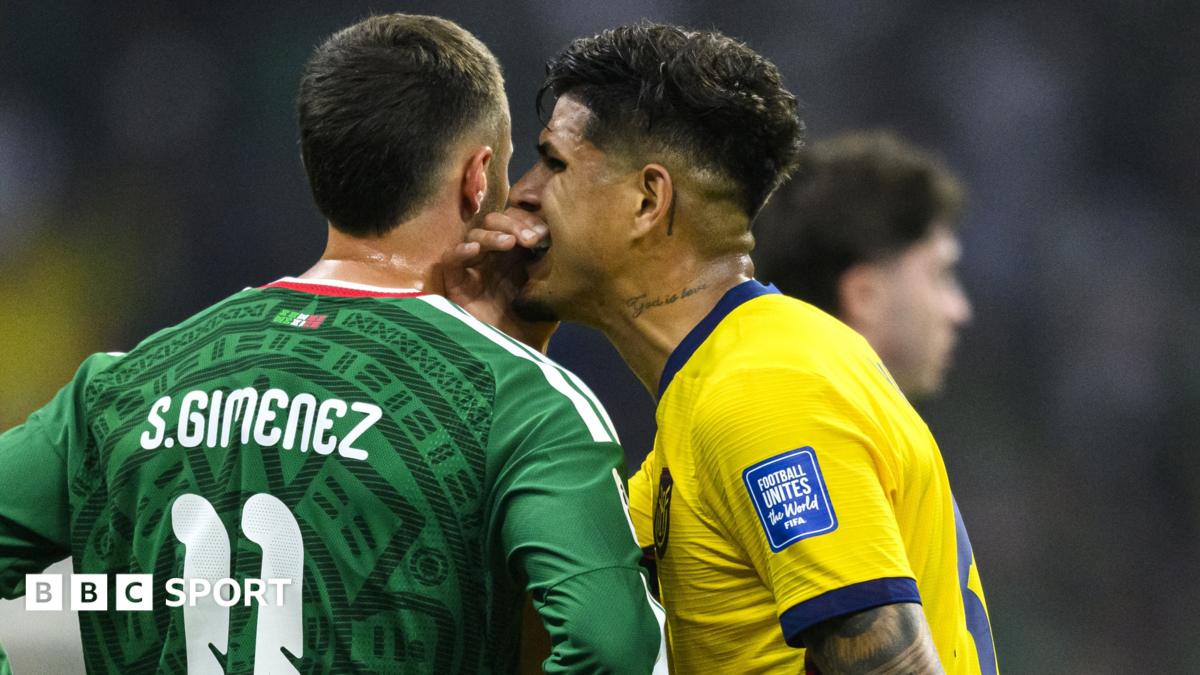
Piero Hincapie’s dismissal in Ecuador’s defeat by Mexico has quickly become one of the tournament’s more unusual disciplinary stories, not simply because of the red card itself, but because of the manner in which it was issued. The defender was sent off after covering his mouth while confronting an opponent, making him the second player at the 2026 World Cup to be dismissed for the same reason.
For Ecuador, the incident is more than a headline. Red cards at major tournaments often reshape matches in an instant, and this one will prompt questions about discipline, emotional control and how players manage confrontations under pressure. In a game where margins are already tight, losing a defender for an avoidable offence can alter the tactical balance and force a team into damage limitation.
Why the incident matters
Covering the mouth during an exchange may seem minor compared with a reckless tackle or violent conduct, but officials have shown they are prepared to treat it seriously when it is part of a confrontation. That makes this dismissal notable for players and coaches across the tournament: body language, dissent and the way arguments are conducted can now carry real consequences.
For Ecuador, the immediate impact is obvious. A sending-off against a competitive opponent like Mexico can leave a side stretched defensively, reduce their ability to build attacks from the back and force midfielders to drop deeper. Even when the full match context is not available, the broader lesson is clear: discipline remains a decisive factor in tournament football.
A warning sign for the tournament
The fact that Hincapie is the second player at the competition to be dismissed for this specific offence suggests referees and match officials are drawing a firm line. That will matter to teams still navigating the group stage, where one moment of frustration can have consequences beyond a single match.
Supporters will see the episode as another reminder that World Cup football is often decided by details far removed from open play. For Ecuador fans, the frustration will be twofold: the defeat itself and the knowledge that the team’s task became harder because of a preventable red card. For Mexico, the dismissal may have helped tilt the contest in their favour, but the wider story is about how quickly discipline can change the shape of a tournament game.
As the 2026 World Cup continues, players will be under pressure not only to perform, but to stay composed in every exchange. Hincapie’s red card is a small incident with potentially large implications, both for Ecuador’s campaign and for how teams approach confrontations from here on.
Source note: This article was prepared using publicly available information from BBC Sport and expanded with editorial context.
Share this content: