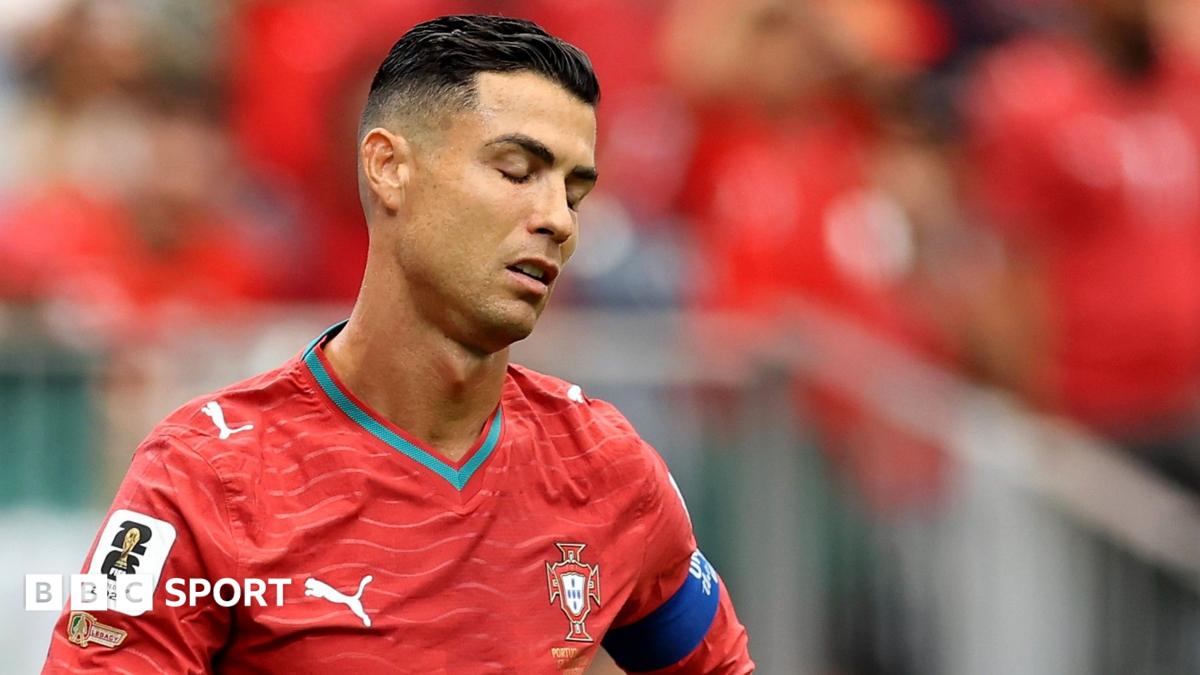
Cristiano Ronaldo’s latest World Cup outing has once again put his role under the microscope, with BBC Sport highlighting a night in which other global superstars shone while Portugal’s captain struggled to impose himself. The headline alone captures the tension around one of football’s most enduring figures: even now, every performance is judged not just on output, but on what it means for the team around him.
For Portugal, that matters because Ronaldo is no longer simply a goalscorer to be fed at the end of moves. At this stage of his career, his presence shapes the entire attacking structure. When he is sharp, the team can play through him, around him, and off his movement. When he is not, the balance becomes harder to maintain, especially in a tournament setting where margins are narrow and opponents are quick to exploit any lack of rhythm.
Why Ronaldo’s role still matters
The BBC’s framing suggests a familiar dilemma for Portugal: how to keep faith with a player whose name still carries enormous weight while also ensuring the side remains tactically flexible. That is not a new issue in international football, but it is particularly sensitive with Ronaldo because of his status, his history, and the expectation that he can still decide matches on the biggest stage.
Supporters will read this as more than a single poor night. It is another reminder that Portugal’s tournament hopes may depend on whether the team can get the best out of Ronaldo without becoming predictable. If he is isolated, the attack can become easier to defend against. If he is supported by runners and creative players, he can still be a decisive reference point.
What the wider World Cup picture tells us
BBC Sport’s note that other superstars sparkled on Tuesday adds another layer to the story. In a World Cup, the comparison is unavoidable: elite players are measured against each other in real time, and the narrative can shift quickly from admiration to scrutiny. That is especially true for a player like Ronaldo, whose career has been defined by extraordinary consistency and constant expectation.
For Portugal, the practical question is not whether Ronaldo remains important, but how the team adapts if his influence is reduced in certain matches. Tournament football often rewards squads that can adjust without losing identity. If Portugal can do that, Ronaldo’s experience may still be an asset. If not, the pressure on him — and on the manager’s selection decisions — will only grow.
For supporters, the story is both familiar and uneasy. Ronaldo remains central to Portugal’s footballing identity, but the BBC’s reporting suggests the conversation is shifting from legacy to functionality. That is the real World Cup test: not just whether a legend can still deliver, but whether the team can evolve around him when the game demands it.
Source note: This article was prepared using publicly available information from BBC Sport and expanded with editorial context.
Share this content: