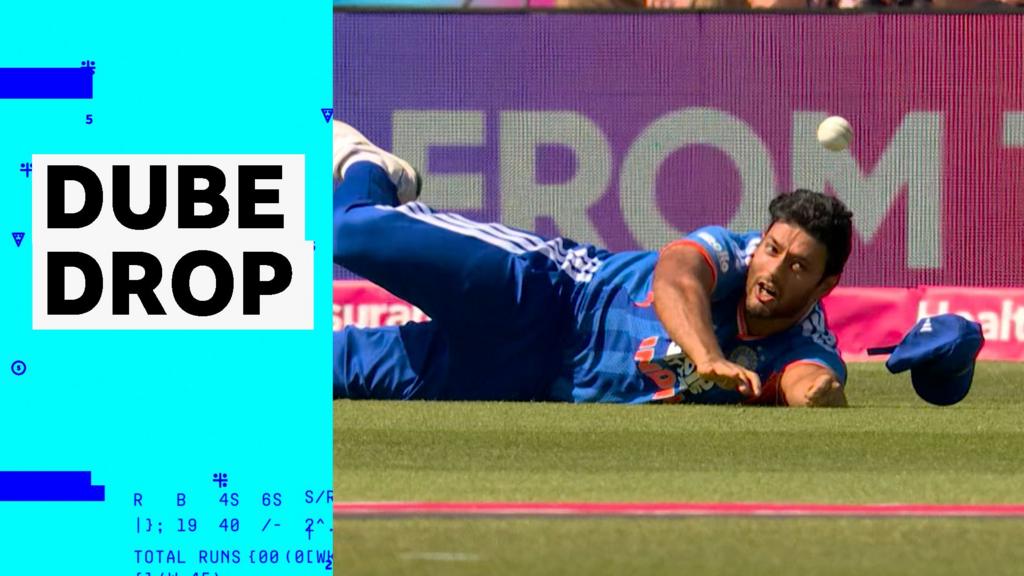
India’s fifth and final T20 against England in Southampton produced one of those moments that can linger long after the scoreboard is forgotten. In a short BBC Sport clip, Shivam Dube is shown misreading a catching opportunity as Harry Brook survives, with the broadcaster describing the mishap as a moment Dube will not want to revisit.
For supporters, these are the kinds of incidents that feel minor in isolation but can carry real weight in a T20 contest. The format leaves little room for error, and a single dropped chance can alter the rhythm of an innings, the confidence of a batter, and the pressure on the fielding side. That is especially true in a final match of a series, where momentum and concentration are often as important as raw talent.
Why the moment matters in T20 cricket
Dube’s error is notable not because it defines a player, but because it highlights how unforgiving international cricket can be. Fielding positions in the deep require split-second judgement, and any hesitation or misalignment can turn a routine chance into a missed opportunity. Against a batter such as Brook, who can punish loose moments, that kind of lapse becomes even more costly.
India’s wider challenge in matches like this is maintaining intensity across all three disciplines. Batting and bowling often dominate the conversation, but fielding can decide tight T20s just as decisively. A clean catch would have removed a dangerous batter and potentially shifted the balance of the innings. Instead, the moment becomes a reminder that the smallest technical details matter under pressure.
What it means for India and Dube
For Dube, the clip is an uncomfortable snapshot rather than a full assessment of his value to the side. All-rounders are often judged on their ability to contribute in multiple phases of the game, and fielding is part of that package. A mistake like this will naturally draw attention, particularly in a high-profile international fixture, but it should also be viewed in the broader context of the demands placed on modern white-ball players.
For India, the incident reinforces a familiar truth: in T20 cricket, the margins are thin and the cost of a single lapse can be immediate. Fans watching in Southampton will recognise the frustration of seeing a wicket chance go begging, especially when the batter involved is capable of changing the course of an innings. It is the kind of moment teams review closely, not to dwell on embarrassment, but to sharpen the standards that separate good sides from great ones.
The BBC clip does not provide the full match context, but it does capture the essence of T20 pressure: one misstep, one reprieve, and one reminder that international cricket rarely forgives hesitation.
Source note: This article was prepared using publicly available information from BBC Sport and expanded with editorial context.
Share this content: