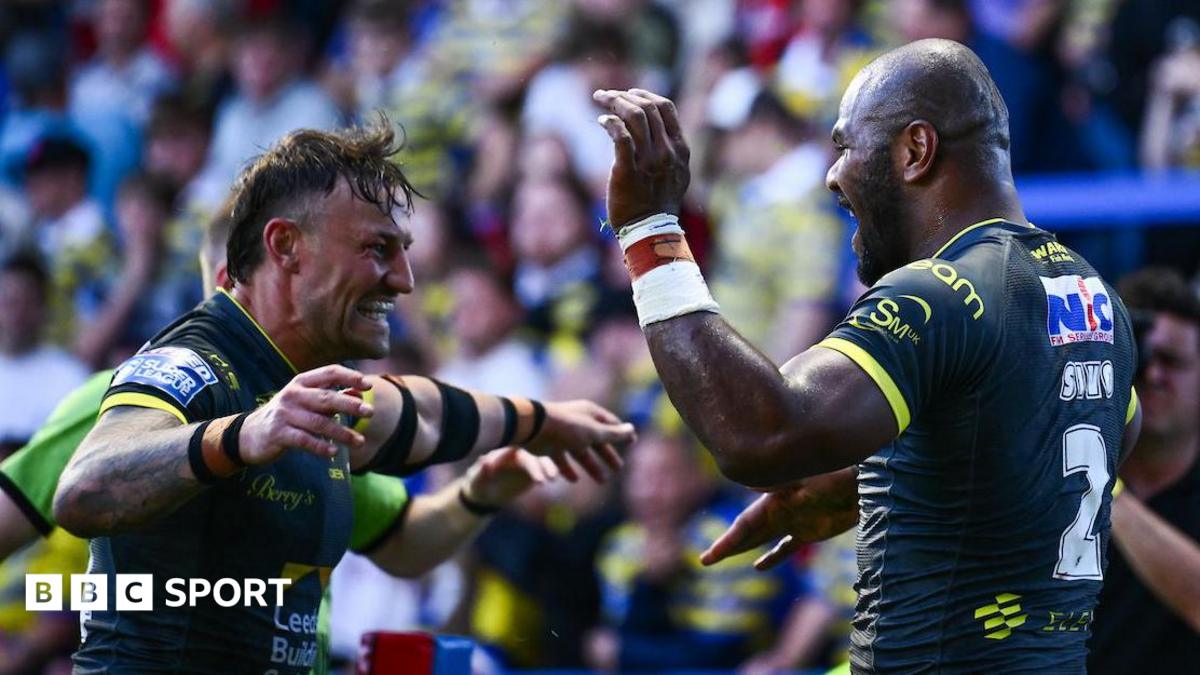
Leeds produced a statement performance against Warrington, with Maika Sivo’s hat-trick providing the decisive edge in a result that will be welcomed by supporters looking for signs of consistency. In a competition as unforgiving as the Betfred Super League, a win built on a dominant attacking display can do more than add two points: it can reset confidence, sharpen belief and send a message to rivals that the Rhinos are capable of controlling games when their edge in the final third is working.
Sivo’s three tries were the headline, but the wider significance lies in how a performance like this can shape a team’s trajectory. For Leeds, a convincing victory over a club with Warrington’s standing suggests more than a one-off burst of form. It points to a side that can convert pressure into points and punish defensive lapses with pace and power out wide. That is exactly the kind of threat that changes how opponents prepare for them.
Sivo’s finishing gives Leeds a clear attacking identity
Hat-tricks are rarely accidental. They usually reflect a team finding the right balance between territory, support play and execution, and Leeds will be encouraged by the way Sivo was able to finish the chances that came his way. Wingers who can repeatedly turn half-chances into tries are invaluable in tight league campaigns, especially when margins between mid-table momentum and top-end ambition are so small.
For Warrington, the defeat is a reminder that even established sides can be exposed if they allow space and rhythm to an opponent’s strike runners. In modern rugby league, defensive structure is only part of the equation; discipline in transition and control under pressure are just as important. When those standards slip, a player of Sivo’s profile can make the difference quickly.
What the result means for Leeds and Warrington
For Leeds fans, this is the kind of result that can lift the mood around the club. A strong attacking display against a recognised rival is often the sort of performance that supporters point to as evidence of progress, particularly if it follows a period in which consistency has been hard to find. It also gives the coaching staff a platform to build on, because confidence in rugby league often grows fastest when a team sees its game plan working in a convincing way.
Warrington, meanwhile, will need to respond quickly. Results like this can be damaging not only because of the scoreline, but because they force a team to reassess where its defensive and tactical standards are slipping. With the Super League season demanding regular recovery and adaptation, the challenge now is to turn a poor night into a prompt reaction rather than a longer run of frustration.
Referee Liam Moore oversaw the contest, but the story of the night belonged to Leeds and to Sivo, whose hat-trick ensured the Rhinos left with a result that should carry both practical and psychological value.
Source note: This article was prepared using publicly available information from BBC Sport and expanded with editorial context.
Share this content: