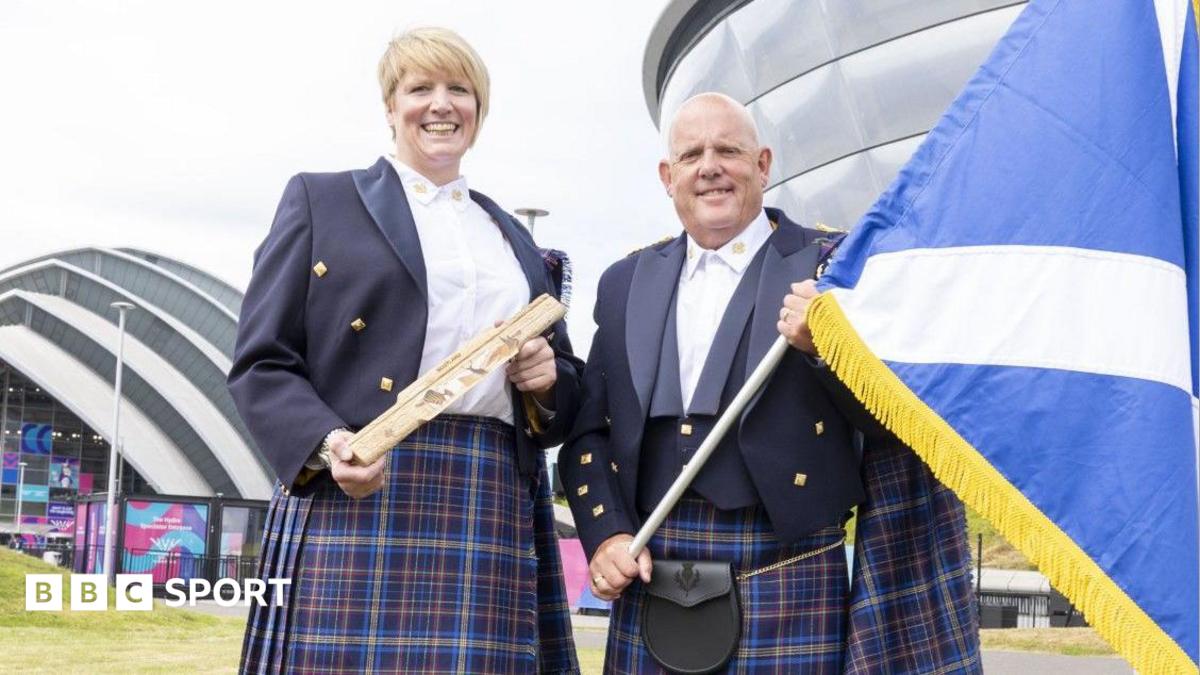
Alex Marshall’s reaction to receiving a Scotland flag honour captures the emotional side of elite sport as clearly as any medal ceremony. For a bowler with seven previous Commonwealth Games appearances behind him, the moment is not about novelty. It is about recognition, responsibility and the pressure that comes with carrying national expectations again.
Marshall’s comments, as reported by BBC Sport, were strikingly open. He admitted to being nervous on waking up, said he expected the feeling to intensify, and even suggested sleep might be difficult before the occasion. That kind of honesty matters because it reminds supporters that experienced athletes do not become immune to big moments. If anything, the stakes can feel heavier when a career already contains so much history.
Experience, expectation and Scotland’s sporting identity
Marshall’s background gives this honour extra weight. Seven Commonwealth Games appearances is a rare level of continuity, and it places him among the most familiar figures in Scotland’s bowls story. In a sport where precision, composure and repetition are everything, that kind of longevity is not accidental. It reflects sustained performance, resilience and the ability to handle the mental demands of international competition.
For Scotland, flag-bearing honours are more than ceremonial. They are a public signal of who best represents the team’s values at a given moment. In Marshall’s case, the choice appears to acknowledge both achievement and presence: a veteran athlete who has seen the highs and lows of major competition and still carries the emotional pull of the occasion.
The reference to 2014 is also telling. Marshall’s remark that even half as good an experience would be amazing suggests that the memory of that year remains a benchmark. For supporters, that creates a useful frame for the upcoming Games: this is not simply a farewell lap for a seasoned competitor, but another chance for a proven performer to influence Scotland’s campaign.
What it means for supporters
There is a broader sporting value in stories like this. In an era often dominated by transfer speculation and instant reaction, a flag honour for a veteran athlete offers something more enduring: continuity, identity and pride. It gives supporters a figure to rally around before competition even begins, and it reinforces the idea that representation still matters as much as results.
Marshall’s emotional response also hints at the pressure that can sit beneath the surface of major tournaments. That pressure is not a weakness. It is often the sign of someone who understands what the moment means. For Scotland fans, that should be reassuring. A player who still feels the occasion deeply is usually a player who still cares deeply about performance.
BBC Sport’s report places Marshall at the centre of a story about national honour, but the wider significance is clear: Scotland are leaning on experience, and Marshall remains one of the most trusted names in their sporting memory.
Source note: This article was prepared using publicly available information from BBC Sport and expanded with editorial context.
Share this content: