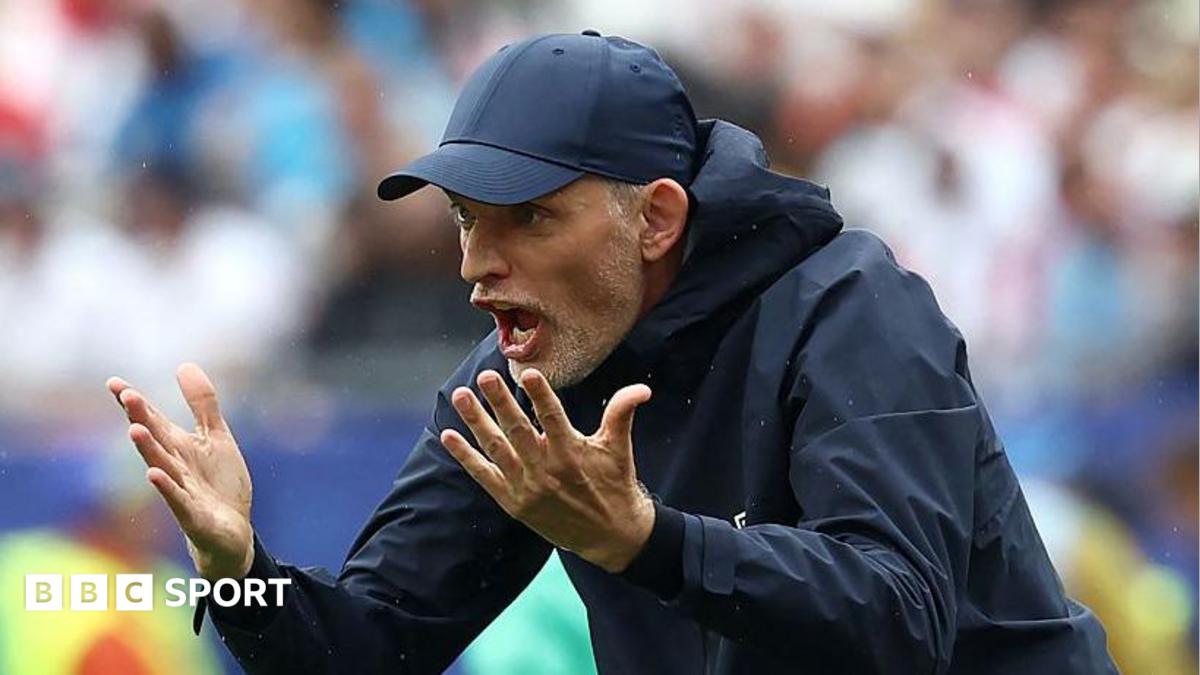
Thomas Tuchel’s early England story is already being judged through the lens that matters most at international level: what happens when the tournament reaches its sharpest edge. BBC Sport’s latest piece frames the World Cup knockout stage as the point where England’s head coach must begin to show his hand, with Tuchel himself describing that phase as “the third chapter” in a campaign he hopes ends with a historic triumph.
That framing matters because England supporters have seen enough tournament cycles to know that group-stage control is only part of the job. The real test for any elite international coach is whether the team can adapt under pressure, manage game states, and produce a clear tactical identity when margins become thin. Tuchel’s reputation has long been built on structure, detail and in-game problem solving, so the expectation is not just qualification or progress, but evidence that England can become more than the sum of their individual talent.
Why the knockout stage is the real examination
The knockout rounds are where conservative selections, cautious game plans and late substitutions are exposed. For England, that means the conversation around Tuchel is not simply about results, but about whether his methods can translate into a side that is flexible enough to survive different opponents and different rhythms. Tournament football often rewards teams that can defend compactly, press intelligently and create chances without becoming predictable, and that is where coaching detail becomes decisive.
Tuchel’s own language suggests he sees the World Cup as a staged process rather than a straight sprint. That is a useful mindset for supporters, because it implies planning, progression and a belief that the team can peak at the right time. But it also raises the stakes: if the knockout stage is the “third chapter,” then England’s earlier performances must build toward something coherent rather than merely functional.
What it means for England supporters
For fans, the immediate implication is clear. England are entering the part of the tournament where optimism is either validated or exposed. The squad’s quality should keep them in contention, but the difference between a promising run and a genuine title challenge often comes down to tactical clarity, trust in selection and the ability to make decisive changes when matches turn.
Tuchel’s challenge is therefore as much about authority as it is about ideas. He must convince supporters that England have a plan capable of surviving the pressure of the knockout stage and the unpredictability that comes with it. If he can do that, the “danger zone” becomes the place where England’s World Cup ambitions start to look real rather than rhetorical.
Source note: This article was prepared using publicly available information from BBC Sport and expanded with editorial context.
Share this content: