Marcus Rashford’s future is once again under scrutiny, but the immediate picture from Kansas City suggests a player focused on the present rather than visibly distracted by speculation. BBC Sport’s report, published on 16 June 2026, places Rashford at the centre of a familiar modern football question: how long can a high-profile player remain in limbo before the uncertainty starts to affect both club and country?
What makes this situation significant is not only Rashford’s profile, but the timing. When a player of his standing is the subject of future talk during a major international period, the discussion quickly moves beyond transfer gossip. It becomes about squad planning, wage structure, dressing-room balance and the message sent to supporters who want clarity on one of the club’s most recognisable names.
Why Rashford’s situation matters now
Rashford has long been one of Manchester United’s defining attacking figures, and any uncertainty around him inevitably carries wider consequences. For United, the issue is not simply whether he stays or goes, but how his status affects the club’s broader football strategy. A player of his quality and market value cannot be treated as a peripheral case. If his future is unresolved, it influences recruitment priorities, tactical planning and the club’s ability to define its attacking identity.
For supporters, the uncertainty is equally important. Rashford is not just another squad member; he is a homegrown star whose career has been closely tied to the club’s recent highs and lows. That makes every update on his future feel loaded with meaning. Fans want to know whether United are building around him, moving on from him, or simply waiting for the right moment to make a decision.
The football implications for United
From a tactical perspective, Rashford remains a player whose role can shape the entire front line. His pace, direct running and ability to attack space make him a different kind of threat from more possession-heavy forwards. That matters in a team that often needs transition speed as well as control. If United are planning for the next phase of their attack, Rashford’s future will help determine whether they need a like-for-like replacement, a different profile, or a system that maximises his strengths.
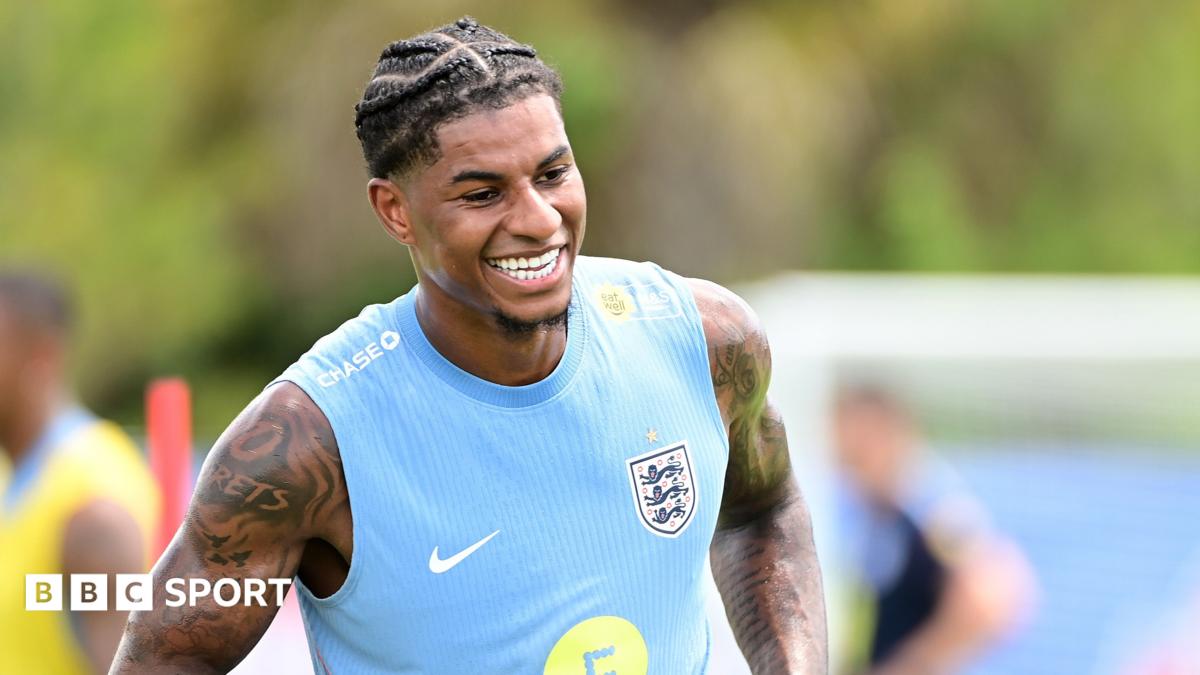
The BBC report does not suggest a dramatic public reaction from Rashford himself. Instead, it presents a player training in difficult heat while the wider conversation continues around him. That contrast is telling. In elite football, the noise around a player’s future can grow quickly even when the player appears outwardly calm. The real question is whether that calm reflects certainty, professionalism, or simply the discipline required to keep working while decisions are made elsewhere.
For now, the story is less about a confirmed transfer outcome than about the significance of the uncertainty itself. Rashford’s future matters because of who he is, what he represents to Manchester United, and how much his next step could shape the club’s direction. Until there is a definitive resolution, every appearance, training session and squad selection will be read through that lens.
Source note: This article was prepared using publicly available information from BBC Sport and expanded with editorial context.
Share this content: