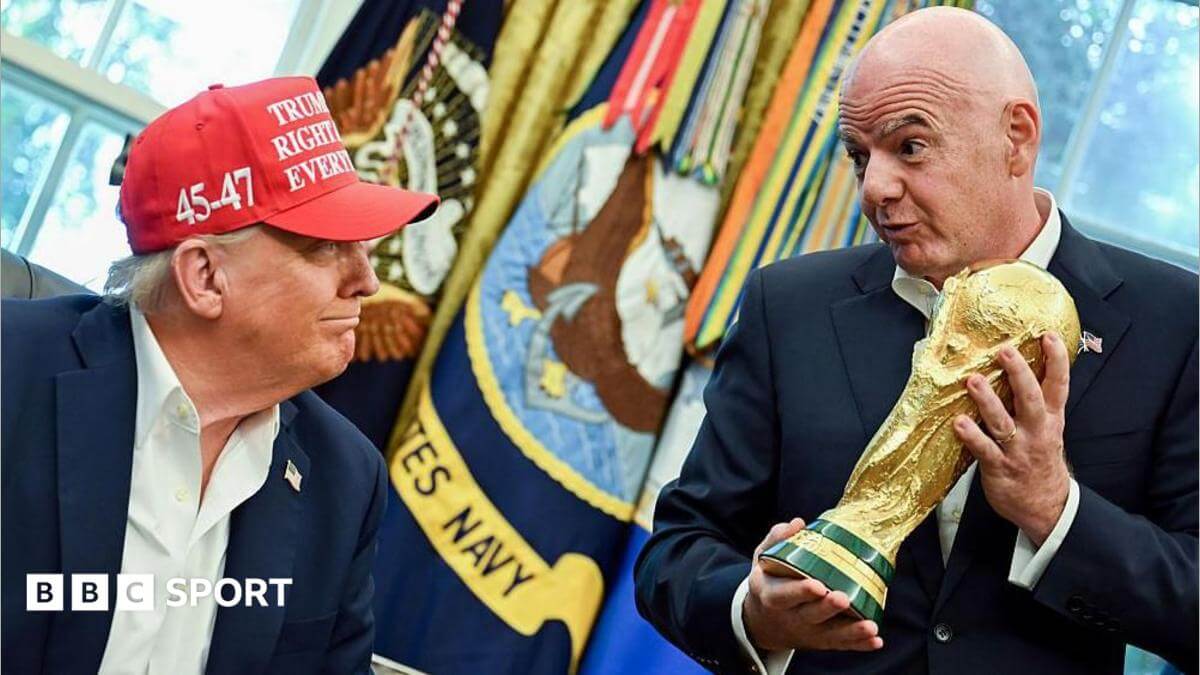
“Simply the greatest event that humanity, that mankind, has ever seen” is how FIFA president Gianni Infantino has described the World Cup. But as the tournament grows larger and more politically charged, questions continue to be asked about what that expansion means for the competition itself.
The 2026 World Cup will be the biggest in history, with more teams, more matches and a wider global footprint than ever before. Supporters of the expanded format argue it creates more opportunities for nations to qualify and gives the tournament even greater reach. Yet critics say the scale comes at a cost, with concerns over player workload, competitive balance and the overall quality of the event.
A bigger tournament, but at what price?
Expansion has long been presented as a way to make the World Cup more inclusive. For many countries, qualification is now more realistic than it was in previous eras, and that has obvious appeal. More nations involved also means more interest across different regions, which is a major commercial advantage for FIFA.
However, the increase in fixtures raises fresh doubts about whether the World Cup can maintain the same intensity and prestige. A larger field can dilute the sense of jeopardy that has traditionally defined the tournament. For players, the demands are also greater, with an already crowded calendar becoming even more congested.
Politics and football are increasingly intertwined
The World Cup has never existed in a vacuum, but its political dimension has become more visible in recent years. Hosting rights, global influence and the scale of FIFA’s power all ensure the tournament sits at the centre of wider debates beyond football.
That makes the competition more than just a sporting event. It is also a platform for soft power, international messaging and commercial expansion. For some, that is part of the World Cup’s modern appeal. For others, it is a sign that the tournament is drifting further from its sporting roots.
The challenge for FIFA
FIFA faces a difficult balancing act. It wants the World Cup to keep growing, but it must also protect the qualities that made it special in the first place. The tournament’s scale may help it reach more people than ever before, yet the long-term cost could be a competition that feels less concentrated, less demanding and less pure.
As the 2026 edition approaches, the debate is unlikely to fade. The World Cup remains football’s biggest stage, but its expansion ensures the discussion around what it has become will be just as significant as the matches themselves.
Your global gateway to nonstop football coverage:
News Goal
Share this content: