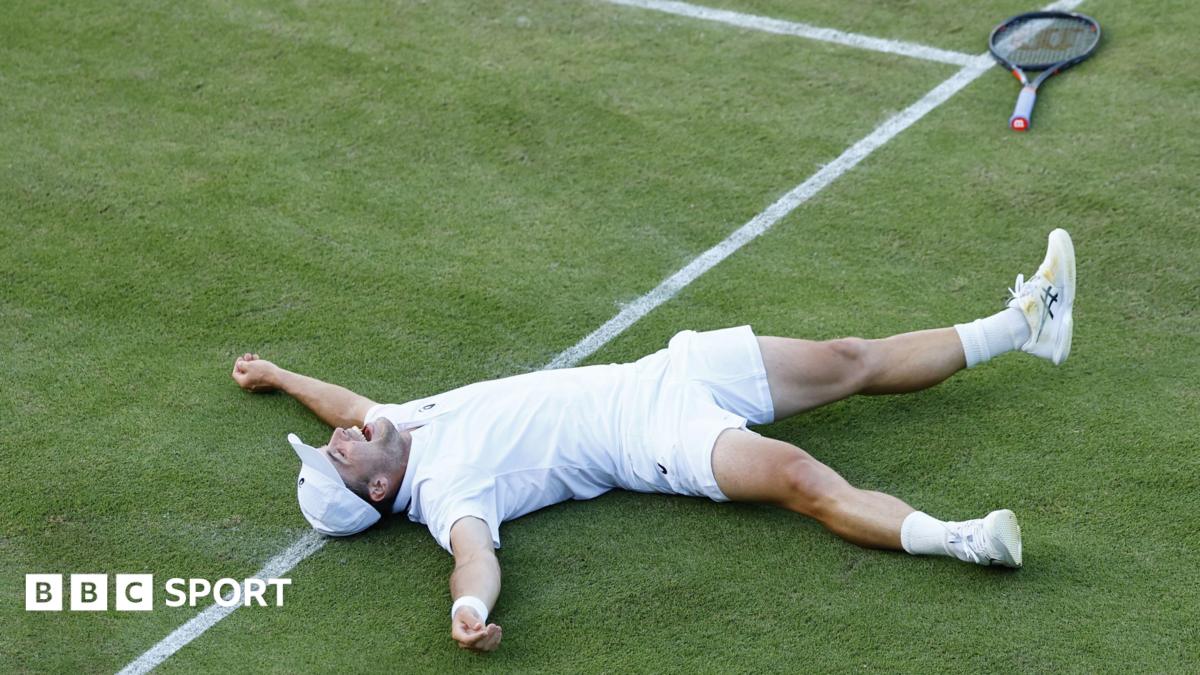
Arthur Fery’s run at Wimbledon has become one of the tournament’s most compelling British stories, with the wildcard producing a five-set victory over Zizou Bergs to reach the fourth round. In a match that tested both physical resilience and nerve, Fery also dealt with three nosebleeds before finally closing out a result that keeps home singles hopes alive.
A breakthrough built on resilience
For British tennis, a deep Wimbledon run by a wildcard is always significant. It brings immediate attention, but it also carries pressure: the expectation to justify the selection, the crowd’s hope for a home contender, and the challenge of handling a seasoned opponent on one of the sport’s biggest stages. Fery managed all of that in a contest that stretched across five sets, showing the kind of competitive toughness that often defines a player’s first major breakthrough.
The fact that he continued despite repeated nosebleeds adds another layer to the performance. At this level, momentum can swing quickly, and any interruption can unsettle rhythm. Fery’s ability to regroup and stay in the match suggests not just physical grit, but also a level of composure that supporters will take as a positive sign for the rest of his campaign.
What the result means for British interest at Wimbledon
With Fery moving into the fourth round, the tournament retains a live British storyline in the singles draw. That matters at Wimbledon more than at almost any other event because the home crowd tends to rally around local players who can carry the atmosphere deep into the second week. A wildcard progressing this far also changes the tone of the conversation: instead of simply being a promising inclusion, Fery is now a genuine part of the competitive picture.
From a tactical perspective, five-set wins often reveal more than straight-set results. They can point to a player’s ability to adjust under pressure, survive dips in level, and find solutions when the match becomes less about clean shot-making and more about managing moments. That is especially valuable at Wimbledon, where grass-court tennis rewards clarity, first-strike confidence and mental discipline.
For Bergs, the defeat is a missed opportunity in a match he will likely feel he could have taken with greater control at key moments. For Fery, though, the significance is clear: he has not only advanced, but done so in a way that will strengthen belief around his potential and give British supporters a player to follow with real interest as the tournament enters its decisive phase.
Source note: This article was prepared using publicly available information from BBC Sport and expanded with editorial context.
Share this content: