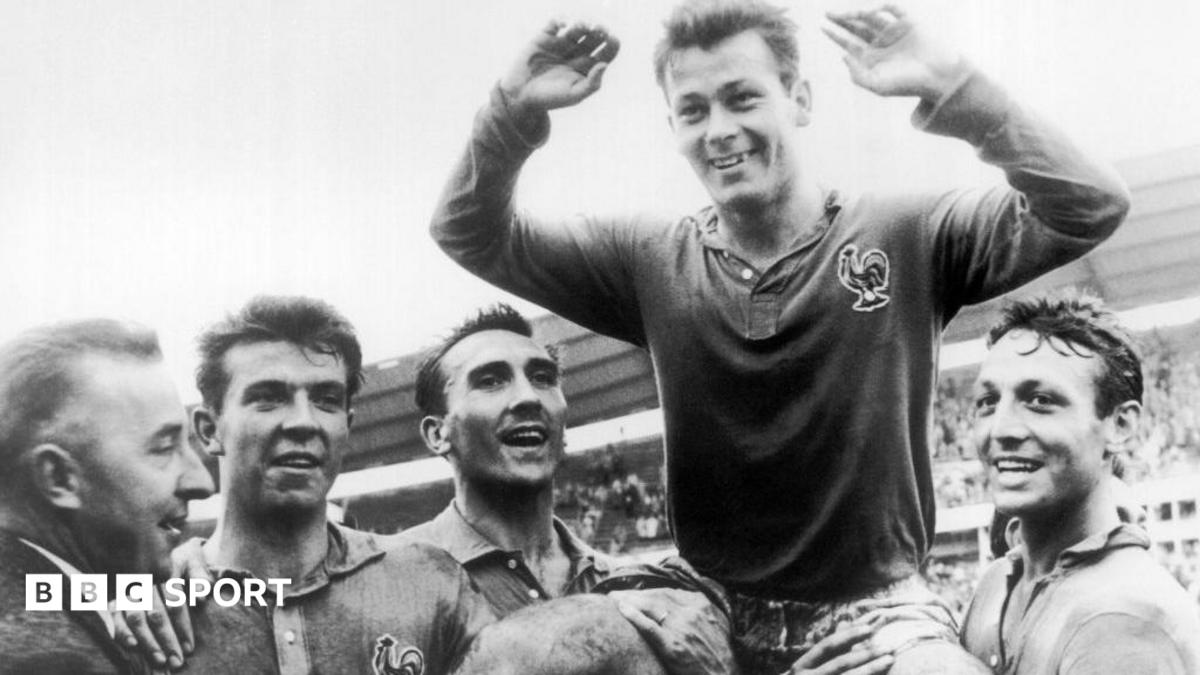
Just Fontaine’s name sits in a rare category in football history: a record that has survived every era of the modern game. His 13 goals at the 1958 World Cup remain the benchmark for the most scored by any player in a single tournament, and the scale of that achievement becomes even more striking when set against the circumstances around it.
According to the BBC’s feature, Fontaine was not even supposed to be France’s starting striker at the tournament. That detail matters because it underlines how quickly a player can move from squad option to global reference point when form, timing and opportunity align. For France, it was a reminder that tournament football can elevate a forward in a matter of days, especially when the team is built to feed a natural finisher.
A record built on opportunity and ruthless finishing
Fontaine’s scoring haul is not just a numbers story. It reflects the kind of efficiency that separates a good striker from a historic one. In a World Cup setting, where chances can be limited and opposition quality rises sharply, 13 goals across one tournament is extraordinary by any standard. The fact that he did it without being the obvious first-choice starter adds another layer to the achievement.
For supporters, this is part of what keeps World Cup folklore alive. Records are usually discussed in abstract terms, but Fontaine’s story has the human detail that makes it memorable: borrowed boots, an unexpected starting role and a finish that turned into a benchmark no one has yet matched. In an age of constant statistical comparison, that kind of longevity is rare.
No Golden Boot, but a place in football history
The BBC also notes that Fontaine did not receive a Golden Boot trophy for being the tournament’s top scorer. Instead, he was awarded an air rifle by a Swedish newspaper, described as a prize for a “sharp shooter”. That detail captures how different football’s awards culture was in the 1950s compared with the modern era, when top scorers are immediately wrapped in branding, ceremony and global recognition.
Even without the contemporary trappings of an official Golden Boot, Fontaine’s legacy is secure. His record has become part of the World Cup’s identity, a reminder that some milestones are not only about athletic excellence but also about the era in which they were achieved. For France, it remains one of the most iconic individual tournament performances in the nation’s football history.
In practical terms, the story also speaks to the way football history is preserved: not only through statistics, but through the odd, vivid details that make records feel alive. Borrowed boots and an air rifle are the kind of facts that ensure Fontaine’s name is remembered far beyond the scoreline. And as long as his 13-goal mark stands, so too will the legend attached to it.
Source note: This article was prepared using publicly available information from BBC Sport and expanded with editorial context.
Share this content: