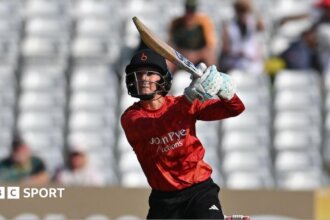
Sophie Ecclestone’s intervention at Lord’s turned a competitive first innings into a collapse, as England’s left-arm spinner took three wickets in six balls across two overs to help dismiss India for 285 on the opening day of the one-off Test.
India had been 279-7 and were still in a position to post a stronger total, but Ecclestone’s burst changed the tone of the innings in a matter of deliveries. For England, that kind of late-innings squeeze is exactly the sort of control they will want from their attack in a Test that could be shaped by patience, discipline and the ability to exploit any pressure in the middle and lower order.
Ecclestone’s spell gives England the upper hand
The key detail is not just the wickets, but the timing. Taking three wickets in six balls across two overs means Ecclestone broke India’s resistance at the point where a set partnership or a few useful runs could have pushed the total beyond England’s comfort zone. Instead, the innings ended at 285, a score that is respectable but far from commanding at a venue where momentum can shift quickly.
For supporters of England, the spell will be encouraging because it underlines the value of a spinner who can do more than contain. Ecclestone’s ability to strike in clusters gives England a genuine wicket-taking option when the ball softens and batters begin to look for release shots. In a one-off Test, where there is no series cushion and every session matters, that sort of breakthrough can define the match narrative.
What the total means for the Test
India’s 285 all out leaves the game finely balanced rather than one-sided. England will likely view the total as manageable, especially after the late collapse, but the score is still enough to keep India in the contest if their bowlers can respond quickly. The opening day at Lord’s has therefore already produced a familiar Test dynamic: one side builds, the other claws back control, and the next innings becomes crucial.
From a tactical perspective, Ecclestone’s spell also highlights how important spin could become as the match develops. If the surface begins to assist turn or grip, England will hope her control and variation continue to create pressure. For India, the lesson is clear as well: getting through the middle and late overs without a collapse will be vital if they are to avoid handing England the initiative.
With the first innings complete, the match now moves into a phase where every partnership and every spell will carry added weight. Ecclestone has already delivered the kind of decisive burst that can shape a Test at Lord’s, and England will hope it proves to be the moment that set them on course.
Source note: This article was prepared using publicly available information from BBC Sport and expanded with editorial context.
Share this content: