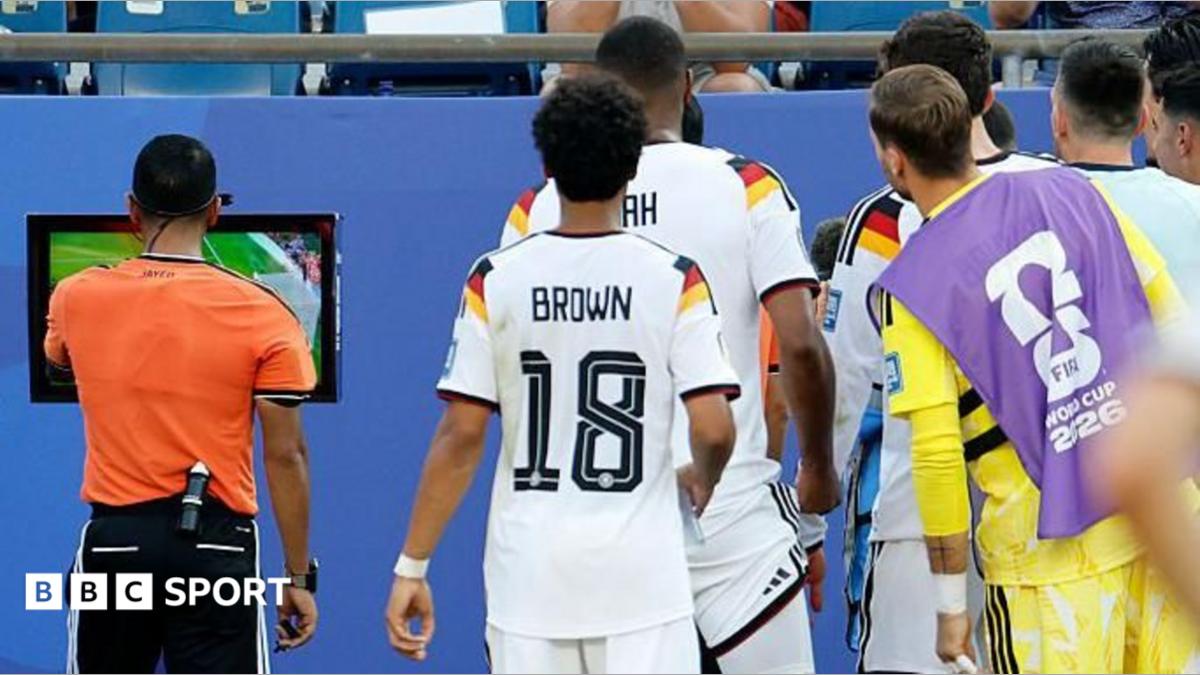
Fifa has moved to explain one of the World Cup’s more contentious officiating calls, saying the decision to rule out Germany’s extra-time goal against Paraguay was in line with instructions given before the tournament. According to the governing body, coaches and players had already been told that referees would penalise the kind of foul that led to the goal being disallowed.
The clarification matters because it shifts the debate away from whether the officials applied the law correctly in the moment and toward whether teams adapted properly to the standards set before kick-off. In tournament football, those pre-competition briefings are not a formality. They shape how defenders challenge in the box, how attackers attack contact, and how much risk teams take in the closing stages of tight knockout matches.
Why the decision matters
For Germany, the ruling will feel especially painful because extra-time goals often decide matches that have already become tactical stalemates. When a goal is removed after such a decisive phase, the emotional impact is immediate: players are left to reset, supporters are left arguing over interpretation, and the match narrative changes in an instant. For Paraguay, the call will be viewed as a vindication of disciplined defending and of the idea that tournament refereeing is being applied consistently.
Fifa’s explanation also reflects a broader trend in modern football: more emphasis on pre-match education, more scrutiny on contact inside the area, and less tolerance for challenges that officials deem illegal even if they are common in open play. That can frustrate supporters who want a freer contest, but it is also part of the sport’s ongoing attempt to reduce ambiguity in high-stakes matches.
What supporters should take from it
For fans, the key takeaway is that this was not presented by Fifa as an isolated or improvised call. The governing body is saying the law was applied according to guidance already shared with teams. That does not end the argument, of course. Controversial decisions rarely do. But it does suggest that the responsibility for avoiding such incidents lies not only with referees on the day, but also with teams that must prepare for the standards they are told to expect.
In a World Cup, where margins are tiny and every set-piece or aerial duel can alter a campaign, that distinction is crucial. Germany’s disallowed goal will now be remembered not just as a flashpoint, but as a reminder that tournament football is shaped as much by preparation and interpretation as by the action itself.
Source note: This article was prepared using publicly available information from BBC Sport and expanded with editorial context.
Share this content: