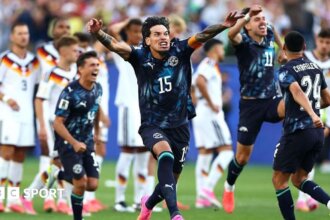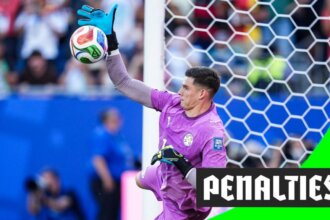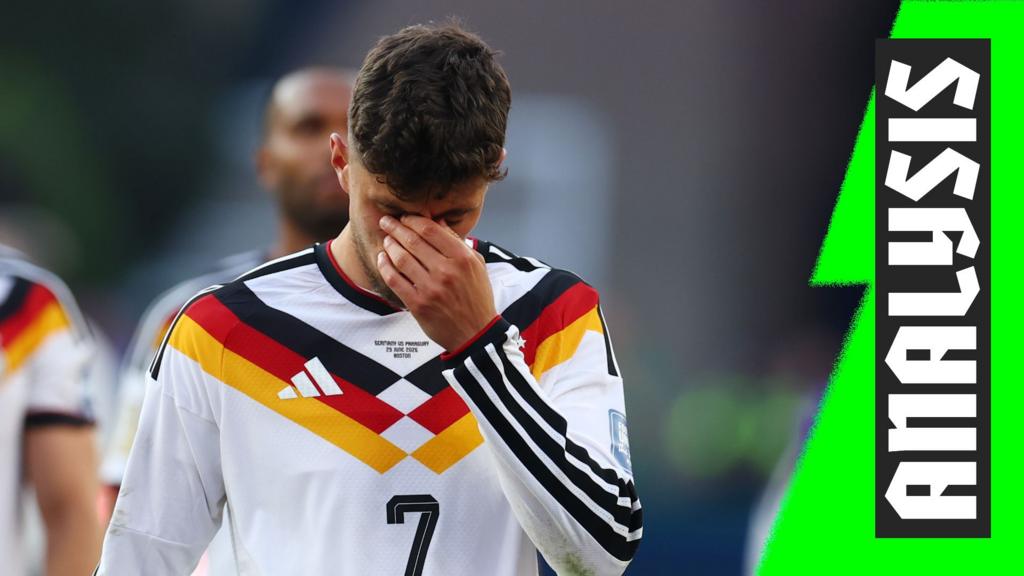
Germany’s latest World Cup setback has reopened a familiar debate: whether the national team’s long-standing football identity still matches the demands of the modern game. In a BBC Sport video, former Germany midfielder Thomas Hitzlsperger argues that the answer is increasingly no, after Germany were beaten by Paraguay on penalties at the 2026 World Cup.
The defeat matters not only because of the result itself, but because it adds to a growing sense that Germany are struggling to find a clear competitive edge in major tournaments. For a country with a deep football tradition and a reputation for structure, efficiency and tournament resilience, repeated disappointments create pressure well beyond one match.
A tactical identity under scrutiny
Hitzlsperger’s central point is that Germany have been trying to win in a way that no longer gives them enough advantage. That is a significant criticism because it goes beyond selection or one-off errors and instead questions the broader football model. In modern international football, where margins are tight and opponents are tactically flexible, a predictable approach can become a weakness rather than a strength.
For supporters, that is the uncomfortable part of the conversation. Germany have often been judged on their ability to adapt in tournament football, but this latest failure suggests adaptation may now be the missing ingredient. If opponents can prepare for a familiar pattern and disrupt it, then the issue is not simply execution — it is the system itself.
What it means for Nagelsmann and Germany
The BBC’s framing also points toward the future of Julian Nagelsmann, whose position inevitably comes under greater scrutiny after a high-profile knockout exit. While the source does not provide a definitive verdict on his job, the implication is clear: Germany’s problems are now being discussed at the level of coaching philosophy, not just match management.
That makes the coming period important for both the coach and the federation. Germany will need to decide whether the solution is a tactical reset, a personnel refresh, or a deeper rethink of how the national team wants to play. For fans, the frustration is obvious — a team with Germany’s resources and history should not be left asking whether its own football identity has become outdated.
Hitzlsperger’s assessment is blunt, but it reflects a wider truth in elite football: tradition alone does not win knockout matches. If Germany are to move forward, they may need to prove that their next version is more adaptable, more unpredictable and better suited to the realities of the modern international game.
Source note: This article was prepared using publicly available information from BBC Sport and expanded with editorial context.
Share this content: