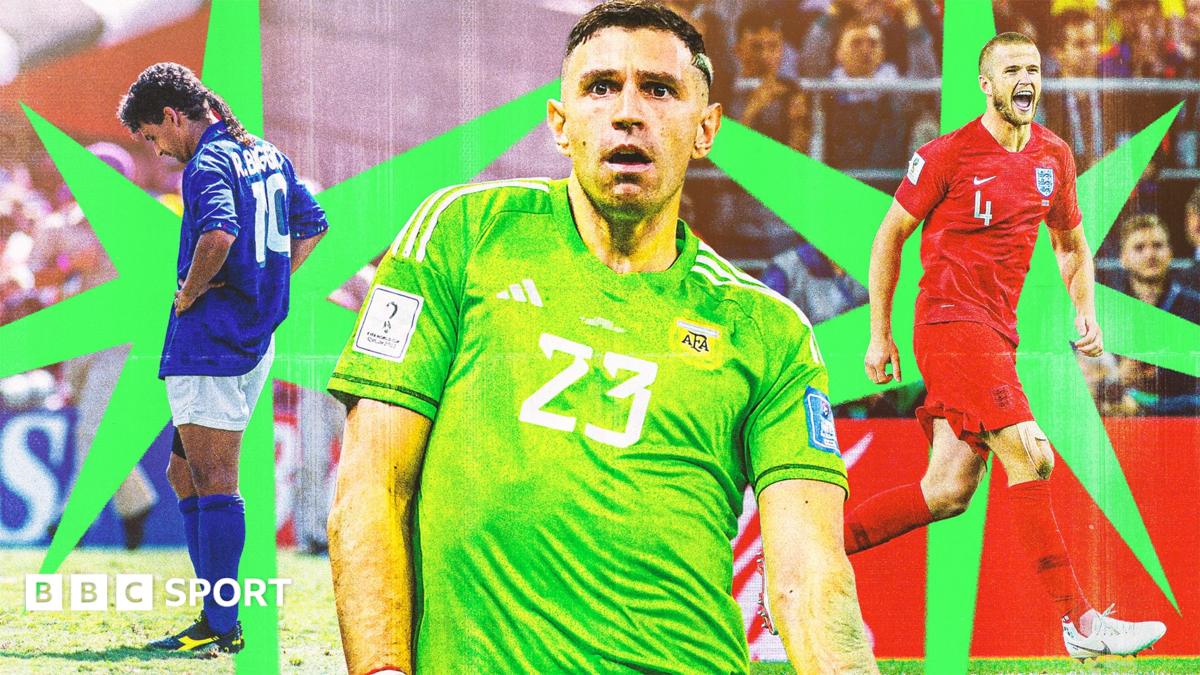
The World Cup quarter-final stage is where margins shrink and pressure rises. At this point in the tournament, a single penalty can swing a nation’s entire campaign, which is why shootout preparation becomes as important as any attacking pattern or defensive shape. The BBC’s focus on how to take a World Cup shootout penalty lands at exactly the right moment: the knockout rounds are now deep enough for nerves, fatigue and expectation to shape outcomes as much as technique.
Penalty shootouts are often framed as a test of composure, but they are also a tactical event. Coaches must decide who is still physically and mentally sharp enough to step forward after 120 minutes of football. Players who have spent the match making repeated runs, defending transitions or carrying creative responsibility may not be the best candidates if their confidence has dipped. In a World Cup quarter-final, that selection process can be decisive.
The psychology behind the spot-kick
For supporters, shootouts are among the most stressful moments in football because they compress an entire match into a handful of kicks. For players, the challenge is even greater: the penalty taker must manage expectation, crowd noise and the knowledge that one miss can dominate the narrative. That is why elite teams spend so much time on routines, goalkeeper analysis and order of takers. The best penalty plans are rarely improvised in the moment; they are built before the tournament begins.
At this stage of a World Cup, the emotional weight is amplified by what is at stake. A quarter-final is not just another knockout round. It is the gateway to the semi-finals and, for many squads, the point where a strong tournament can become a historic one. That makes every detail matter, from the player’s run-up to the goalkeeper’s decision-making and the bench’s ability to keep the group calm.
Why shootout preparation matters now
Teams that reach the quarter-finals usually do so because they have balance, discipline and enough quality to survive tight games. But those same traits do not guarantee success from the penalty spot. Shootouts reward clarity under pressure, and the side that handles the moment best often has the advantage regardless of how the match unfolded beforehand.
For supporters, the lesson is simple: a World Cup shootout is never just luck. It is the product of preparation, confidence and the ability to execute under extreme stress. As the tournament moves deeper into the knockout rounds, the teams that treat penalties as a planned part of their strategy, rather than a last resort, are the ones most likely to survive.
The BBC’s article is therefore relevant not only as a practical guide, but as a reminder of how knockout football changes at the sharp end of a World Cup. At the quarter-final stage, the smallest details can decide who advances and who leaves with regret.
Source note: This article was prepared using publicly available information from BBC Sport and expanded with editorial context.
Share this content: