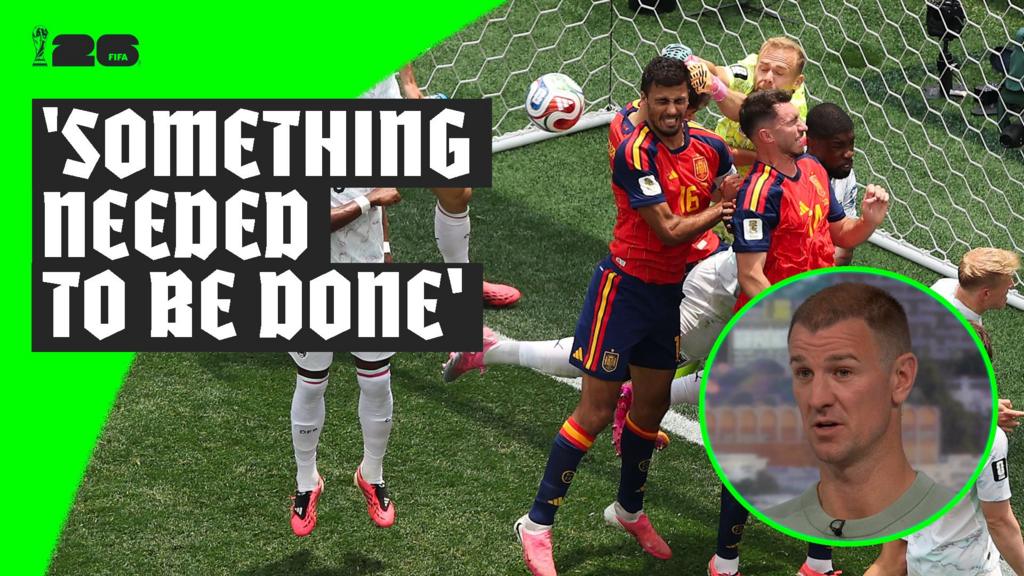
Joe Hart’s reaction to the disallowed Marc Cucurella goal has added another layer to a familiar football debate: how much contact is too much when a goalkeeper is involved? Speaking on the BBC’s coverage, the former England goalkeeper argued that the decision to rule out the effort for a foul on Austria’s Alexander Schlager was soft, and suggested Premier League goalkeepers would be watching the incident with interest.
The incident came during Austria’s round of 32 match in Los Angeles, where Cucurella’s goal was chalked off after the referee judged there had been a foul on Schlager. Hart’s view matters because it comes from a player who spent years dealing with the same split-second calls from the other side of the argument. For goalkeepers, any contact in the six-yard box can feel decisive; for attackers, the line between fair challenge and infringement is often far less clear.
Why the call matters beyond one match
Hart’s comment is not just about one overturned goal. It speaks to a wider issue in modern football, where officials are asked to balance physical contact, intent and the goalkeeper’s protected status. In practice, those calls can swing games and shape the way teams attack set pieces, crosses and second balls. If a challenge like this is judged too harshly, forwards may become more cautious; if it is allowed, goalkeepers and defenders may feel exposed.
That is why Hart’s line about Premier League goalkeepers “throwing food at the TV” resonates. It captures the frustration many keepers feel when they believe the standard for contact is inconsistent. Supporters, meanwhile, are left with the same familiar split: some will see a clear foul, others will see a routine bit of box traffic that should have stood.
What supporters should take from the debate
For Austria, the decision was a major moment in a knockout game, and for Cucurella it was a reminder that even a well-taken finish can be undone by a marginal call. For viewers, the bigger takeaway is that these decisions remain among the most contentious in the sport. Hart’s analysis gives the incident extra weight because it comes from someone who understands the goalkeeper’s perspective but is still willing to call the decision soft.
In a tournament setting, moments like this can define momentum. A disallowed goal changes the emotional rhythm of a match, and the debate that follows often lasts longer than the action itself. Hart’s verdict ensures this one will be discussed not only as a refereeing call, but as part of the ongoing argument over how football protects goalkeepers without over-policing the penalty area.
Source note: This article was prepared using publicly available information from BBC Sport and expanded with editorial context.
Share this content: