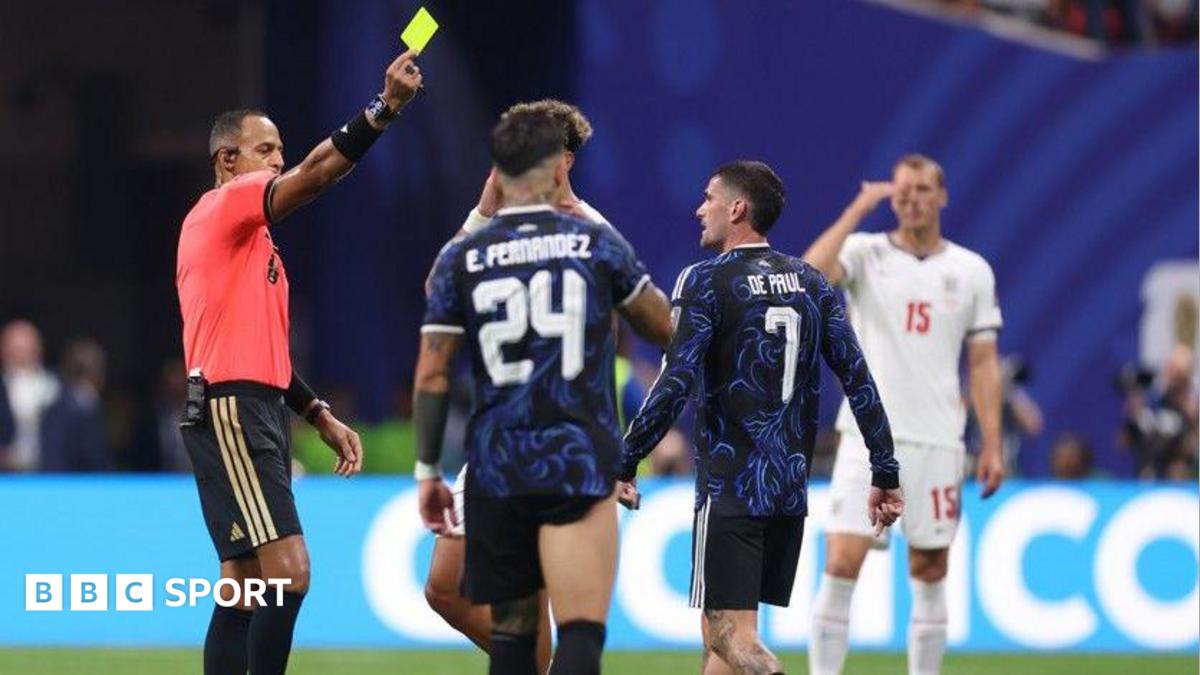
Aymeric Laporte has added a pointed voice to the long-running debate about Argentina’s competitive edge, saying the world champions are a side that “likes to leave a mark on their opponents” and that such behaviour “shouldn’t be allowed in football”.
The Spain defender’s remarks, carried by BBC Sport, are notable not just for their bluntness but for what they reveal about the emotional residue left by elite international matches. When a team is as successful and as emotionally charged as Argentina, opponents often come away talking about more than tactics. They talk about tempo, contact, game management and the fine line between aggression and provocation.
What Laporte’s comments say about the rivalry
Laporte’s criticism fits a familiar pattern in knockout football, where margins are tiny and physical duels can shape the tone of an entire match. Argentina have built a reputation in recent years for being intense, streetwise and difficult to unsettle, qualities that supporters of the team often celebrate as competitive character and opponents sometimes interpret as gamesmanship.
For Spain, and for Laporte personally, the comments underline how international football can become a test of mentality as much as technical quality. Defenders are often the first to feel the impact of a team that presses aggressively, challenges hard and tries to dominate the emotional rhythm of a game. In that sense, Laporte’s words are less about one isolated incident than about the broader culture of high-stakes football.
Why this matters for supporters
For supporters, the story is another reminder that modern international football is rarely just about possession numbers or passing patterns. It is also about how teams impose themselves physically and psychologically. That can be admired as part of winning culture, or criticised as crossing a line, depending on which side of the contest you are on.
BBC Sport’s framing also points to the wider fascination around Argentina, a team whose success has been shaped by a blend of technical quality, competitive edge and strong collective identity. Those traits tend to make them compelling to watch, but also a frequent target for criticism when opponents feel they have been pushed too far.
Laporte’s comments will likely resonate with fans who have seen similar debates play out across major tournaments. They also serve as a reminder that in elite football, the conversation after the final whistle often extends beyond the scoreline and into questions of conduct, control and what the game should allow.
With no additional match details provided in the source, the safest conclusion is that Laporte’s remarks are best read as a sharp opinion on Argentina’s style rather than a verified disciplinary claim. Even so, they add another layer to the way the team is perceived on the international stage.
Source note: This article was prepared using publicly available information from BBC Sport and expanded with editorial context.
Share this content: