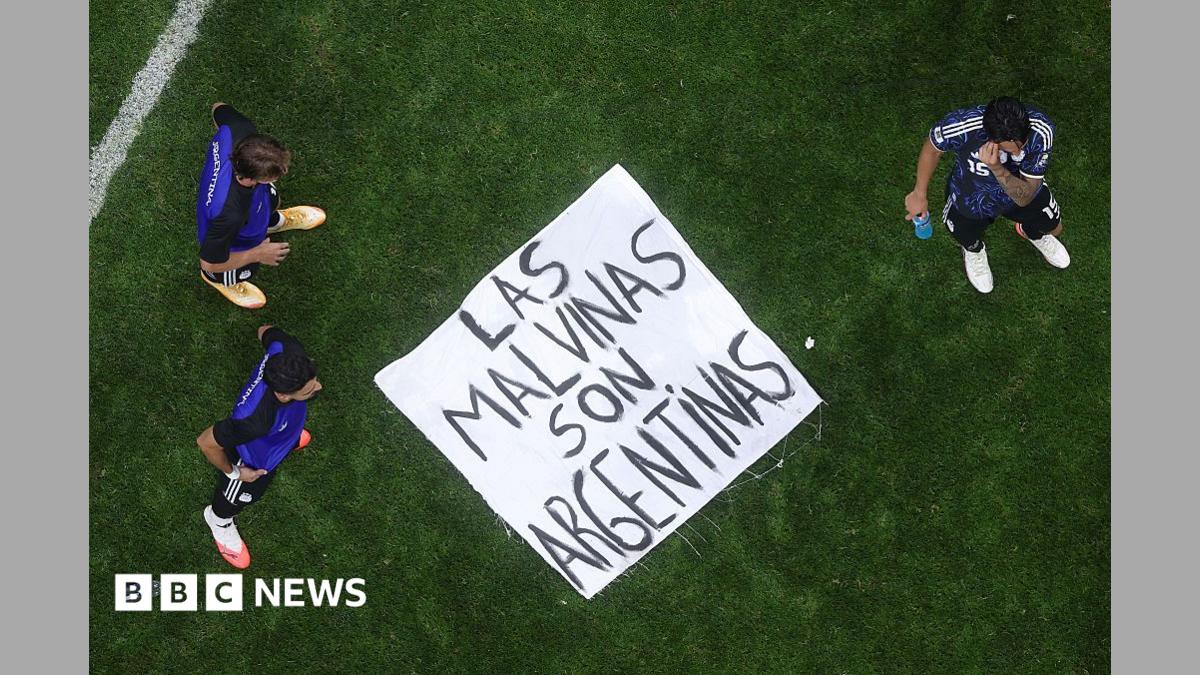
The White House has defended Argentina’s right to free speech after the national team was drawn into a political controversy during its World Cup celebrations. The row centres on a banner linked to Argentina’s territorial claim to the Falkland Islands, which was displayed as the players marked their win over England.
For a football audience, the incident matters because it sits at the intersection of sport, national identity and international politics. FIFA’s rules are designed to keep political messaging out of the game, particularly on the pitch and in official tournament settings. That means the governing body now has a delicate decision to make: whether the banner crossed the line into a sanctionable political statement, or whether the celebration falls under protected expression.
Why FIFA may be forced to act
FIFA has long tried to separate football from political disputes, but that boundary is often tested when national teams celebrate major victories. In this case, the symbolism is especially sensitive because the banner referenced a long-running territorial dispute between Argentina and the United Kingdom over the Falkland Islands. The fact that the display came during celebrations against England only adds to the tension.
Any disciplinary response would likely be judged not only on the content of the banner but also on the setting in which it appeared. Tournament organisers and governing bodies typically look at whether a message is political, whether it was visible in an official context, and whether it could be seen as bringing the competition into a diplomatic dispute. That makes the case more than a simple post-match celebration issue.
What it means for supporters and the wider game
For Argentina supporters, the episode may be viewed as an expression of national feeling after a major win. For England fans, and for many observers in the UK, it is likely to be seen as an unnecessary provocation that turned a football moment into a political flashpoint. The reaction from the White House shows how quickly a sporting image can become part of a wider international debate.
From a football perspective, the key question is whether FIFA wants to set a clear precedent. A firm response would reinforce the message that political banners have no place in official celebrations. A lighter touch, however, could invite future disputes over where celebration ends and political expression begins. Either way, the incident has ensured that Argentina’s victory will be remembered for more than what happened on the field.
Source note: This article was prepared using publicly available information from BBC Sport and expanded with editorial context.
Share this content: